
Reviewed · GUIDED WALKS IN LONDON
Secrets of the London Underground Small Group Walking Tour
A Tube tour that uses stations like a time machine. You’ll see central London through origins, construction, and stations that changed or disappeared, all tied to the underground system.
I love how tight the focus stays on how the Tube was built and used, not just what it looks like today. I also like that the group size is capped at 25, so it feels easy to follow even when you are moving at a lively pace.
One thing to plan for: this is a walking tour with many steps, and it can be wet if weather turns, so bring rain gear and be ready for some hustle.
In This Review
- Quick Hits Before You Go
- Entering The Underground at Baker Street, the 1863 Beginning
- The 2.5 Hours on Foot and Short Tube Hops
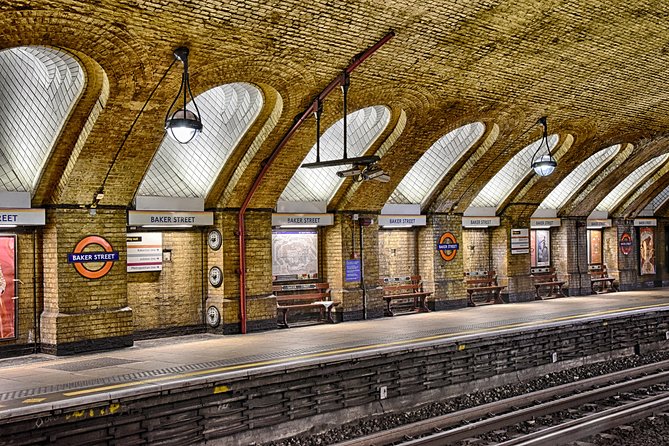
- Stop 1: Baker Street Station and the Metropolitan Railway Origin Story
- Stop 2: Oxford Street and Oxford Circus, the Victoria Line Timeline
- Stop 3: Green Park (Down Street), the Station That Closed in 1932
- Stop 4: Piccadilly Circus Station, Openings in 1906
- Stop 5: Embankment Station and the River Thames Reclaim Plan
- Stop 6: Westminster Station, From Westminster Bridge in 1868
- The Victorian Build, Disused Stations, and the Underground’s Many Jobs
- Price and Value, Plus the Zone Ticket You Still Need
- Who Should Book This Tube-Themed History Walk
- Should You Book Secrets of the London Underground?
- FAQ
- What’s the duration of the Secrets of the London Underground walking tour?
- Where does the tour start and end?
- What is included in the tour price?
- Is a travel card included?
- Do I need to pay admission at each stop?
- How big is the group?
- What days does it operate?
- Is the tour suitable for people with reduced mobility?
- Can I get a refund if my plans change?
Quick Hits Before You Go
- Baker Street starts at the Underground’s early era, including the original 1863 station story tied to the Metropolitan Railway
- You get a station-to-station timeline, from 1906 openings at Piccadilly Circus to Victoria line changes in the 1960s
- Green Park and Down Street show how stations can fail, with a closure in 1932 after low patronage
- Westminster adds a transportation-first angle, opened as Westminster Bridge in 1868 with early access routes
- A real guide matters here, with frequent praise for guides like John, Peter, and Angela for clear, funny storytelling
- You will need your own Zone ticket, since travel cards are not included and the tour is partly on trains
Entering The Underground at Baker Street, the 1863 Beginning
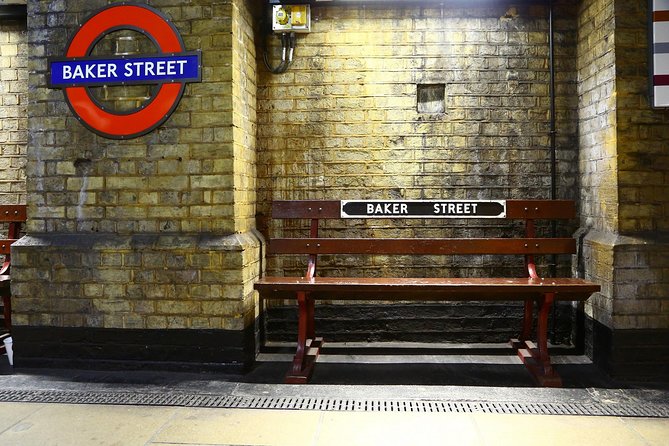
The tour kicks off at Baker Street Underground Station, a strong choice because it instantly puts you in the deep end of London transit history. This is one of the earliest Underground stops tied to the Metropolitan Railway, and it helps explain why the Tube was not just a modern convenience, but a bold Victorian engineering play.
Baker Street is also where the tour’s theme clicks. Instead of treating stations like background scenery, you see them as decisions made by planners, builders, and politicians. That matters because the underground you ride today was shaped by choices people made long before contactless payments and phone maps.
If you are a history buff, this opening sets you up to notice details you might otherwise miss. You start thinking in timelines: what came first, what expanded next, and what got shut down.
What to watch for: Baker Street can be busy. Showing up early helps you spot your guide and settle before the group starts moving.
More Guided Walks in London
The 2.5 Hours on Foot and Short Tube Hops
This runs about 2 hours 30 minutes, and it mixes walking with short Tube segments. That blend is part of the value, because you get both street-level context and underground context, without spending the whole day commuting.
The tradeoff is that it is not a slow museum stroll. With many steps and a moderate fitness expectation, you should be prepared for stairs, underground passages, and frequent “move now” moments. The upside is that the pace keeps the tour from dragging, and the guide can cover a lot of station history in a compact time window.
It is also a small group experience, max 25 people. That helps with following directions, hearing stories, and not feeling like you are trapped behind a wall of shoulders.
Stop 1: Baker Street Station and the Metropolitan Railway Origin Story
At the start, you get context for why Baker Street matters. The station is described as one of the original stops on the Metropolitan Railway, which is often credited as the world’s first underground railway. That framing matters, because it stops you from thinking of the Tube as purely British branding. It was a world-shifting idea.
You’ll also hear about how the system was built during the Victorian era, before today’s tech made underground construction easier. In practice, that means the stories stay focused on engineering realities, plus how roles in the network evolved over time.
Even if you have ridden the Tube for decades, this stop can reset your brain. London feels like it runs on routine until someone points out the original purpose and the early limitations. Then stations start to feel like artifacts.
A practical tip: when your guide starts describing the early system, stand where you can look up and around. Station design cues are easier to catch when you are not constantly blocked.
Stop 2: Oxford Street and Oxford Circus, the Victoria Line Timeline
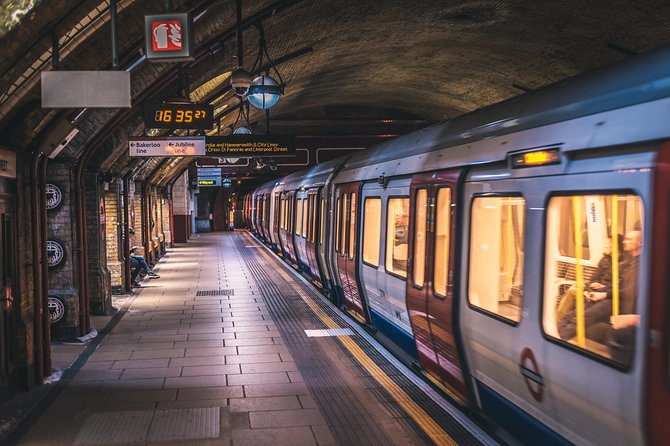
Next comes Oxford Circus Station, and this is where the tour shifts from earliest Underground dreams to expansion and planning in the modern era. The story here starts in the 1960s, with construction beginning in 1962 on the initial Walthamstow to Victoria section. It also talks about cross-platform interchange plans at Oxford Circus.
Then you get a clean milestone: the Victoria line platforms opened on 7 March 1969. After that, the station’s opening is tied to the second extension from Warren Street to Victoria. It is a lot of dates for one area, but the guide’s job is to make those dates feel like cause and effect, not a trivia list.
Why I like this stop for value: it explains how London’s busiest central interchange shaped itself through phased development. You see how today’s routes are the end product of planning made decades earlier.
Possible drawback: Oxford Circus is a high-traffic area. On crowded days, it can be harder to linger for photos, so keep the group moving and treat pictures as quick grabs.
Stop 3: Green Park (Down Street), the Station That Closed in 1932
Green Park and Down Street is one of the more fascinating stops because it is not a success story. You get the detail that Down Street Station opened in 1907 by the Great Northern, Piccadilly and Brompton Railway. It later served the Piccadilly line.
The story also includes location logic. It sat between Dover Street, now named Green Park, and Hyde Park Corner stations. Then comes the reason it vanished: lack of patronage and proximity to other stations, leading to closure in 1932.
That is more than a fun fact. It is a reminder that transit networks survive by demand, not by nostalgia. Stations are living things in an evolving system, and sometimes they are removed when they no longer make sense.
If you like old infrastructure: this is the stop that makes you look at the network like a changing organism, not a fixed map.
More England on foot, brolly optional:
- Westminster Guided Walking Tour with Abbey Entry★ 5.0 · 1,282 reviews
- Walking Tour of London Westminster Abbey, Big Ben, Buckingham★ 4.5 · 1,213 reviews
- London West End Musical Silent Disco Walking Tour Top 1% Rated★ 5.0 · 1,057 reviews
- Westminster 3 Hour Walking Tour and Visit of Churchill War Rooms★ 5.0 · 967 reviews
Stop 4: Piccadilly Circus Station, Openings in 1906
Piccadilly Circus Station adds a crisp, early-20th-century chapter. The station was opened on 10 March 1906 by the Baker Street and Waterloo Railway, which is now the Bakerloo line.
Then you get a second opening event in the same year: platforms tied to the Great Northern, Piccadilly and Brompton Railway, now the Piccadilly line, opened on 15 December 1906. That split timeline is exactly the kind of detail that makes a station feel alive. It explains why the underground you navigate today has multiple layers of planning behind it.
As a traveler, I like that the tour does not just point at a station sign and move on. You learn what was happening around the same time in different parts of the system, which helps you understand why transfers work the way they do.
Heads up: Piccadilly Circus can be loud. If you have trouble hearing in busy spaces, position yourself where you can still hear the guide clearly.
Stop 5: Embankment Station and the River Thames Reclaim Plan
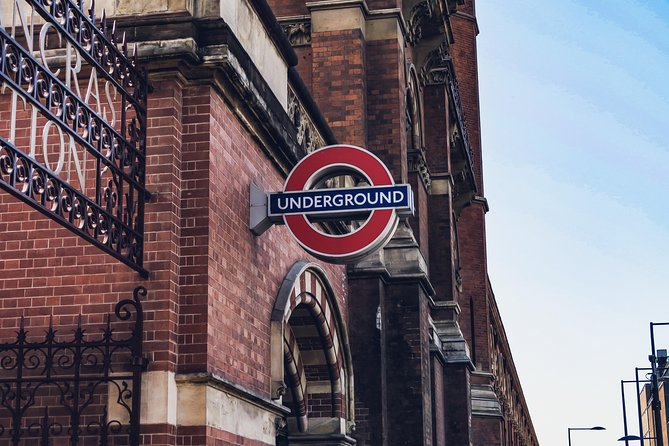
Embankment Station brings the underground story back to the city itself, because the Tube does not operate in a vacuum. The tour describes Embankment as running from the City of Westminster to the City of London along the north bank of the River Thames.
It also gets specific about the 19th-century purpose: the area was developed to reclaim marshy land from the river banks. That’s a key theme for this tour. The underground is a transportation network, yes, but it is also part of how London remade itself physically.
I like this stop because it connects infrastructure to geography. It helps you see why some locations were reachable and buildable in certain eras, and how engineering and land use shaped what could come next.
Photo note: if you want river views, you will likely need quick timing and good angles. Keep the group pace in mind.
Stop 6: Westminster Station, From Westminster Bridge in 1868

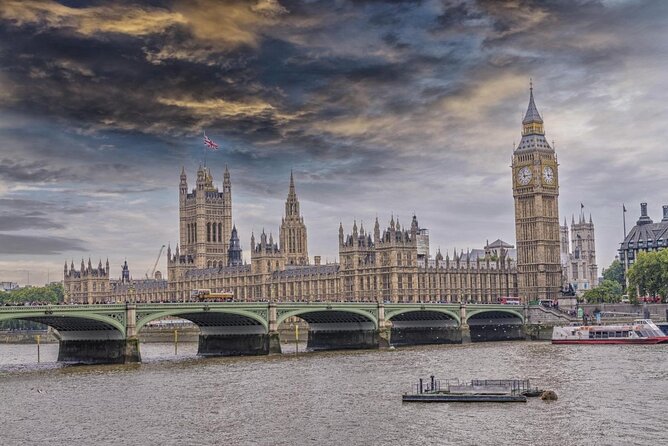
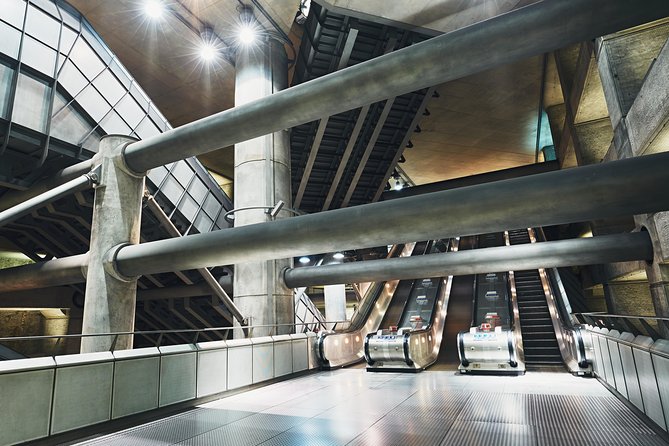
The finale is Westminster Station. You learn that it opened as Westminster Bridge on 24 December 1868, built by the steam-operated District Railway (DR), which is now the District line. This was when the railway opened its first section from South Kensington.
The tour also mentions access details: you could reach the station via a passageway from Bridge Street and a pedestrian subway under the road. Those small access descriptions are gold, because they make you picture how people moved before modern signage, escalators, and step-free routes were taken for granted.
You also end with a station stop where the admission ticket is listed as free. That’s helpful if you are watching costs tightly and want the experience to stay focused on stories rather than paid add-ons.
The Victorian Build, Disused Stations, and the Underground’s Many Jobs
A big part of the tour’s appeal is that it does more than walk between well-known stops. It covers how the Underground was built during the Victorian era, and it also includes stories about haunted and disused stations left abandoned on the network.
That haunted angle can be fun, but the real value is how it helps you think about the underground as layered history. Some parts are in daily use, some are closed, and some linger in the imagination. The stories fit the theme: the system changes, and not every choice lasts.
The tour also shares how the Underground has played a variety of roles. Based on what guides have been praised for, you may hear about big events and social forces that shaped the network, including wartime use tied to WWII stories. Even if you know the headlines, hearing how the Tube fit into daily life during major events is a strong way to make the city feel less like postcards.
Price and Value, Plus the Zone Ticket You Still Need
At $41.13 per person for about 2 hours 30 minutes, this tour sits in the mid-value range for a specialized history walk. The value comes from two things: you are paying for a focused guide and a structured route through historically meaningful stations.
But there’s a cost you must factor in: travel is not fully covered. Travel cards are not provided, and you need a contactless card, Oyster card, or travel card valid for Zone 1. The tour notes you should purchase a day travel card for Zones 1 to 2, so budget for that on top of the tour price.
That is why I call this “value with a condition.” If you already planned to buy a multi-zone day pass anyway, the tour price feels easier to justify. If you hate extra logistics, read the ticket guidance carefully before you book, because you are still responsible for getting around on the network.
Who Should Book This Tube-Themed History Walk
This works best if you want a local-feeling look at London that goes beyond famous sights. The underground route is concentrated, and the topics are tuned for history-minded travelers who enjoy engineering details and station design stories.
I also think it suits first-time London visitors who want a quick, guided orientation, since you cover major central areas like Baker Street, Oxford Circus, Piccadilly Circus, and Westminster. If you already know the routes well, it can still reward you by giving context for how those lines came to be.
You should consider skipping it if mobility is limited. The tour explicitly includes many steps and is not suitable for guests with reduced mobility. If weather is a problem for you, plan for rain gear too, since one of the most common complaints is that the tour can get wet.
Should You Book Secrets of the London Underground?
Book it if you want station-by-station context, not a generic walking tour. I like that it blends Victorian engineering stories, expansions in the 1900s and 1960s, and real examples of stations that opened and closed. And the guide quality seems to be the main reason people rate it highly, with frequent praise for guides like John, Peter, and Angela keeping stories clear, funny, and easy to follow.
Skip it if your idea of value is a low-cost deep-dive where transport is fully included. Because the tour depends on you having the right Zone ticket, the final cost can feel uneven if you end up paying more for transit than you expected.
If you match the vibe, this is a great way to see London like a transit fan, with a route that stays practical and focused.
FAQ
What’s the duration of the Secrets of the London Underground walking tour?
The tour lasts about 2 hours 30 minutes.
Where does the tour start and end?
It starts at Baker Street Underground Station (Marylebone Rd, London NW1 5LJ) and ends at Westminster Station (Bridge St, London SW1A 2JR).
What is included in the tour price?
You get visits to one of the Underground original stations opened in 1863, plus stories about how the system was built during the Victorian era, haunted and disused stations, and the Underground’s different roles.
Is a travel card included?
No. Travel cards are not provided. You need a contactless card, Oyster card, or travel card valid for Zone 1.
Do I need to pay admission at each stop?
Admission tickets are not included for the stops listed, except Westminster is listed as free.
How big is the group?
The tour has a maximum of 25 travelers.
What days does it operate?
It runs from April to March on Tuesdays, Thursdays, and Sundays, excluding 24 to 26 December and 1 January.
Is the tour suitable for people with reduced mobility?
No. The tour includes many steps and is not suitable for guests with reduced mobility.
Can I get a refund if my plans change?
Yes. You can cancel up to 24 hours in advance for a full refund.
Latest to join the queue for London





Guided Walks in London, compared.

Tour for Muggles The Ultimate Harry Potter Walking Tour in London
Read our review →
Changing of the Guard Guided Walking Tour in London
Read our review →
The Great British Rock and Roll Walking Tour
Read our review →
Westminster Guided Walking Tour with Abbey Entry
Read our review →
Walking Tour of London Westminster Abbey, Big Ben, Buckingham
Read our review →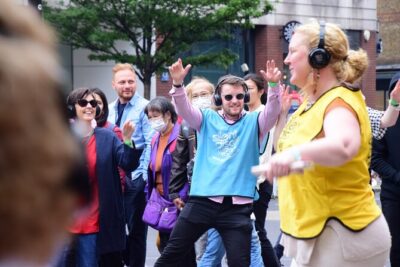
London West End Musical Silent Disco Walking Tour Top 1% Rated
Read our review →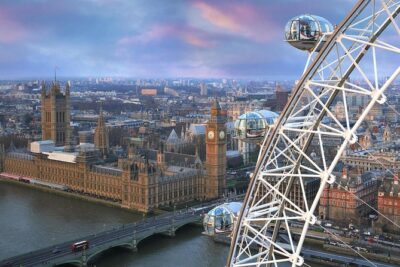
Westminster 3 Hour Walking Tour and Visit of Churchill War Rooms
Read our review →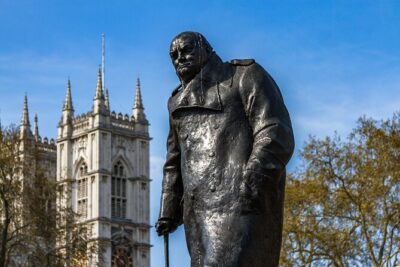
WW2 London Walking Tour & Churchill War Rooms Entrance Ticket
Read our review →Browse the lists this tour appears in