
Reviewed · BUCKINGHAM PALACE & ROYAL LONDON TOURS
Royal Observatory Greenwich & Prime Meridian Entry Ticket London
You can stand on two halves of Earth. At Royal Observatory Greenwich, that becomes more than a photo op. You get a guided walk through the science behind time, longitude, and the way we measure the universe, all set on a hill in Greenwich Royal Park with big London views.
Two things I particularly like: the chance to pose astride the Prime Meridian and feel how real the East-West split is. Second, the audio guide makes it easy to learn at your own pace, with options in multiple languages while you move through historic rooms and instruments.
One drawback to consider is the effort of getting up there. The observatory sits at the top of a steep hill with stairs, and some areas are not fully accessible, so plan your route carefully if mobility is a concern.
In This Review
- Key highlights worth your time
- Standing on the Prime Meridian, and why it feels different in person
- Meridian Courtyard photos: the one moment to get right
- Flamsteed House: GMT, clocks, and the science of longitude
- Octagon Room and Sir Christopher Wren: where the architecture supports the science
- Time Ball and Shepherd Gate Clock: public time signals that changed daily life
- Great Equatorial Telescope: the onion dome and long-view astronomy
- Views and a realistic 2-hour plan in Maritime Greenwich
- Value check: is this ticket worth about $33.90?
- Should you book this Prime Meridian entry ticket?
- FAQ
- How long does the Royal Observatory Greenwich visit take?
- What is the price per person?
- Is the ticket a mobile ticket?
- Is an audio guide included, and what languages are available?
- Where is the Royal Observatory Greenwich located?
- Is transportation to and from the attraction included?
- What nearby places can I visit for free?
- Is the attraction near public transportation?
- Are children allowed, and are any children free?
- Is the attraction fully accessible for mobility needs?
- Can I bring a service animal?
- What is the cancellation policy?
Key highlights worth your time
- Prime Meridian photo moment in the Meridian Courtyard, with one foot on each side
- Audio guide for self-paced learning, available to download and also used on-site
- Harrison and longitude timekeeping plus other major astronomers connected to the site
- Octagon Room by Sir Christopher Wren, among the best-preserved Wren interiors in London
- Time Ball and Shepherd Gate Clock, early public signals for Greenwich Mean Time
- Great Equatorial Telescope in the onion dome, built for long views of the universe
Standing on the Prime Meridian, and why it feels different in person
The Prime Meridian at Greenwich is one of those London sights that sounds simple until you’re actually there. The moment you step into the Meridian Courtyard, you’re no longer reading about East and West on a map. You are standing at the line that ties the whole idea of global reference time to a physical place.
This is also why the attraction works for a wide mix of people. If you love science, you’ll enjoy the instruments and the names tied to real discoveries. If you’re more into travel and landmarks, you’ll still come away with something concrete: the East-West split is visible, photogenic, and explained in a way that connects timekeeping to everyday life.
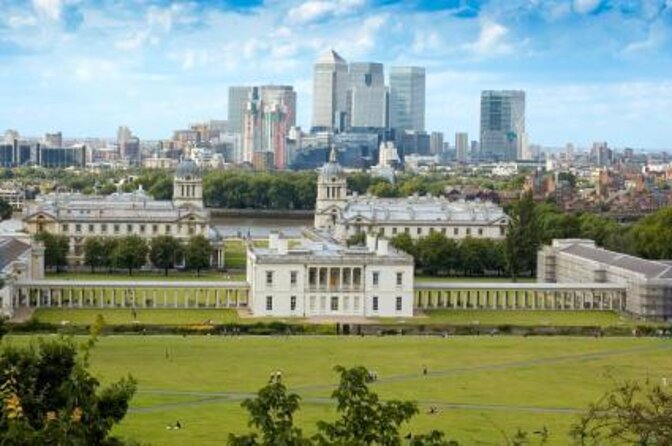
I also like the setting. The observatory is on a hill in Greenwich Royal Park, so you’re rewarded with views across London, including the City and the River Thames. That matters because the walk up is part of the day’s “worth it” factor, even if it’s tiring in the rain or for slower walkers.
More guard changes done by the clock:
Meridian Courtyard photos: the one moment to get right
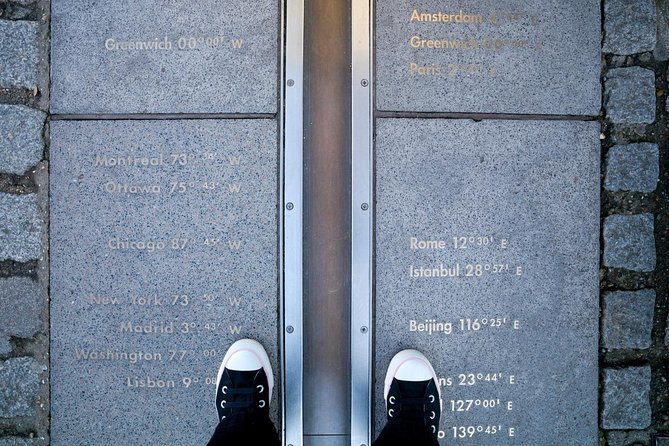
Your visit begins in the Meridian Courtyard, where you’ll stand astride the Prime Meridian Line. This is the signature moment, so treat it like a mini mission.
Here’s what helps:
- Wear shoes you don’t mind walking in and standing in for photos.
- If you care about getting clear shots of the line itself, plan to do that early in your entry window when the courtyard is less crowded.
- Give yourself time to read the nearby interpretation before you rush to pose. A quick minute here makes the rest of the tour click.
What’s special is the symbolism. You’re not just looking at a plaque. You’re physically positioned so the East-West idea makes immediate sense. Several people specifically mention that feeling, like standing precisely on the division rather than just seeing it in a diagram.
Flamsteed House: GMT, clocks, and the science of longitude
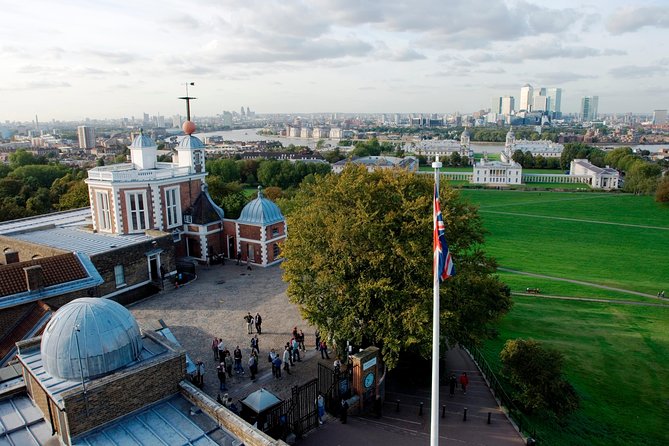
After the courtyard moment, the route moves through Flamsteed House, where you walk in the footsteps of the Astronomers Royal. This is where the visit shifts from landmark to story.
You’ll see how timekeeping became a scientific tool, not just something you check on a watch. The displays and route point you toward why accurate time mattered for navigation and why Greenwich Mean Time (GMT) became a global reference.
This is also where the big clock names come in. Harrison’s clocks are highlighted as inventions that changed the world, and you’ll learn about other scientists and inventors associated with the Royal Observatory, including Newton, Halley, Bradley, Maunder, Airy, and even Einstein. If you’ve ever wondered why “time” is a serious topic in science, this is the part that makes it feel logical.
One detail I think many people will appreciate: the tour also covers early public time signals, not just advanced instruments. That angle turns the observatory into something grounded, because timekeeping affected ordinary life long before GPS made everything automatic.
Octagon Room and Sir Christopher Wren: where the architecture supports the science
The next standout is the Octagon Room, designed by Sir Christopher Wren. It’s one of the best-preserved Wren interiors in London, which means you’re not only touring science history, you’re also touring a remarkably intact slice of 17th-century design.
Why this matters for you: when a museum space stays visually authentic, it helps you imagine what “work” looked like back then. In this room, the historical feel isn’t just decorative. It supports the whole theme of the observatory as a working place for astronomy and time measurement.
In practical terms, plan to slow down here. If you’re moving quickly, the room can feel like another stop. If you pause and let the audio guide narration do its job, the connection between the building, the scientists, and the instruments becomes clearer.
Also, expect that some parts involve indoor walking through display areas rather than a hands-on science playground. It’s educational and interpretive, which is ideal if you like learning through explanations and exhibits.
Time Ball and Shepherd Gate Clock: public time signals that changed daily life
One of the most memorable contrasts at the Royal Observatory is how early public time was delivered. You’ll learn about the Time Ball on top of Flamsteed House, an early public time signal first used in 1833 and still operating today. That’s a clever reminder that “time” has never been only for scientists. It was for ships, workers, and anyone who needed a shared reference.
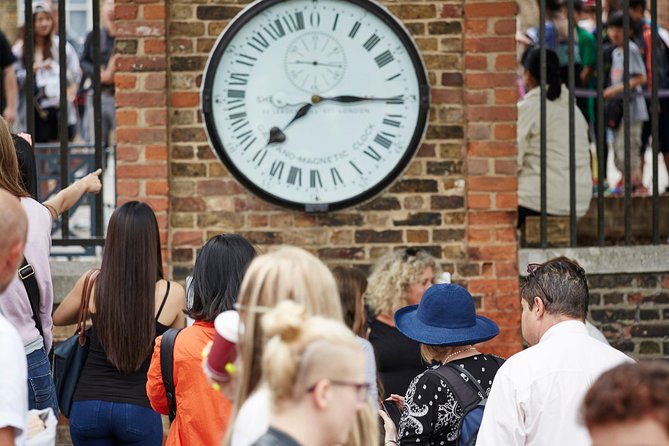
You’ll also see the Shepherd Gate Clock, mounted outside. It’s described as the first clock to show Greenwich Mean Time to the public. This is the kind of detail that makes the observatory feel tangible. Instead of thinking time was invented once and then forgotten, you see that society had to build trust in the accuracy of timekeeping.
For photo lovers, this section gives you more than a single landmark shot. You can look outward toward London while learning how the observatory broadcast accurate time signals into daily routines.
More meridian lines and tea clippers:
- Westminster to Greenwich Sightseeing Thames Cruise in London★ 4.5 · 2,969 reviews
- Leeds Castle, Canterbury, Dover & Greenwich Boat ride★ 4.5 · 604 reviews
- ‘Cutty Sark’ Entrance Ticket★ 4.5 · 373 reviews
- Leeds Castle, Canterbury, Dover & Greenwich Cruise from London★ 4.0 · 369 reviews
Great Equatorial Telescope: the onion dome and long-view astronomy

The highlight for many astronomy fans is the Great Equatorial Telescope, located inside the huge iconic onion dome. This is where the visit leans hard into the “how did they see the sky?” question.
Even if you’re not an astronomy expert, the telescope’s presence does something. It anchors the story of time to the purpose of astronomy itself. Timekeeping and observing are tightly linked, because where and when you look changes what you can measure and discover.
I also like that this part of the experience isn’t random. It comes after the clock story, so you’ve already learned why precision mattered. Then you get to see a major instrument designed for long views of the universe, which helps the science feel like a connected system rather than separate exhibit topics.
If you’re short on time, don’t rush this area. It’s one of those “stop and look” moments, and it’s worth giving it your attention even if you only have the classic couple of hours.
Views and a realistic 2-hour plan in Maritime Greenwich
The experience runs about 2 hours for most visits, so you want a plan that matches the pace of the site. The route includes outdoor walking around the hill and courtyards, plus indoor exhibits and rooms. That means weather matters.
Here’s my practical advice:
- If it’s raining, expect the outdoor parts to feel like work, not stroll time.
- If you’re traveling in warmer months, start early so the crowds do not steal your photo opportunities and your quiet moments with the displays.
- Bring patience for the uphill walk. It’s part of why the views over London are so good, but it’s still steep.
The site also helps you extend the day. The observatory is located within the UNESCO World Heritage Site of Maritime Greenwich, and other major sights are within short walking distance. The ticket includes free admission to the National Maritime Museum and Queen’s House, which is a big value add if you like going deeper without adding ticket costs.
And if you want a famous nearby stop, Cutty Sark is described as a must-see when visiting Greenwich. It’s an easy add-on for a fuller day, especially if you’re already in the area for the Prime Meridian.
Value check: is this ticket worth about $33.90?
At $33.90 per person for about a two-hour visit, you’re paying for a specific mix: one iconic landmark photo moment, a structured walk through historic rooms and instruments, and an audio guide experience.
For the money, what makes it feel fair is that the ticket isn’t just about standing on a line. You get:
- Admission to Royal Observatory Greenwich
- A free audio guide download in multiple languages
- All fees and taxes included
- Free access to the National Maritime Museum and Queen’s House nearby (within a short walk)
That last point is what can quietly change the value equation. If you only do the observatory, you’re still paying for a well-known Greenwich experience. But if you also plan to add the maritime museum and Queen’s House, the ticket starts to feel like a day-pass for the central highlights of Maritime Greenwich.
Booking ahead also helps. This attraction is always popular, with an average booking window noted around 35 days in advance. If you’re traveling during peak season or on a weekend, reserving your timed entry ahead of time is the move.
My only caution on value is time management. If you walk fast, you might miss details and end up wishing you had more time. If you walk slow, the hill and stairs can become the main story. Aim for a relaxed, steady pace, especially around the clocks and the telescope areas.
Should you book this Prime Meridian entry ticket?

Book it if you want a London landmark that ties directly into real science and real history of how time became standardized. I think it’s especially satisfying for people who enjoy clocks, astronomy instruments, and the meaning behind famous places.
Skip or adjust expectations if you need fully accessible routes. Some parts are not fully accessible, there are stairs, and inside lifts are not available. In that case, contacting the attraction in advance is the smart step.
If you do book, plan for comfortable shoes, expect a steep climb, and aim to start your Prime Meridian photo moment early in your visit. That way, you get the best of the courtyard experience, not just the best of the view.
FAQ
How long does the Royal Observatory Greenwich visit take?
The experience is listed at about 2 hours.
What is the price per person?
The price is $33.90 per person.
Is the ticket a mobile ticket?
Yes, it’s described as a mobile ticket.
Is an audio guide included, and what languages are available?
A free audio guide is included and available to download in multiple languages. It also notes audio guides are available in 7 languages on-site, and the downloadable audio is listed as 10 different languages.
Where is the Royal Observatory Greenwich located?
It’s located on a hill in Greenwich Royal Park.
Is transportation to and from the attraction included?
No. Transportation to and from attractions is not included.
What nearby places can I visit for free?
The National Maritime Museum and Queen’s House are free to visit and are within a short walking distance.
Is the attraction near public transportation?
Yes, it’s noted as near public transportation.
Are children allowed, and are any children free?
Children under age 4 are free to enter. Children must be accompanied by an adult.
Is the attraction fully accessible for mobility needs?
Certain parts are not fully accessible. The information advises contacting the attraction if you need assistance planning your visit.
Can I bring a service animal?
Yes, service animals are allowed.
What is the cancellation policy?
Free cancellation is available up to 24 hours in advance for a full refund.
Latest to join the queue for London







Buckingham Palace & Royal London Tours, compared.
Changing of the Guard Guided Walking Tour in London
Read our review →
Buckingham Palace Entrance Ticket & Changing of the Guard Tour
Read our review →
Walking Tour of London Westminster Abbey, Big Ben, Buckingham
Read our review →
Changing of the Guard Guided Tour at Buckingham Palace
Read our review →
The Kensington Palace Gardens Royal High Tea
Read our review →
Changing of the Guard Walking Tour in London at Buckingham Palace
Read our review →
Royal Historic Pubs Walking Guided Tour in London
Read our review →
Browse the lists this tour appears in