
Reviewed · WORKSHOPS
Private Shoreditch Street Photography Workshop
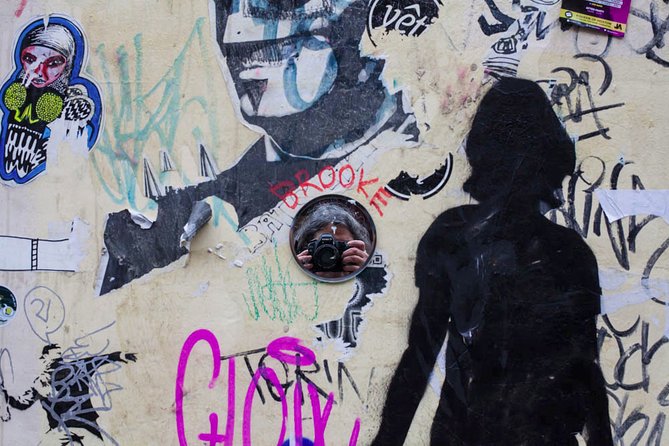
Street photos click when you learn what to look for. This private walk through Shoreditch and Brick Lane turns London’s East End into a hands-on classroom for your camera, led by fine art photographer Lou Smith. If you want photos with story and confidence, this is a practical way to work the streets.
I like two things right away. First, you get real tuition, not just a casual stroll, and you shoot through short assignments designed for fast, candid moments. Second, there’s a photo review element, which helps you understand what worked and what to repeat the next time you’re out.
One drawback to consider: because the format can feel like a structured class, it may not automatically match your exact skill level unless you speak up early. If you want heavier customization, come with clear goals and ask how the session will be tailored.
In This Review
- Key highlights to know before you go
- Why Shoreditch and Brick Lane are great for street photos
- Your guide: Lou Smith and what that changes
- A realistic 4-hour flow, and what you do during each phase
- 1) Meet at Liverpool Street Station, then get your camera ready
- 2) Shoreditch streets: street art, small shops, and learning to see fast
- 3) Quick technical work: camera setup, focusing, and moving subjects
- 4) Black and white: simplifying the scene to find the story
- 5) Color exercises: using atmosphere, not just pretty scenes
- 6) Narrative and composition: people plus cityscape
- 7) Photo review: learn from what you captured
- Value and price: what $337.03 gets you
- What to bring so you get your money’s worth
- Who this workshop fits best
- Practical tips to use before you go (so it feels personal)
- Should you book? My take
- FAQ
- How long is the private Shoreditch street photography workshop?
- Where does the workshop start and end?
- What is included in the workshop?
- Do I need a specific type of camera?
- Is the tour private?
- What about accessibility and getting there?
- Is lunch included, and what about tipping?
Key highlights to know before you go
- Private guide coaching from fine art photographer Lou Smith, with teaching experience
- Short shooting assignments that push candid street capture and quick decisions
- Black-and-white and color exercises to compare mood, focus, and storytelling
- Focusing and camera setup practice made specifically for street photography
- On-the-spot composition training for people moving through the frame
- Image review and feedback so you can develop skills, not just take photos
Why Shoreditch and Brick Lane are great for street photos
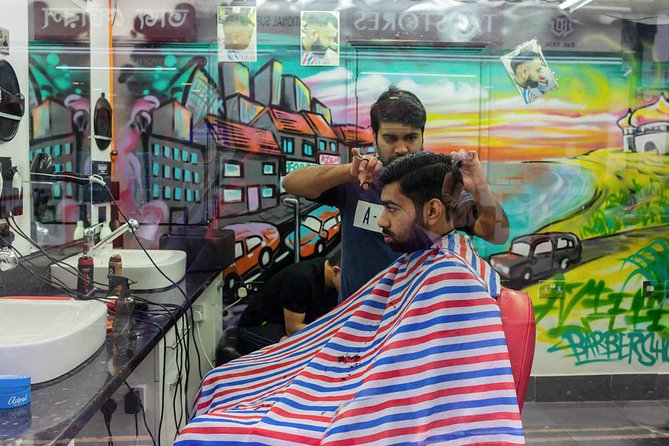
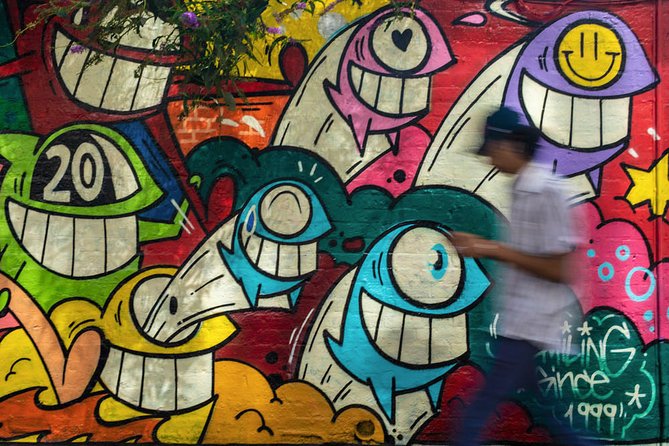
Shoreditch and Brick Lane are built for photography practice. You get layers of textures and details: street art, small shops, and those cobbled backstreets that add grit and rhythm. Even if you think you are not a street photographer, this area makes it easier because the scene gives you many possible subjects within a short walk.
What I like about training here is that you can concentrate on fundamentals without feeling stuck. Instead of hunting for the perfect location, you practice seeing. That matters more than having one famous viewpoint. A good street-photo workshop is really a skill workshop, and the East End is the toolset.
You also get the right mix of busy and controllable. There are people, movement, and changing light. But the streets are walkable and you are guided to keep momentum, which helps you actually finish the shooting tasks, not just watch interesting things happen.
Also on in London, no fuss
Your guide: Lou Smith and what that changes
The workshop is taught by Lou Smith, a professional fine art photographer with extensive teaching experience. That name matters, because it tells you the session is likely built around fundamentals and repeatable habits, not random tips.
From what the workshop emphasizes, Lou Smith’s role is two-fold. First, she guides you to capture what is happening, using the environment as part of the story. Second, she helps you build confidence for fast choices: framing, focusing, and camera setup for subjects that are not waiting politely.
There is also support listed for multiple camera types. You can bring your own camera, and the workshop is suitable for all types of digital cameras, including smartphones. That means the teaching approach can translate even if you are not using a traditional camera.
A realistic 4-hour flow, and what you do during each phase
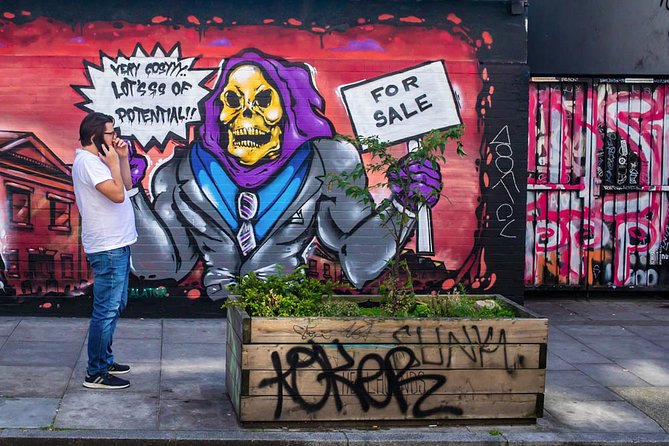
The workshop runs about 4 hours, and it starts and ends back at Liverpool Street Station. Since there is no fixed timetable of exact photo stops provided, think of the schedule as a guided walking loop where each part builds on the last. You will likely move through Shoreditch and Brick Lane in sections, working a theme, then changing the assignment to force new ways of seeing.
1) Meet at Liverpool Street Station, then get your camera ready
Meeting at Liverpool Street Station is practical. It is a major transit hub, so you can arrive without stress. Once you meet, the first priority is simple: charge up, set up your gear, and be ready to shoot right away.
You are told to bring your own camera and have a fully charged battery. That sounds basic, but for street photography it is a big deal. Battery life and storage capacity decide whether you can shoot enough frames to learn by doing.
If you want the session to match your level, this is when you should speak early. Ask what you are struggling with, and mention what camera you use. That kind of up-front check helps a private workshop feel truly personal.
2) Shoreditch streets: street art, small shops, and learning to see fast
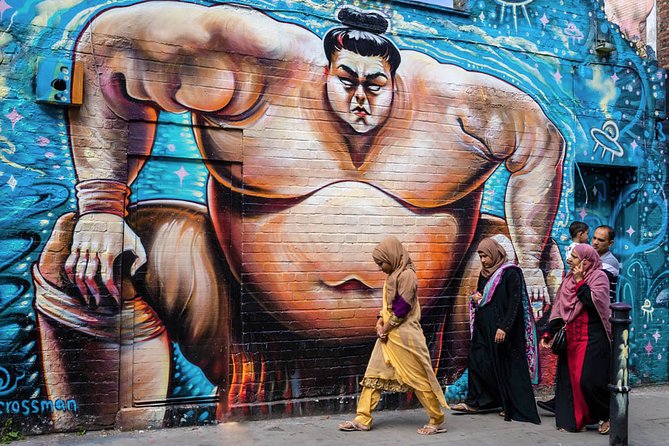
In Shoreditch, the workshop leans into real street texture: street art, small cozy shops, and small cobbled backstreets. Your job is not just to photograph a mural or a storefront. Your job is to train your eye for connections, such as how people and environment work together in the same frame.
Short assignments here are the heart of the practice. The goal is candid capture while you are moving. That is where most street photography improves quickly, because you stop waiting for perfect moments and start working with what the street gives you.
If you like structured practice, this is where you will feel it most. You are not only told what to do, you are pushed to do it, then learn from the result.
Possible drawback in this phase: if you are expecting a fully customized route, you may find that the walk is still fairly guided. The streets of Brick Lane and Shoreditch are so full of photo opportunities that the instructor may focus more on coverage than on tailoring to very specific interests unless you request it.
While the kettle’s on in London:
- Stonehenge, Windsor Castle, and Bath from London★ 4.5 · 18,662 reviews
- London Big Bus Hop-On Hop-Off Tour with Optional River Cruise★ 3.5 · 10,803 reviews
- London Small Group Tour of Historical Pubs★ 5.0 · 10,422 reviews
- Stonehenge, Windsor Castle and Bath with Pub Lunch in Lacock★ 4.5 · 7,402 reviews
3) Quick technical work: camera setup, focusing, and moving subjects
A big promise of this workshop is street-specific technique. You get instruction on how to set your camera for street photography and focusing techniques made for the realities of the street.
Here is the practical value. Street photography forces you to make decisions constantly: where to focus, when to press the shutter, how to frame a subject that might move out of the scene. You do not need fancy gear, but you do need a plan you can execute quickly.
During this phase, you will practice framing moving subjects with confidence. That is useful whether you shoot with a DSLR, mirrorless, or a smartphone. The core skill is the same: getting your focus and composition options right before you lose the moment.
4) Black and white: simplifying the scene to find the story
You are specifically set up for black and white captures. That usually changes everything. Color can hide structure, while black and white makes you see contrast, shape, and gesture more clearly.
If you have ever taken street photos in color and felt the images looked flat, this kind of exercise can fix that. Black and white training teaches you to rely on light and form, not just color.
It also encourages a different kind of patience. Even while you are moving, you start to look for moments with stronger lines, stronger separation, or clearer subject presence.
5) Color exercises: using atmosphere, not just pretty scenes
The workshop also teaches you how to use color to create mood and atmosphere. This is where the East End setting helps. Brick Lane and Shoreditch are packed with visual signals, so your job is not to copy what you see, but to choose how you want the image to feel.
A practical way to use this assignment is to take the same general type of subject in both modes. When you compare black and white versus color, you learn what information the scene is offering you. Is it the emotion of faces? The glow of signage? The textures of walls? The guide’s instruction helps you aim those choices, instead of letting the camera pick for you all the time.
6) Narrative and composition: people plus cityscape
One of the creative techniques listed is about creating a narrative, plus integrating the environment in your photographs. That means you should start thinking beyond a single subject.
You might be asked to create a shot that includes both the person and the setting so the frame tells a mini story. Street photography often feels strongest when the viewer can guess what is happening, or why the scene matters.
In practical terms, this is where you practice composition that feels intentional even if the moment was fast. You also get practice blending people with cityscape, which is harder than it sounds because movement and crowds can blur your subject.
7) Photo review: learn from what you captured
The workshop includes a review of photographs and guidance on how to develop your skills. In a street photo session, this is the step many people skip.
A review can help you spot patterns fast. Maybe your framing improved but your focus selection lagged. Maybe your black and white looks stronger because your choices in contrast got clearer. Maybe your color shots feel more emotional once you started using atmosphere on purpose.
This is where the tuition pays off. Shooting is the fun part. Feedback is the part that turns fun into actual progress.
Value and price: what $337.03 gets you
The price is $337.03 per person for about 4 hours, and it is a private tour exclusive to your group. That structure changes how you should think about value.
You are paying for three main things:
1) Time with a professional fine art photographer who teaches
2) Guided shooting assignments tailored to street photography
3) Review and feedback, plus instruction on camera setup and focusing
If you tried to learn this on your own, you would still spend money on time, gear practice, and probably multiple failed outings. A private workshop compresses the learning curve because you get coaching while you shoot and feedback after.
You might also like that the workshop is described as suitable for all skill levels and all types of digital cameras, including smartphones. That broad fit matters because you do not need to justify buying expensive equipment just to benefit.
A word of caution on value: if you are the kind of photographer who wants a session built around your own style and specific scenes, you should plan to communicate that early. If customization is not asked for, the workshop may follow a more general route through Shoreditch and Brick Lane.
What to bring so you get your money’s worth
You have one big homework assignment, charge your gear. Bring your own camera and a fully charged battery. If you are shooting with a smartphone, you might still want to bring an external battery pack, since street sessions can chew through power while you test settings and review shots.
Also consider these practical items:
- Enough storage so you can shoot many frames during assignments
- A way to keep your camera stable when you are shooting quickly
- A calm mindset for making mistakes. Street photography rewards reps
Because the workshop is private to your group, you should also think about what you want feedback on. If your main goal is better focusing, say that. If you want stronger composition, say that. If you want story in your frames, say that.
Who this workshop fits best
This works especially well if you:
- Love street art and want to turn that inspiration into stronger photos
- Want hands-on instruction on focusing, camera setup, and composition for fast-moving scenes
- Are comfortable trying both black and white and color so you learn what each mode changes
- Prefer a structured practice session rather than wandering with random tips
It is also a solid choice for different experience levels. The workshop claims suitability for all skill levels, and it is designed to work with digital cameras and smartphones.
The best fit for you will depend on expectations. If you want technique plus a clear shooting plan, you will likely enjoy it. If you want your route and assignments deeply personalized for your exact interests, you will need to speak up early and make your goals clear.
Practical tips to use before you go (so it feels personal)
Here are a few moves that help private street sessions feel tailored:
- Tell Lou Smith what you shoot most often, portraits, street people, architecture, or details.
- Mention your biggest frustration, blur, focus, framing, or getting the story right.
- Ask how the assignments will fit your level at the beginning.
- Decide what you want from the photo review. Two questions beat ten vague hopes.
Even if the workshop already has a strong structure, your input can steer how you practice and what you focus on during the review.
Should you book? My take
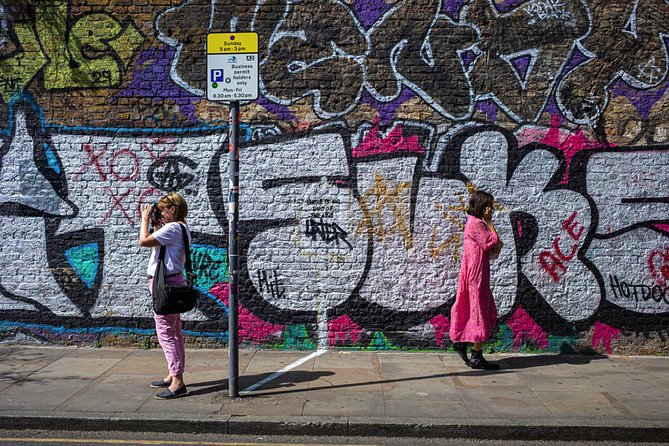
I would book this if you want a street photography lesson that actually includes shooting exercises and feedback. The pairing of a fine art photographer, Lou Smith, plus instruction on focusing and camera setup for street work is the kind of combo that turns your photos from random good shots into a repeatable approach.
I would hesitate only if you are expecting the entire session to be built around your personal style from minute one. The workshop can feel class-like, and that is fine for most people, but not every photographer wants the same level of structure. If you fall into the customization-first camp, ask those questions early and make your goals specific.
If your goal is to leave with better street photos and a clearer method, this workshop has a strong shot at delivering.
FAQ
How long is the private Shoreditch street photography workshop?
It runs for about 4 hours.
Where does the workshop start and end?
It starts at Liverpool Street Station, London EC2M 7QA, UK, and it ends back at the meeting point.
What is included in the workshop?
You get expert photography instruction, a professional fine art photographer guide (Lou Smith), a review of your photographs, and photo coaching to help you develop skills.
Do I need a specific type of camera?
No. The workshop is suitable for all types of digital cameras, including smartphones. You should bring your own camera and a fully charged battery.
Is the tour private?
Yes. It is a private tour/activity, exclusive to you or your personal group.
What about accessibility and getting there?
It is near public transportation, and service animals are allowed. Most travelers can participate.
Is lunch included, and what about tipping?
Lunch and light refreshments are not included. Gratuity is not included and is left to individual discretion.
Latest to join the queue for London

Workshops, compared.



Chocolate Bar Making Workshop – York Cocoa Works
Read our review →

Street Art Tour and Spray Painting Workshop in London
Read our review →Browse the lists this tour appears in