Reviewed · PRIVATE
Private Rock ‘n’ Roll Music Tour of Central London
London sounds better when you walk it. This private 3-hour rock and roll history walk links iconic spots like the London Palladium to Denmark Street, with your guide keeping the story moving street by street.
I love the music-first stops here, because you hit major names and eras without needing a museum ticket. I also like the feel of a tour where you can ask questions as you go, especially when the guide brings out details you would miss staring at a building from the sidewalk.
One possible drawback: it is fast-paced by design. Many locations are short photo stops, and a couple of the famous venues on the route do not include admission.
In This Review
- Key things you should know before you go
- Why Central London is perfect for a rock ‘n’ roll walk
- Price and value for a private group up to 15
- Starting at the London Palladium, where Beatlemania and rock rules collide
- Broadcasting House and the BBC, the music machine with rules
- The London Polytechnic building and the early path to Pink Floyd
- Carnaby Street and the 1950s roots of swinging London fashion
- Kingly Street and Bag O’Nails, plus McCartney’s first big love link
- Heddon Street and the Ziggy Stardust photo shoot location
- 3 Savile Row and the Beatles rooftop concert at the heart of Apple
- Cordings Ltd and Eric Clapton’s fashion-to-influence story
- Hotel Café Royal and Bowie retiring Ziggy Stardust in 1973
- Wardour Street and the Marquee Club, where careers got launched
- Sounds of the Universe, record shopping with the Rolling Stones in the backstory
- The Ship in Soho and how lost licenses changed the vibe
- Trident Studios plaque, a studio that worked from 1968 to 1981
- Soho Square and McCartney Publishing, when music becomes money
- Ronnie Scott’s Jazz Club and the surprise moments you do not expect
- ODEON Covent Garden and Brian Epstein’s theater gamble
- Foyles Bookshop and the Sex Pistols first gig connection
- Denmark Street, the final stop where British pop takes practical shape
- What your 3 hours look like on the ground
- Who this tour is best for
- Should you book this private rock ‘n’ roll tour of Central London?
- FAQ
- How long is the private rock ‘n’ roll tour?
- What does it cost, and how many people can be in the group?
- Where do we meet and where does the tour end?
- Is the tour private?
- What language is the tour offered in?
- Are tickets included for Ronnie Scott’s Jazz Club and ODEON Covent Garden?
- What is the cancellation policy?
Key things you should know before you go
- Private group up to 15 means you can ask questions without waiting your turn
- Music-story focus ties venues to specific moments, from rooftop concerts to photo shoots
- Most stops are free outside access, with a few places where entry is not included
- 3 hours is tight, so expect lots of short segments rather than long time inside
- A guide like Michael is highlighted for broad knowledge and nonstop entertainment
Why Central London is perfect for a rock ‘n’ roll walk
Central London is where pop culture learned to put on a show. In just a few hours, you can cover multiple decades, and the streets do the work of connecting everything. You start with mainstream stage power and end up at guitar-shop street energy, which is a fun contrast.
This tour format also makes sense if your group has mixed levels of rock knowledge. Even if someone only knows a handful of bands, the guide can anchor each stop to a scene you can picture, then point you to the exact spot where the story happened.
Also on in London, no fuss
Price and value for a private group up to 15
The price is $205.67 per group for up to 15 people. If you fill near the top end, the per-person cost becomes very reasonable for a private guide, especially in London where hourly guidance can get pricey fast.
Here is the smart way to judge value. This is not a ticket-heavy experience, because many stops are ticket-free and the main cost is the guide time plus a walking route that hits the key landmarks. If your group has 8 to 15 people, you usually feel like you are getting your money’s worth.
If your group is small, you may still find it worth it, but you will pay more per person. In that case, the decision hinges on whether rock stories plus being able to ask questions matters more than saving money.
Starting at the London Palladium, where Beatlemania and rock rules collide
You meet outside the London Palladium at 8 Argyll St, London W1F 7TF. That is a great start point because it is instantly recognizable, and the venue has hosted some of the biggest music names and TV moments.
The tour kicks off with two details that set the tone. The Palladium connects to the start of Beatlemania, and it also includes the story that the Rolling Stones would not follow the usual end-of-show routine. That kind of anecdote helps you understand rock culture as attitude, not just songs.
Practical note: this is a short introduction, about 10 minutes. You are there to get oriented and to set up the theme, not to linger for a full venue visit.
Broadcasting House and the BBC, the music machine with rules
Next stop is Broadcasting House, the BBC headquarters. You also visit a wing named after DJ and music pioneer John Peel, which signals that this is not just corporate London, it is where broadcasting helped shape listening habits.
A key part of the stop is the not-always-easy relationship between the BBC and rock and pop. The tour explains that the BBC has, in the past, banned certain records from their airwaves. That matters because it shows how mainstream institutions can both support and constrain music careers.
This is another quick stop, around 10 minutes. You get enough time for the big story beats and photo angles, but you are not expecting an in-depth museum-style visit.
The London Polytechnic building and the early path to Pink Floyd
One of the more intriguing moments on the route is the site connected to Roger Waters, Nick Mason, and Richard Wright. In September 1962, three students enrolled there to study architecture, and they rehearsed in a basement tea room for a band called Sigma 6.
Then the story turns, with Syd Barrett joining and the band becoming Pink Floyd. Even if you are not a hardcore Floyd fan, this stop is valuable because it shows the early “how it started” phase of a legendary group, not just their final fame.
Time on site is about 10 minutes. If you like origin stories, this is one of the stops that rewards attention, since the names and sequence are the whole point.
While the kettle’s on in London:
- Stonehenge, Windsor Castle and Bath with Pub Lunch in Lacock★ 4.5 · 7,402 reviews
- Tower of London and Crown Jewels Exhibition Ticket★ 4.5 · 6,677 reviews
- Thorpe Park Admission Ticket★ 4.0 · 5,915 reviews
- Stonehenge, Windsor Castle and Bath Full Day Guided Tour★ 4.5 · 5,346 reviews
Carnaby Street and the 1950s roots of swinging London fashion
You head to Carnaby Street, often remembered as center stage for swinging London. The tour ties the street’s cool factor to unexpected origins in the 1950s and focuses on the flamboyant clothing worn by bands like The Small Faces, The Who, and the Rolling Stones.
There is also a human angle: the role of music promoter and manager Don Arden. That piece matters because it connects style to the industry machine behind it, not just to costumes on stage.
This stop is about 10 minutes. Expect it to feel like a “see it, learn it, move on” segment, so wear shoes you can walk in comfortably.
Kingly Street and Bag O’Nails, plus McCartney’s first big love link
At Kingly Street, you visit the former site of Bag O’Nails. This is a legendary 60s performance haunt, with the tour highlighting names that played there, including Jimi Hendrix Experience, The Who, The Animals, and Tom Jones.
One of the standout details is personal: at least three musicians met their future wives here. The tour specifically notes that Paul McCartney met Linda in 1967. That makes the music story feel more like real life, with relationships forming in the same spaces as creativity.
Time is about 10 minutes. It is enough to connect the dots, but not enough for a long, slow look.
Heddon Street and the Ziggy Stardust photo shoot location
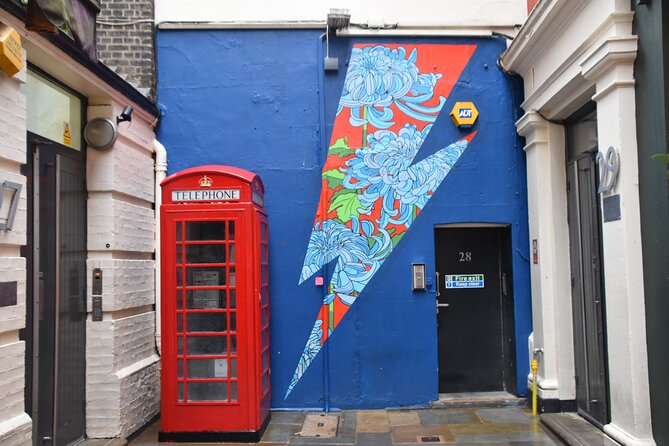
Next you visit Heddon Street, tied to the front and back cover of The Rise and Fall of Ziggy Stardust and the Spiders From Mars. The guide gives you the setup for the photos, including the detail that the iconic images were shot on a cold and wet January night in January 1972.
You even get a chance to recreate the iconic photos. That is one of those “silly in a good way” experiences that makes the tour feel more memorable than just standing and listening.
This stop is about 10 minutes. If it is cold or rainy, you will feel the timing, so keep your phone ready but be mindful of slipping while you pose.
3 Savile Row and the Beatles rooftop concert at the heart of Apple
At 3 Savile Row, you visit the former office connected to the Beatles and the site of their legendary rooftop concert. The tour frames it as the building featured in Let It Be and Get Back, and it also points out that this was the headquarters of Apple, which drew Beatles fans from around the world.
This stop is special because it connects film, fame, and geography. You are not just hearing about a concert, you are standing near the exact urban stage where it happened.
Time is about 10 minutes, and you will likely move on quickly. Still, the rooftop story lands well here because Savile Row feels like it should carry business energy, not rock and roll chaos. That contrast is part of the fun.
Cordings Ltd and Eric Clapton’s fashion-to-influence story
You then reach Cordings Ltd, where the tour tells the story of Eric Clapton window shopping as a teenager and later becoming a regular customer. The big reveal is that Clapton eventually invested in the business and became its design director.
This is a nice change of pace. It pulls rock into everyday culture, showing that music stars influence more than just guitars and stages.
Again, you are there for about 10 minutes. The value is the specific narrative, not the time spent.
Hotel Café Royal and Bowie retiring Ziggy Stardust in 1973
At Hotel Café Royal, the tour begins with the hotel’s earlier café roots from 1865 and then turns to a famous moment. It explains that David Bowie retired the character Ziggy Stardust at a high-profile bash in 1973.
The guide also connects that night to the hotel’s later Ziggy Stardust cocktail bar idea. It is a good example of how a pop myth can become a long-running brand signal in the city.
Time is about 10 minutes. If you enjoy Bowie details, this stop will feel like a highlight.
Wardour Street and the Marquee Club, where careers got launched
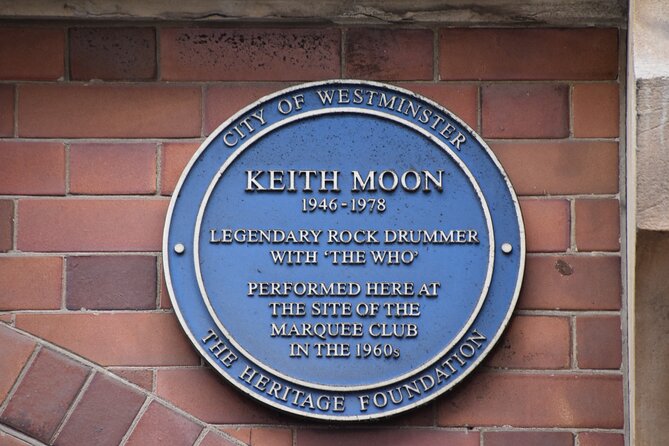
The tour moves to Wardour Street, tied to the famed Marquee Club. The Marquee is described as an important music venue open for 26 years, helping launch early careers of The Who, David Bowie, and more.
There is also a small but memorable marker: a dusty plaque to Keith Moon over the door. Those details help you notice things you would otherwise walk past, and they add personality to the walk.
Time is about 5 minutes. You get the core story fast, and you keep momentum.
Sounds of the Universe, record shopping with the Rolling Stones in the backstory
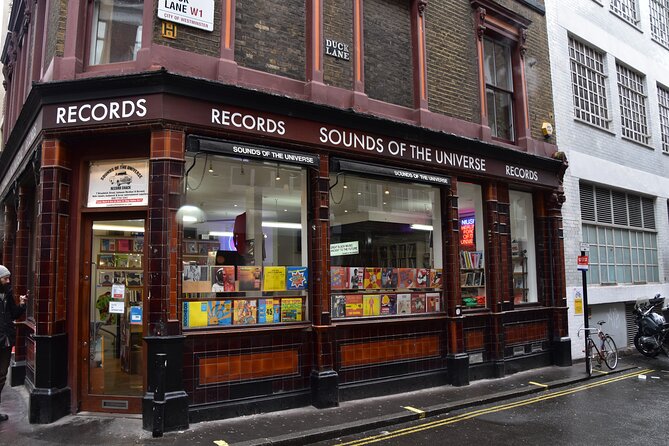
Next, you visit Sounds Of The Universe, a record shop that occupies the site of the old Bricklayers Arms pub. The tour explains that the pub is where the Rolling Stones had their very first rehearsal.
You get about 15 minutes here. That longer stop matters because it gives you a chance to browse, not just stare at a doorway. Even if you buy nothing, it is a fun moment to step into record-store culture while staying anchored to the music origin story.
The Ship in Soho and how lost licenses changed the vibe
At The Ship in Soho, the tour tells a practical music-business story. When the Marquee lost its alcohol licence, music fans chose to drink at The Ship, and the singers and musicians followed.
The guide points out the kind of rock legend antics you might imagine when the party migrates. Even if you do not care about the gossip, the real value is understanding how venue rules can reshape scenes.
Time outside is about 10 minutes. It is short, but it paints a clear picture.
Trident Studios plaque, a studio that worked from 1968 to 1981
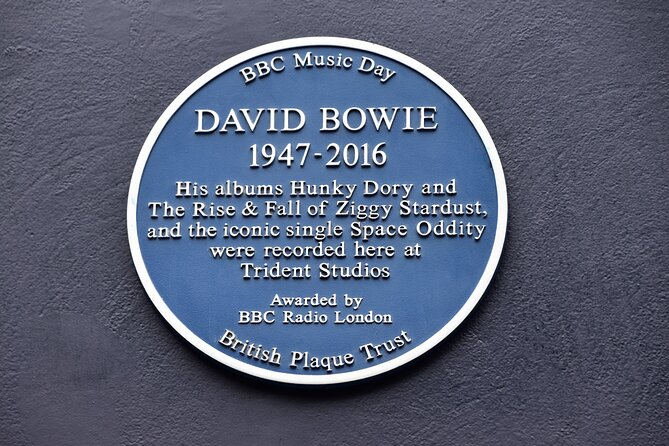
In a tiny alley round the corner from The Ship, you see the Trident Studios plaque. The tour highlights that Trident Studios was between 1968 and 1981 and was used by top artists.
The list in the tour includes David Bowie, The Beatles, Queen, Elton John, Rolling Stones, and Black Sabbath. That is a strong concentration of power, and even a plaque stop feels meaningful when you know what was recorded nearby.
Time is about 5 minutes. Think quick marker, big impact.
Soho Square and McCartney Publishing, when music becomes money
At Soho Square, you visit MPL – McCartney Publishing Limited, tied to Paul McCartney’s music empire. The tour notes he was revealed to be a billionaire partly because of music publishing, and it uses the location to explain the business side of Beatles success.
This stop is great for curious minds. If you only think of bands as touring and songwriting, this adds the layer that keeps songs earning long after the last encore.
Time is about 5 minutes. If you like industry context, pay close attention because the explanation is where the value is.
Ronnie Scott’s Jazz Club and the surprise moments you do not expect
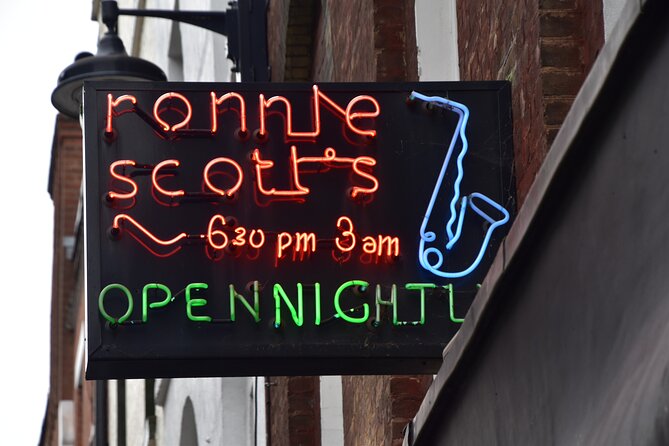
At Ronnie Scott’s Jazz Club, the tour covers the move to Frith Street in 1965. The guide name-drops major players, and the stop includes a shocking mention of a surprise performance by Lady GaGa, along with the final performance of Jimi Hendrix.
Important practical point: admission to Ronnie Scott’s is not included. That means you are focused on the outside story, not an inside concert experience.
Time is about 5 minutes. It is a quick stop, but the contrast between jazz branding and rock stars stepping in makes it memorable.
ODEON Covent Garden and Brian Epstein’s theater gamble
At ODEON Covent Garden, the tour connects the Beatles manager Brian Epstein to the story. It explains that he decided to buy a theatre in 1966, and it covers what he did with it and which legendary artists played there.
It also frames this as a path toward reviving 60s energy later. Even if you do not plan to go inside, hearing why the theatre matters adds a real-world layer to the music brand story.
Admission is not included for this stop. So plan for this to be a narrative stop, not a ticketed event.
Time is about 10 minutes.
Foyles Bookshop and the Sex Pistols first gig connection
At Foyles Bookshop, the tour shifts from polished pop legacy to punk-era spark. It describes the bookshop as once a university building, and it links it to the Sex Pistols’ first gig.
The tour also mentions Malcolm McLaren, including that he would only book the band for student gigs early on. It adds a practical detail: Steve Jones getting their guitars from there.
This stop is about 10 minutes. I like it because it does not treat punk like a rumor, it treats it as a place-based story tied to real people and early constraints.
Denmark Street, the final stop where British pop takes practical shape
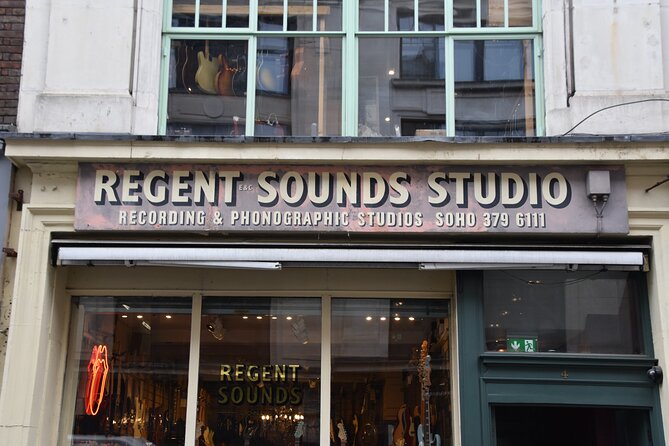
The tour finishes at Denmark Street. This street is described as arguably the most important location for British 20th-century music, and the tour connects it to multiple turning points.
You hear about the Beatles’ first music publishing deal being struck there. You also hear that the Rolling Stones recorded their first album there, and that the Sex Pistols crashed, rehearsed, and that John Lydon drew rude pictures on the wall, with the implication that they may still be visible.
The tour also ties the street to early days of Elton John and David Bowie. This ending works because it pulls you from iconic venues into the creative supply chain, guitar shops and music-business deals.
Time is about 10 minutes. You end with that street-level feeling, which makes the whole route click.
What your 3 hours look like on the ground
This is a half-day walking tour with multiple stops that range from about 5 to 15 minutes each. That means your guide has to pack in key points fast, and you should do the same by keeping your questions ready for the moments that fit.
Most stops are labeled admission ticket free, which is a big deal for value. You get context without paying entry fees at every stop.
Two stops note admission not included. If you were hoping for an inside look at Ronnie Scott’s or ODEON Covent Garden during the tour, you will want to plan that separately.
Also, you should have a moderate physical fitness level since it is a walking route through Central London. It is near public transportation, which is helpful if you need to switch plans.
Who this tour is best for
If you love rock and roll and you like getting stories tied to exact locations, you will enjoy this tour style a lot. It is also a strong fit for groups, because private means you do not have to share your attention with strangers.
It is especially good for people who like both music and the surrounding culture, fashion, radio, publishing, and studio work. The route covers all of that, from BBC airwave politics to music publishing money.
If you want long indoor time or a heavy museum feel, you might find it too “walk and learn.” This tour is built to move.
Should you book this private rock ‘n’ roll tour of Central London?
Yes, if you want a guided walk that treats rock music like a city map, not just a playlist. The value is strongest for group sizes closer to the up to 15 cap, since you are paying per group and most stops are ticket-free.
Skip it or pair it with extra plans if your main goal is inside access to specific venues. This route is more about the connections, the stories, and the photo-able locations than it is about sitting through ticketed experiences.
If your group includes a mix of Beatles, Bowie, Stones, punk, and industry-curious fans, this is a rare format where everyone can find a reason to lean in.
FAQ
How long is the private rock ‘n’ roll tour?
It runs about 3 hours. You should have a moderate physical fitness level, since it involves walking between stops.
What does it cost, and how many people can be in the group?
The price is $205.67 per group, up to 15 people. This is a private tour, so only your group participates.
Where do we meet and where does the tour end?
You start outside the London Palladium at 8 Argyll St, London W1F 7TF. The tour ends on Denmark Street in London WC2H.
Is the tour private?
Yes. It is listed as a private activity, and only your group will participate.
What language is the tour offered in?
The tour is offered in English.
Are tickets included for Ronnie Scott’s Jazz Club and ODEON Covent Garden?
Admission is not included for Ronnie Scott’s Jazz Club and ODEON Covent Garden. Other stops on the route are listed as ticket-free.
What is the cancellation policy?
Free cancellation is available. You can cancel up to 24 hours in advance for a full refund, and changes made less than 24 hours before the start time are not accepted.
Latest to join the queue for London

Private, compared.
The Premier Classic London: Private 4-Hour Tour in a Black Cab
Read our review →
Stonehenge Inner Circle Private Tour from London with Bath Visit
Read our review →

Private London Arrival Transfer – Airport to Hotel / Accommodation
Read our review →
Private 3-Hour Guided Beatles Classic Tour of Liverpool
Read our review →
British Museum London Guided Tour Semi-Private 8ppl Max
Read our review →