
Reviewed · MUSEUMS
Private Highlights Tour of the British Museum
Time at the British Museum can vanish fast. This private highlights tour turns the chaos into a clear route, and it’s designed to fit what you actually care about, with English-speaking guidance and a custom focus from the start.
Two things I really like: the guide builds the visit around your interests right at the beginning, and the storytelling does not shy away from the tougher stuff behind famous objects, not just the easy trivia. You also get a professional guide with advanced degrees in Cultural Heritage and Museum Studies.
One thing to keep in mind is the time limit. In about 3 hours, you will see an impressive number of headline pieces, but it moves at a museum-highlights pace, so you will want to tell your guide your true must-sees.
In This Review
- Key highlights to look for on this tour
- A private 3-hour British Museum tour that actually matches your interests
- How much it costs, and why the per-person value can be surprisingly fair
- Where you meet, how the tour flows, and what to do before you go
- What the expert guide brings: clarity, context, and hard questions
- Entering the British Museum highlights, one iconic object at a time
- Rosetta Stone: how language can change everything
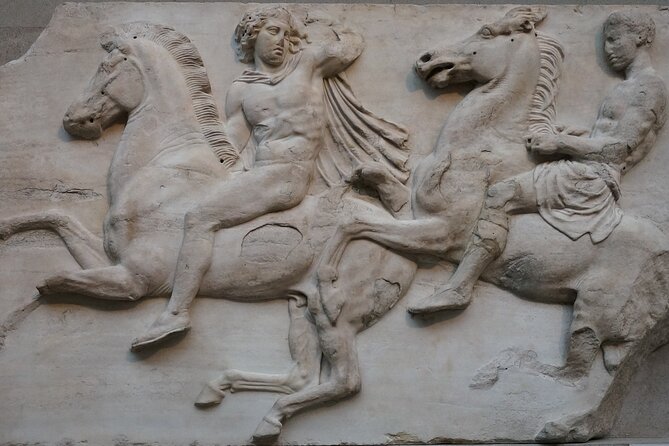
- Parthenon Sculptures (Elgin Marbles): art plus ownership debates
- Lewis Chessmen: when games turn into history
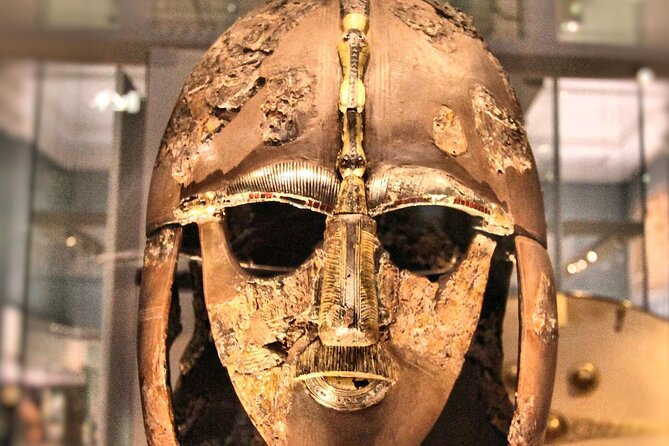
- Sutton Hoo: prestige, power, and the clues left behind
- Vindolanda Tablets: writing that feels shockingly human
- Standard of Ur: symbolism and state power
- Egyptian Mummies and Ramesses II: belief, authority, and spectacle
- Assyrian Guards: a face-to-face reminder of force
- Aztec Double-Headed Serpent: symbolism that travels through time
- Portland Vase: glass art that survived and still fascinates
- Statue of Tara: devotion, representation, and meaning
- Ife Head: portraiture and identity
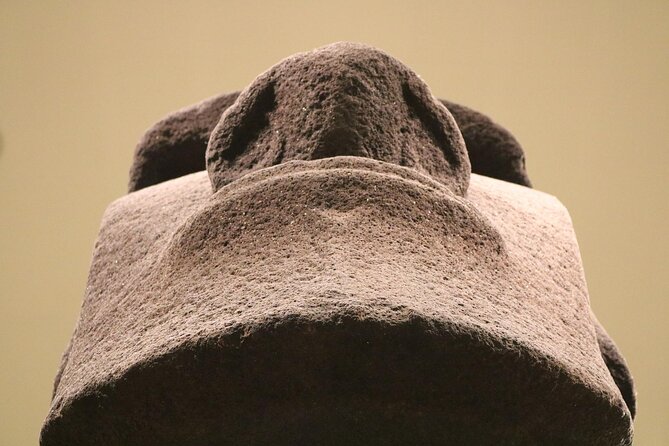
- Hoa Hakananai’a: cultural context for a famous face
- FeeJee Mermaid: wonder, fabrication, and why people believed
- Why the lesser-known entrance and mobile ticket matter for your day
- Who this tour suits best, and who might want a different plan
- Should you book the Private Highlights Tour of the British Museum?
- FAQ
- How long is the Private Highlights Tour of the British Museum?
- What is the group size for this private tour?
- What language is the tour offered in?
- Is museum admission included?
- Where do we meet, and where does the tour end?
- Is the tour customized to my interests?
- Can I use a mobile ticket?
- Can I cancel for a full refund?
Key highlights to look for on this tour
- A bespoke route: the guide starts by asking what you want to focus on and adjusts on the fly
- Serious history, explained clearly: the tour covers controversy and context without getting lost in jargon
- Big-name objects, with meaning: you’ll hit iconic items like the Rosetta Stone and Parthenon Sculptures (Elgin Marbles)
- Works for mixed ages: Jessica’s approach has been especially strong with groups that include teenagers
- Faster entry through a lesser-known route: included to help your visit start smoothly
- Designed for up to 10: private group format, so you can actually ask questions
A private 3-hour British Museum tour that actually matches your interests
A museum like the British Museum can feel like a maze. This experience is built to solve that problem. Instead of you wandering, you and your private group get guided time through the museum’s most famous and most talked-about works.
What makes it especially useful is the way the guide starts. At the start of the tour, they ask about your interests, then they shape the route and the explanations around that. If you care about writing systems, you’ll get pulled toward things like the tablets and stone inscriptions. If you care about empire and power, the objects tied to rulers and conquests come forward.
This matters because the British Museum is massive. In a normal visit, it’s easy to skim the highlights without learning how they connect. Here, the guide helps you link objects to bigger themes, like technology, belief systems, empire, and what happens when objects travel far from their original settings.
I also appreciate that the guide does not treat controversy like a side dish. You’ll get balanced context around items where history is messy. That approach is one reason the tour tends to land well for people who want more than surface-level museum labels.
More free halls and paid exhibitions:
How much it costs, and why the per-person value can be surprisingly fair
The price is $468.78 per group, up to 10 people, and the tour lasts about 3 hours. That’s the key value math: the cost is per group, not per person.
If you fill the group size at 10 people, you’re looking at roughly $47 per person (before any personal spending like drinks). If you bring fewer people, the per-person number rises, but you still get a private, expert-led route plus included British Museum entry through a lesser-known entrance.
The “admission ticket free” detail is important. With a major museum, entry can be a line-item you forget to budget. Here, that part is handled, which makes planning easier.
So the value question comes down to this: do you have enough people (or enough determination) to make a private route worth it? If you’re a couple, the price may feel steep compared with a standard group tour. If you’re a family or small circle of friends, it can feel like a smart way to buy time and focus instead of just buying entry.
Where you meet, how the tour flows, and what to do before you go
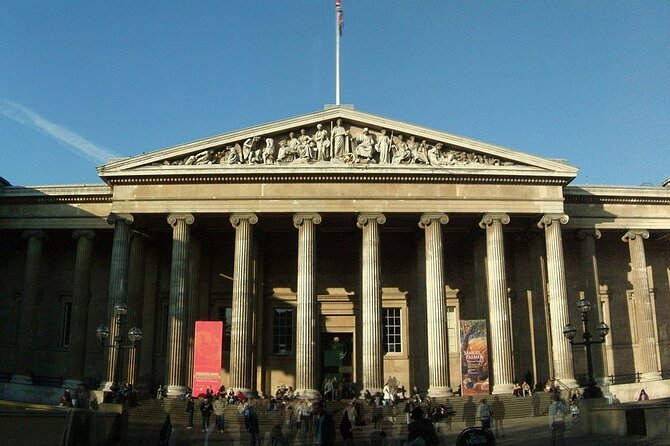
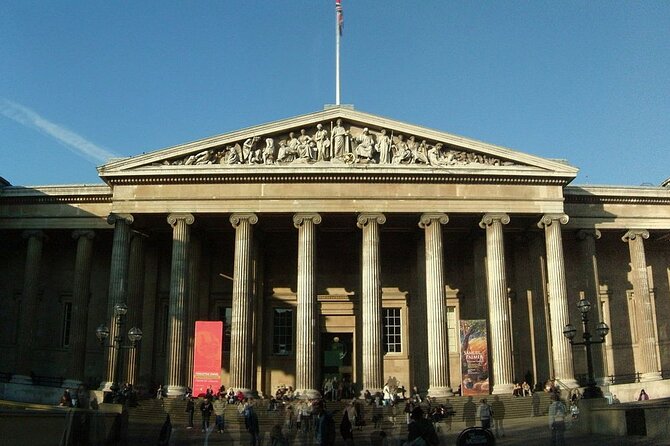
You start at Montague Place, Montague Pl, London, UK. The tour finishes inside the museum at The British Museum, Great Russell St, London WC1B 3DG, UK. A mobile ticket is provided, and it’s offered in English.
That “finish inside” detail matters because you’re not wandering back outside to end your day. You can keep the museum rolling after the tour, if you want, with fewer logistics headaches.
A practical tip: before you meet, make a tiny list for your guide, even if it’s just three bullets. One “must-see,” one “curiosity,” and one “topic.” Maybe your must-see is the Rosetta Stone. Your curiosity might be an artifact that looks strange, like the FeeJee Mermaid. Your topic might be written languages or ancient rulers.
That tiny list helps the guide do what this tour is built to do, tailoring the walk and the explanations to you.
What the expert guide brings: clarity, context, and hard questions
The best part of this kind of tour is the human layer. The guide is described as a professional with advanced degrees in Cultural Heritage and Museum Studies. That usually translates to explanations that are accurate, but also structured, and ready for questions.
The reviews also highlight how strong the guide’s engagement can be. Jessica, for example, has been noted for keeping a group of 10 families involved, including teenagers. That is a real skill. Teenagers tend to tune out lectures, so if they stay with it, you know the storytelling is built in a way that keeps people thinking.
Another big plus is how controversy gets handled. You’ll hear context behind items that people argue about. You’ll also get help connecting those objects to the broader “how did this get here?” story, instead of treating the museum as a neutral storage room.
For you, that means you can look at something famous and leave with a clearer mental picture, including what is known, what is debated, and why people care.
Entering the British Museum highlights, one iconic object at a time
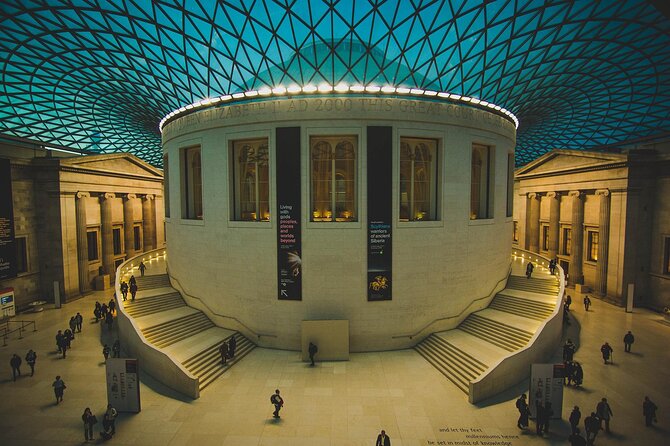
This tour stays anchored in the British Museum, moving through major highlights chosen to cover many cultures and time periods. The route is not just a checklist. The guide uses these objects to show how different civilizations recorded knowledge, expressed power, built art, and shaped belief.
Here’s what you can expect to see, and why each one matters.
Also on in London, no fuss
- Stonehenge, Windsor Castle, and Bath from London★ 4.5 · 18,662 reviews
- London Big Bus Hop-On Hop-Off Tour with Optional River Cruise★ 3.5 · 10,803 reviews
- London Small Group Tour of Historical Pubs★ 5.0 · 10,422 reviews
- Stonehenge, Windsor Castle and Bath with Pub Lunch in Lacock★ 4.5 · 7,402 reviews
Rosetta Stone: how language can change everything
The Rosetta Stone is the kind of object that instantly makes people sit up. Even if you know the basics, the guide’s job is to connect it to the bigger idea: writing systems and translation are bridges across time.
You’ll get help understanding why this stone became such a turning point. The value here is not just the fact of it, it’s the reason it’s a gateway object for decoding and cultural contact.
Practical note: if you’re the type who likes to read labels, this is a spot where the guide’s explanation can save you from getting lost in dates and technical terms.
Parthenon Sculptures (Elgin Marbles): art plus ownership debates
The Parthenon Sculptures, often called the Elgin Marbles, are famous for two reasons. First, they’re among the most recognized masterpieces of classical art. Second, they are tied to long-running debates about removal and cultural ownership.
This is a strong stop for visitors who want the story beyond beauty. The guide can help you see how artistic merit and ethical questions overlap, and why people still argue about these pieces today.
A consideration: if you want a totally neutral, non-controversial tour, this stop may feel intense. If you want the real context, it’s exactly the right place.
Lewis Chessmen: when games turn into history
The Lewis Chessmen are a reminder that everyday objects can be extraordinary. A chess set might sound like a fun detour, but the guide will frame them as part of cultural life, skill, trade, and the movement of ideas.
This is one of those stops where you can enjoy the craftsmanship and still walk away with a richer understanding of medieval life. If you’re traveling with people who might not love ancient empires, this stop often wins them over.
Sutton Hoo: prestige, power, and the clues left behind
Sutton Hoo is one of the museum’s most compelling “what was life like?” stories. It connects objects to burial practices and status, and it helps you understand how archaeology turns fragments into evidence.
In this tour context, the value is in interpretation. You’re not just seeing famous finds. You’re getting a guide who explains what kinds of conclusions historians can and cannot draw from what survives.
Vindolanda Tablets: writing that feels shockingly human
The Vindolanda Tablets stand out because they are actual written material from a frontier setting. The guide can help you see why that matters: letters and notes bring everyday voice into an ancient world that can otherwise feel distant.
If you care about ancient communication, this is a highlight you’ll likely remember. It’s also a great stop for younger minds, because the idea of someone writing a message two thousand years ago is instantly relatable.
Standard of Ur: symbolism and state power
The Standard of Ur is small enough to feel easy to miss on your own. With a guide, it becomes a tool to understand symbolism and early state power.
Expect explanations of what the imagery might represent and why rulers cared about display. It’s the kind of object that shows art can function like messaging.
Egyptian Mummies and Ramesses II: belief, authority, and spectacle
You’ll see Egyptian mummies and a figure tied to Ramesses II. Together, these help you connect belief systems with politics.
Mummies are not just bodies in museum cases. With the right context, they become stories about ritual, status, and how societies prepared for ideas about the afterlife.
Ramesses II helps you connect Egyptian power to art, monuments, and historical memory. It’s a good stop if you want to understand how rulers built legacies using images and objects.
Possible drawback to plan around: Egypt can take emotional energy. If you’re easily unsettled by human remains, give yourself a minute. The guide can usually frame things in a respectful way and help you pace the visit.
Assyrian Guards: a face-to-face reminder of force
The Assyrian guards bring a different flavor of history, one tied to protection, control, and authority. These sculptures often feel intense because they are meant to look commanding.
The guide can help you read the purpose behind the style. Instead of only admiring the craft, you get the why: how power was performed through images.
Aztec Double-Headed Serpent: symbolism that travels through time
The Aztec double-headed serpent is a reminder that meaning can be layered. The guide can explain how symbolism works in cultural systems, and why animals, myth, and ritual are part of how societies explain the world.
If you like cultural interpretation, this stop usually lands well. It’s not just “an ancient object.” It’s a message encoded in imagery.
Portland Vase: glass art that survived and still fascinates
The Portland Vase is a visual treat. It’s also a lesson in why certain objects last, not just because of age, but because of craft and historical attention over time.
The guide’s context helps you notice details you might otherwise miss. If you’re one of those people who like objects you can keep looking at, this is a satisfying pause.
Statue of Tara: devotion, representation, and meaning
The statue of Tara brings the tour beyond purely Western timelines and into belief-driven art. Tara matters to many traditions as a figure associated with compassion and spirituality, and the guide can explain why the representation is significant.
This is a good stop for visitors who want the museum to feel global, not just European-centered. It also gives you contrast with the empire-themed pieces.
Ife Head: portraiture and identity
The Ife head is known for its portrait-like presence. The guide can help you understand how art can communicate identity, status, and ideals of representation.
This stop is also useful if you’ve had trouble connecting African art to the “museum narrative” you might see in other places. Here, you get direct help building those connections.
Hoa Hakananai’a: cultural context for a famous face
Hoa Hakananai’a is one of those objects that triggers immediate curiosity because of its name and appearance. The guide can help you connect it to its cultural origin and to the wider story of objects far from home.
This is another good stop for anyone who wants to understand how museum display shapes perception.
FeeJee Mermaid: wonder, fabrication, and why people believed
The FeeJee Mermaid is the fun and unsettling wildcard on the list. The guide can frame it so it becomes more than a creepy curiosity.
What you’re looking for here is the human side of misinformation and spectacle. You’ll learn how the idea of a strange creature can spread, how people use wonder as entertainment, and why museums end up with objects made for shock.
If you want a laugh later, this is a likely candidate. If you want a lesson on belief and authenticity, it delivers that too.
Why the lesser-known entrance and mobile ticket matter for your day
A major museum visit has friction, and this tour is designed to reduce it. You get free entry through a lesser-known entrance, plus a mobile ticket.
That combination usually means less time stuck in the busiest entry areas and more time where it counts, inside the galleries with your guide.
It also makes the day feel smoother for groups with different energy levels. When someone in your group just wants to see the highlights without delay, this approach helps.
Who this tour suits best, and who might want a different plan
This is a great fit if you:
- love history but don’t want to spend hours planning your own route
- want a guide who can handle controversial topics with balance
- travel with teenagers or mixed-age groups, and you want explanations that keep attention
- are visiting London for a short time and want the British Museum without the overwhelm
It might be less ideal if you:
- want ultra-deep study of one theme for the full 3-hour window
- are planning to linger for long photo sessions in every room, with no pacing
- prefer a quiet museum experience with minimal talking
The tradeoff is simple. You get focus and context, but not unlimited wandering time.
Should you book the Private Highlights Tour of the British Museum?
Book it if you want a guided hit list with brains behind it. The private group setup, the expert guide, and the fact that the route gets adjusted to your interests makes this a strong value for small groups. It’s also a smart way to experience the British Museum without spending your day lost between rooms.
Skip it if your goal is to quietly self-tour and soak up details without conversation. In that case, you might prefer a general entry ticket plus your own planning.
My take: if your group has even a few people who care about stories, not just objects, this tour is a very practical way to get the most out of the British Museum in limited time.
FAQ
How long is the Private Highlights Tour of the British Museum?
The tour lasts about 3 hours.
What is the group size for this private tour?
It’s a private tour for your group, with pricing for groups up to 10 people.
What language is the tour offered in?
The tour is offered in English.
Is museum admission included?
Yes. Admission is free as part of the experience.
Where do we meet, and where does the tour end?
You start at Montague Pl, London, UK, and the tour ends inside the British Museum at Great Russell St, London WC1B 3DG, UK.
Is the tour customized to my interests?
Yes. The guide asks about your interests at the beginning and can craft the focus around them.
Can I use a mobile ticket?
Yes. A mobile ticket is included.
Can I cancel for a full refund?
Yes. You can cancel up to 24 hours in advance for a full refund.
Latest to join the queue for London





Museums, compared.

Tower of London and Crown Jewels Exhibition Ticket
Read our review →

Official tickets: Moco Modern & Contemporary Art Museum
Read our review →
British Museum London Guided Tour Semi-Private 8ppl Max
Read our review →
The British Museum London – Exclusive Guided Museum Tour
Read our review →


Skip the Line: Liverpool Beatles Museum – The perfect tribute to the Beatles
Read our review →Browse the lists this tour appears in