
Reviewed · MUSEUMS
Paradox Museum London Admission Ticket
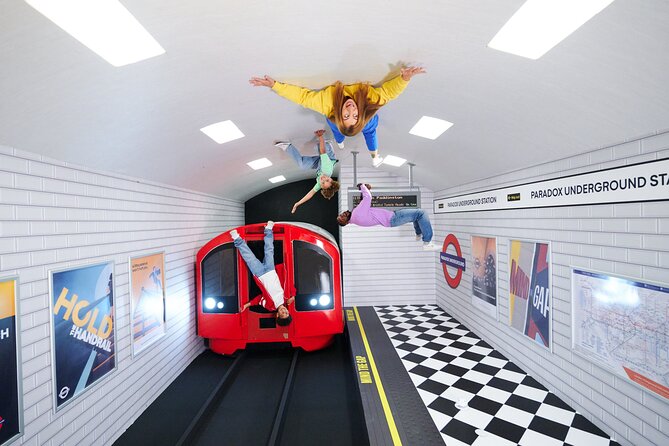
London’s illusions turn your camera into a toy. Paradox Museum London is built for that moment when a photo looks normal until you stop and realize your brain is being played. You’ll move through the Camouflage Room, tackle the Paradox Tunnel, and test your sense of direction in the Wizard Room and Paradox Sofa setup.
What I like most is how the experience is designed around quick, playful photo stops, not long lectures. I also like that you can prebook online for a time slot, which helps you avoid wasting time in a city where every minute counts.
One thing to consider is value and pacing. Several parts can feel short, some activities may require extra on-site add-ons, and a few exhibits may be out of order when you arrive.
In This Review
- Key points before you go
- The photo-first format that makes Paradox Museum feel worth your ticket
- Tickets, time slots, and how to plan the 1.5 hour visit
- Entering the Camouflage Room: how to get better shots instead of just quick snaps
- The Paradox Tunnel: timing your steps when depth tricks you
- Wizard Room hallways and the Paradox Sofa: where the brain needs a minute
- Zero Gravity Room upgrade: when it’s worth the add-on
- How long it takes, and what to do if you finish fast
- Price and value at $34.39 for general admission
- Who should book Paradox Museum London
- Quick practical tips so you get more fun per minute
- Should you book Paradox Museum London?
- FAQ
- How long is Paradox Museum London?
- Is a mobile ticket included?
- What is included in the admission ticket?
- Is the Zero Gravity Room included?
- Do I choose a time slot?
- What is the cancellation policy?
- Is the museum near public transportation?
Key points before you go
- Mobile ticket means fewer steps at check-in if you keep your phone charged.
- About 1 hour 30 minutes is the target length, but it can run shorter if you move fast or the place is one floor.
- Photo-first rooms like Camouflage and the Sofa make it easy to get lots of fun shots.
- Optional Zero Gravity upgrade is sold on site, subject to availability.
- Crowds happen, so going at your chosen time matters.
The photo-first format that makes Paradox Museum feel worth your ticket
Paradox Museum London is one of those experiences where the main product is surprise. You’re not waiting for a guided lecture. You’re walking into themed spaces that mess with scale, depth, and perspective, then prompting you to try it again from a slightly different angle.
That matters because London can be expensive, and time is your real currency. At $34.39 for general admission, you want a solid stretch of hands-on fun rather than a quick walk-through. The good news is the rooms are set up so you can keep moving and keep experimenting, which is why people often say it works for both kids and adults.
I also appreciate that it’s straightforward: you’re there to be amused, to laugh, and to leave with pictures you can share. If you’re traveling with a camera, even a basic one on your phone, this kind of museum is made for that.
The catch is that the museum is about 1 floor, so if you sprint through and ignore some spots, the time can feel tight. That’s where a little strategy helps, and I’ll show you how to get more from the same visit.
More free halls and paid exhibitions:
Tickets, time slots, and how to plan the 1.5 hour visit
Paradox Museum London runs on scheduled time slots, and that’s a real advantage. You’re not trying to guess the best moment. You pick a slot when you book, and then you show up at the right time.
The museum uses a mobile ticket, and you’ll get confirmation at booking time. I recommend treating your phone like an essential travel document here. Keep your ticket accessible, and bring a power bank if you’re using maps and photos back-to-back.
Booking timing also helps your day. On average, this is booked about 11 days in advance, which suggests popular times can fill. If you’re visiting in school holidays or on a weekend, I’d aim to lock in your entry sooner rather than later.
In terms of pacing, plan for about 1 hour 30 minutes as a comfortable target. If you’re traveling with kids, give yourself room to slow down. If you’re going solo or with adults who move quickly, you’ll likely finish faster, but that doesn’t mean you should rush. Take a minute, reset, and try the same illusion from another spot.
Entering the Camouflage Room: how to get better shots instead of just quick snaps
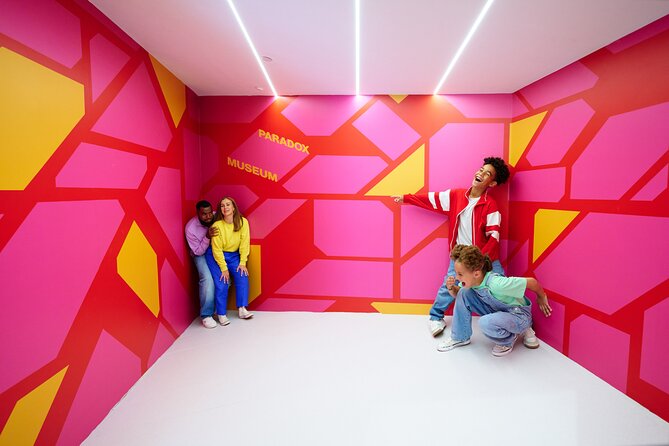
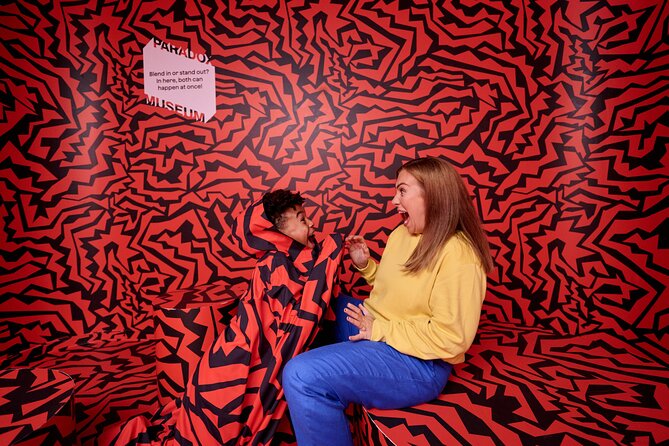
The Camouflage Room is the kind of challenge that rewards you for paying attention. You’re essentially training your eye to spot what the illusion is hiding and why your brain wants to see something else. The payoff is that it’s interactive without being complicated.
For photography, this room is ideal because it naturally encourages different angles. A quick snap might look okay. But if you pause and reframe, you’ll usually get a funnier, clearer result. Think of it like portrait shooting in an odd studio: the subject stays your body, but your position changes the whole effect.
If you want a smoother experience, do this:
- Arrive ready to experiment, not just to pose once.
- Take one photo, step aside, and then try again from a nearby spot.
- Watch the floor and the edges of the scene. That’s often where the illusion cues hide.
I also like that Camouflage feels like a game, not a test. You’re not worried about doing it wrong. You’re just playing with what your eyes think is true.
Potential drawback to keep in mind: if the museum is crowded, popular photo moments can become a queue. Choosing a time slot that fits your schedule helps, and if you feel stuck waiting, shift to another part of the experience for a few minutes, then circle back.
The Paradox Tunnel: timing your steps when depth tricks you
Next up is the Paradox Tunnel, where the challenge is simple to describe and tricky to execute. You’re trying to walk straight through a space designed to mess with your sense of alignment and distance.
This is one of the rooms that tends to generate big laughs, because people naturally correct themselves mid-step. The result is often a photo or video that looks great later, even if it feels slightly chaotic in the moment.
Practical tip: don’t force it. If the space makes you feel pulled off course, slow down. A stable, slow attempt often gives you more control over your footing and your camera framing. Also, if you’re filming, keep the camera steady instead of chasing the motion. The illusion works regardless, and your footage will look cleaner if you stop flailing around.
If you’re visiting with kids, this tunnel is a good choice because it’s physical enough to hold attention without being unsafe or requiring complicated rules. Keep an eye on little ones, but you’re not dealing with anything high-risk. It’s more about perception than danger.
One more value note: tunnels and hallways are often short spaces. If you’re trying to get the most out of your time, treat the tunnel like a round-trip experiment. Try once, then step out and do it again with a different starting position. That helps you stretch the same illusion into a mini routine, without increasing cost.
Wizard Room hallways and the Paradox Sofa: where the brain needs a minute
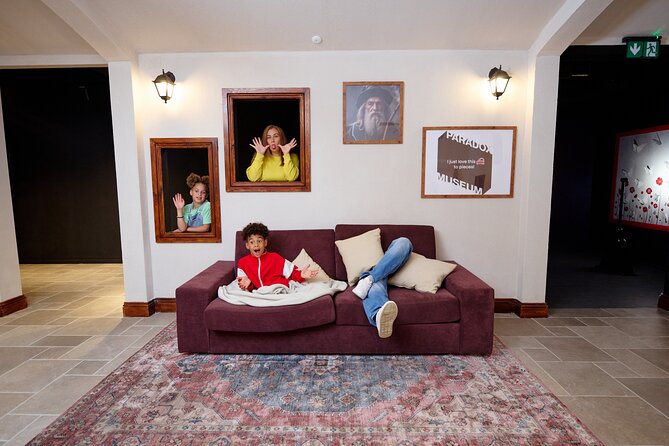
The Wizard Room is where the museum leans into trick corridors and mind-bending furniture. You move through hallway sections that are designed to make navigation feel off, and you’ll also encounter the Paradox Sofa, which encourages you to interact and reinterpret what you’re seeing.
I like this combination because it adds variety. The earlier parts challenge your eye. This part challenges your motion. When you’re moving through tricky hallways, you’re thinking about your steps, your framing, and your next photo at the same time.
That’s also why it can be easy to rush. If you speed through only to grab one photo, you might not get the full effect. Give yourself one extra minute. Walk the hallway slowly once. Then try your camera position again.
For photography, the Paradox Sofa is often a great anchor. Furniture gives you a stable reference point for perspective. That means your photos can look fun even if you’re not a professional photographer. You just need consistent framing and a quick pose.
Possible drawback: if certain attractions are down or limited, you might feel like some parts of the experience are incomplete. And because some activities may require additional access like wristbands, you could find that the best moments have a small extra step. It’s worth going in with the mindset that the core ticket covers admission, but the optional experiences may add costs.
Also on in London, no fuss
- Stonehenge, Windsor Castle, and Bath from London★ 4.5 · 18,662 reviews
- London Big Bus Hop-On Hop-Off Tour with Optional River Cruise★ 3.5 · 10,803 reviews
- London Small Group Tour of Historical Pubs★ 5.0 · 10,422 reviews
- Stonehenge, Windsor Castle and Bath with Pub Lunch in Lacock★ 4.5 · 7,402 reviews
Zero Gravity Room upgrade: when it’s worth the add-on
The museum offers an on-site upgrade to the Zero Gravity Room, and it’s sold at the museum subject to availability. That phrase matters. If you want it, don’t assume it will be offered when you arrive. Treat it like a bonus, not the plan.
So is it worth paying extra? Here’s the fair way to decide:
- If you love the idea of a more dramatic illusion experience, the add-on can be a satisfying splurge.
- If you’re already feeling cost-sensitive, stick with the general admission and focus on the main rooms you’ve already paid for.
- If the museum is busy, waiting for an additional session may cut into your time. Factor that in.
What I like about an upgrade option is control. You’re not locked into a higher ticket price. You can assess the energy of the museum once you’re inside, then decide whether you want to spend more.
If you do upgrade, plan to take your photos there too. Zero Gravity type experiences are often visual by nature, and you’ll likely want to build that into your pacing so you don’t feel rushed elsewhere.
How long it takes, and what to do if you finish fast
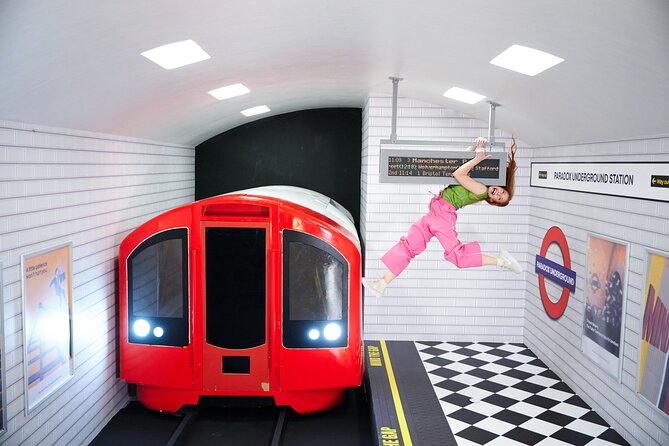
Duration is listed at about 1 hour 30 minutes. In real life, that can be shorter if you move efficiently, especially since everything is largely on one floor. That’s not necessarily bad, but it changes the value conversation.
If you end up around 30 minutes on the low end, it can feel like too little for the price. The fix is simple: don’t treat it as a quick photo stop list. Treat it as an experiment course.
Do this to stretch the experience:
- Pick two rooms to repeat. One repetition is usually enough to get noticeably better results.
- Use small changes in position. Step left, step forward, then shoot again.
- Take breaks for crowd management. If you’re waiting, don’t burn time staring. Move to another room, then return when it clears.
Also be aware that some attractions might be out of order at times. That can make your visit feel incomplete if your favorite part is unavailable. If that happens, be flexible. Take more time with the rooms that are running and accept that an illusion museum is more “interactive” than “museum-standard.”
If you’re combining this with other London plans, build in a buffer. It’s a good activity on a rain day, but you still want extra time for transit and snacks.
Price and value at $34.39 for general admission
At $34.39 per person, Paradox Museum London sits in the mid-price range for a ticketed attraction in London. Whether it feels like value depends on how you engage.
If you’re the type who loves puzzles, illusions, and photo opportunities, the price can feel fair. The museum’s style is compact, but it’s dense with interactive sets, and the overall timing fits neatly into a London day.
If you’re expecting a long museum experience with multiple floors, rotating exhibitions, or guided programming, the ticket might feel steep. The format is built for short attention spans and quick reactions. That’s great for fun, but it can feel skimpy if you want something that lasts.
Another value point is the possibility of extra access for certain exhibits. If wristbands or additional steps are part of the experience, you can end up spending more than you expected. Before you commit, decide whether you want to stay in the general admission lane, or whether you’re open to upgrades and add-ons like the Zero Gravity Room.
Bottom line: I think it’s priced best for people who want a 60 to 90 minute, camera-friendly activity and are not demanding a full day.
Who should book Paradox Museum London
This is a strong fit for:
- Families who want a low-pressure attraction that works for kids and adults
- Rainy-day planners who want indoor fun without complicated logistics
- Photo lovers who like the idea of illusions that create shareable results
- Small groups who can move together and take turns in photo moments
It can be less ideal if:
- You dislike crowds and short waits can stress you out
- You hate paying for add-ons after buying the base ticket
- You only want long-form sightseeing and prefer museums with deeper, multi-hour pacing
Also note that most travelers can participate, and service animals are allowed. The museum is near public transportation, which helps if you’re building a day around several spots.
Quick practical tips so you get more fun per minute
These are the small choices that can change your experience a lot.
Arrive at your time slot, not early. When you show up too soon, you can lose time hovering. When you show up on time, you can walk in and start playing right away.
Bring your charger mindset. A museum that encourages photos can drain a battery fast. Keep your phone ready, and consider a power bank if you’re taking lots of pictures.
Don’t lock your plan to one favorite room. If crowds make your first choice slow or if something is temporarily unavailable, you still want a good experience. The good news is that the museum has multiple themed sets, so you can switch tracks.
If you see a wristband or extra access step for certain activities, decide on the spot based on your budget and the wait time. You don’t want to spend your whole day deciding, but you also don’t want surprises.
And if you’re shopping for the best photo angles, move slowly and look around before you shoot. The illusion usually works best from specific positions, and those positions are often right next to where people are standing.
Should you book Paradox Museum London?
Yes, I’d book it if you want a short, fun, photo-driven indoor stop in London. The main rooms are designed to be playable, and the timing fits well into a day that already has travel time, food stops, and other sights.
I would hesitate if you are very price-sensitive, if you dislike crowds, or if you expect a longer multi-floor museum layout. At around 1 hour to 1.5 hours, the experience can feel short, and any add-ons like wristbands or the Zero Gravity Room can change your final spend.
If you’re a photographer or you’re traveling with kids, this can be a great choice. If you’re looking for quiet, slow sightseeing, you may want a different kind of attraction.
FAQ
How long is Paradox Museum London?
The museum visit runs about 1 hour 30 minutes, approximately.
Is a mobile ticket included?
Yes. The ticket is a mobile ticket.
What is included in the admission ticket?
General admission to the museum is included.
Is the Zero Gravity Room included?
The Zero Gravity Room is not included. It is available as an on-site add-on purchase, subject to availability.
Do I choose a time slot?
Yes. You can book time slots online so you do not waste time waiting.
What is the cancellation policy?
You can cancel for a full refund up to 24 hours before the experience start time. If you cancel within 24 hours of the start time, the amount you paid will not be refunded.
Is the museum near public transportation?
Yes. It is near public transportation.
Latest to join the queue for London







Museums, compared.
Tower of London and Crown Jewels Exhibition Ticket
Read our review →

Official tickets: Moco Modern & Contemporary Art Museum
Read our review →
British Museum London Guided Tour Semi-Private 8ppl Max
Read our review →
The British Museum London – Exclusive Guided Museum Tour
Read our review →

Skip the Line: Liverpool Beatles Museum – The perfect tribute to the Beatles
Read our review →Browse the lists this tour appears in