
Reviewed · MUSEUMS
National Maritime Museum Private Tour
Greenwich moves at a human pace when you have a guide. This private 3.5-hour tour puts you in the National Maritime Museum and right around a UNESCO World Heritage area, with narration that turns big dates into real people and choices. I like that it’s limited to your group, so questions do not get lost in a crowd.
You’ll also get up close to standout objects like Turner’s Battle of Trafalgar and the Nelson jacket, plus a midway coffee or tea pause at the museum cafe. One drawback to plan for: you have a set time window, so if you linger too long in one room, you might rush through the rest.
In This Review
- Key highlights to look forward to
- Starting at the Ship in a Bottle, Greenwich’s easiest first step
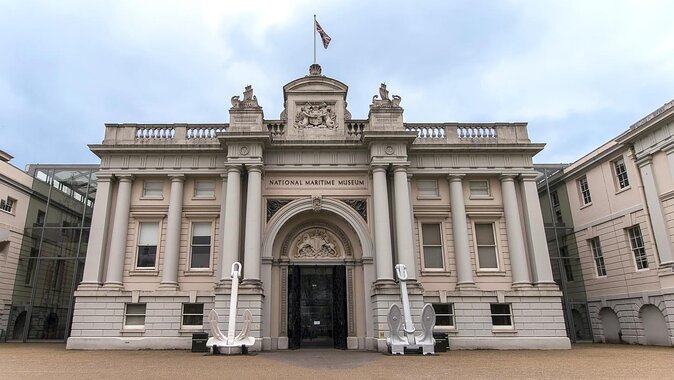
- Inside the National Maritime Museum: where the guide does the heavy lifting
- Turner’s Battle of Trafalgar: start with an image you can actually picture
- Nelson, Navy, Nation: the jacket that turns a battle into a person
- Trade gallery and East India Company: history explained in plain cause-and-effect
- Atlantic Slavery and lighthouses: hard topics, guided pacing
- Your mid-tour coffee or tea break inside the museum
- Queen’s House in 45 minutes: the Armada Portrait finish
- What makes the private format worth it (especially for families)
- The museum exhibit style: where some people feel let down
- Value check: is $237.59 per person a fair deal?
- Timing and pacing tips for a smooth 12:30 start
- Should you book this Greenwich maritime private tour?
- FAQ
- Where does the tour start and where does it end?
- How long is the National Maritime Museum private tour?
- Is this a private tour or shared with other groups?
- What is included in the tour price?
- Are food and drinks included?
- What language is the tour offered in?
Key highlights to look forward to
- Private-group pace that keeps the story flowing instead of herding you room to room
- Turner’s Battle of Trafalgar presentation near the start, built for quick context
- Nelson’s mortally wounded moment brought to life through the jacket on display
- Trade, East India Company, and the Far East explained in plain language
- Atlantic Slavery gallery that tackles England’s role directly, with firm guidance
- Queen’s House with the Armada Portrait as a focused 45-minute finale
Starting at the Ship in a Bottle, Greenwich’s easiest first step
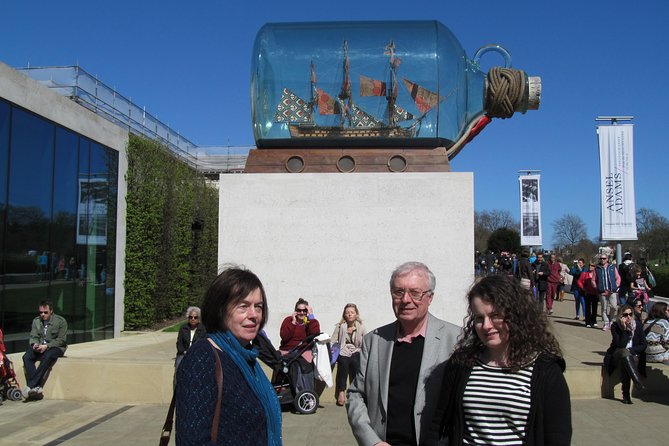
Your tour begins at the Ship in a Bottle Herbaceous Border at the southern entrance to the National Maritime Museum, the side toward the observatory. If you’re not familiar with Greenwich, that meeting point is a gift. It’s simple to find, and it gets you into the museum area fast instead of spending your best energy searching for the right gate.
Because this is a private tour, you will move as a group with a guide setting the pace. That matters here, since the museum can feel big once you’re inside. You’ll get that early, practical orientation before you head into the galleries, which helps kids and first-timers settle in quickly.
One small tip: arrive a few minutes early, even if your start time is set. Museums swallow time. If your group is even slightly delayed, it can shrink how long you want to spend with your favorite rooms later.
More free halls and paid exhibitions:
Inside the National Maritime Museum: where the guide does the heavy lifting
The National Maritime Museum is the heart of this experience, and the value comes from how you’re guided through it. Admission to the museum side of the visit is free, and you’re not just walking past displays. You’re getting the “why it mattered” behind each major stop, which turns a typical browse into a clear route.
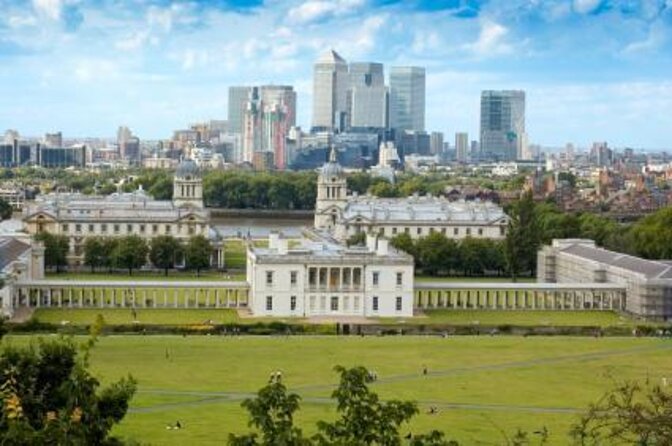
Expect a mix of art, uniforms, trade stories, and hard history. The guide’s narration helps you connect themes across rooms, like how power, ships, and navigation shaped daily life and empire. And yes, the setting sits within Greenwich’s UNESCO area, so you’re in a part of London where maritime history is not stuck behind a single wall.
A couple of reviews also call out how helpful and friendly guides can be, especially for families. If you’re traveling with kids, this is where the private format shines. You can slow down when someone gets curious, and you can skip ahead when attention flags.
Turner’s Battle of Trafalgar: start with an image you can actually picture
Right at the start, you’ll see and experience Turner’s Battle of Trafalgar, painted in the early 1820s. This is a smart opening because it gives you a visual “anchor” before you move into more technical galleries. Even if you think you are not a museum person, a major painting like this helps you understand what naval battle looked like emotionally, not just historically.
The guide can help you interpret what you’re seeing, which is key with Turner. His style rewards close looking, but it can also overwhelm if you don’t know what to focus on. With a guide, you get the small set of cues that make the whole image click.
If you like maritime art, this moment is a highlight. If you have limited time, it also works as a quick payoff early in the tour, so you still get a win even if the rest of the visit feels slower.
Nelson, Navy, Nation: the jacket that turns a battle into a person
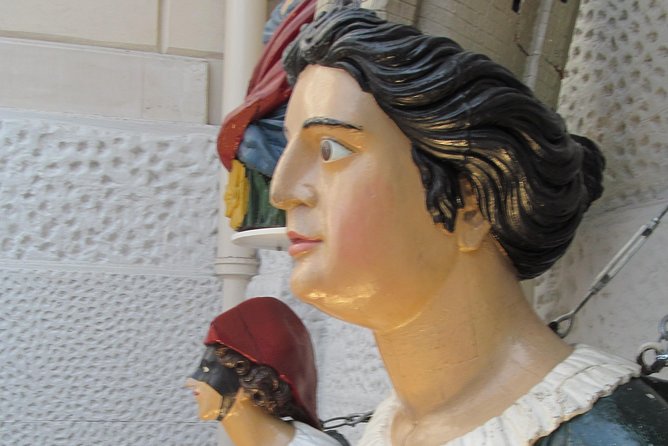
Next up is the Nelson, Navy, Nation gallery, and the emotional core comes fast. You’ll see the jacket that Nelson was wearing when he was mortally wounded aboard HMS Victory. That detail changes the room. It stops being a display about a concept and becomes a display about a moment.
This is where I think a good guide matters most. Nelson’s story is widely known, but you still need context for what you are seeing and why it is preserved. The guide’s narration helps you connect the object to the scene and the stakes, so you are not just reading labels.
For history buffs, this is the “final boss” exhibit in the best way. For families, it’s also a great conversation starter because you can ask simple questions like who made the clothing, what it means to be at sea, and how wars affect individuals.
Trade gallery and East India Company: history explained in plain cause-and-effect
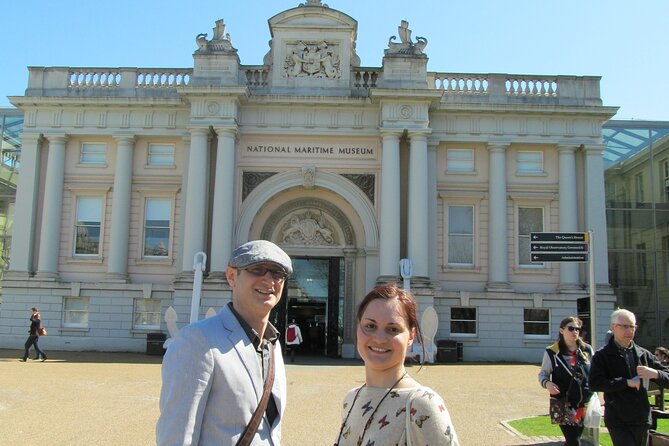
Then you’ll head to the Trade Gallery, focused on trade with the Far East and the origins connected to the East India Company. The strength here is the cause-and-effect framing. Instead of treating trade as a vague background topic, you learn how shipping routes, goods, and organizations shaped what people could buy, wear, and build.
This section is especially useful if you want maritime history beyond ships and battles. It also gives you a different lens on power, because trade connects economics, politics, and everyday life.
A practical note: if your group includes teens, this is often a strong match. One review praised interactive exhibits for a teenager, and even if your tour is narration-focused, you’ll likely find enough hooks in this gallery for younger minds to stay engaged. If attention dips, ask the guide to point out one object and explain what it reveals about the bigger story.
Also on in London, no fuss
- Stonehenge, Windsor Castle, and Bath from London★ 4.5 · 18,662 reviews
- London Big Bus Hop-On Hop-Off Tour with Optional River Cruise★ 3.5 · 10,803 reviews
- London Small Group Tour of Historical Pubs★ 5.0 · 10,422 reviews
- Stonehenge, Windsor Castle and Bath with Pub Lunch in Lacock★ 4.5 · 7,402 reviews
Atlantic Slavery and lighthouses: hard topics, guided pacing
The Atlantic Slavery gallery is brutally honest about the slave trade and England’s role in it. This is not a comfortable stop, but it is an important one, and the guide’s narration helps you move through it without getting lost or overwhelmed.
After that, you’ll also discover more about lighthouses and their history in the UK. That pairing can feel surprising at first, but it helps you see maritime history as a system. Safety, navigation, commerce, and suffering all sit in the same ocean world, and guided interpretation keeps the connection clear.
If your group has young kids, the guide can help adjust the pace. You can keep it age-appropriate without skipping the core facts. Still, I would plan emotionally for this section if the topic is sensitive for anyone in your party.
Your mid-tour coffee or tea break inside the museum
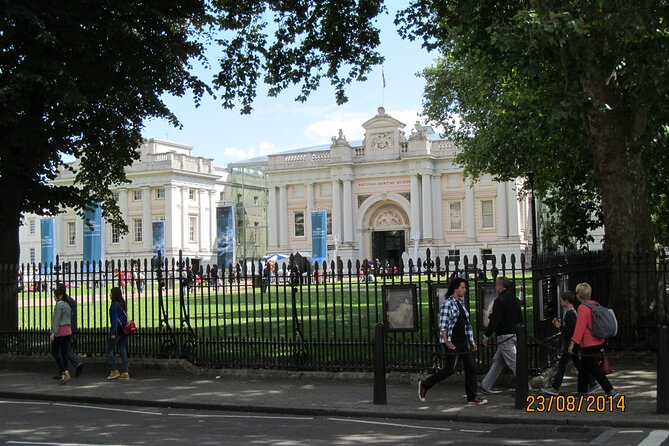
Halfway through, you’ll get the chance for a coffee or tea break at the museum cafe. Food and drinks are not included, so this is your time to pay for snacks and drinks if you want them.
One review mentions enjoying fish and chips in the cafeteria, which is a useful heads-up if you want something more substantial than a quick drink. Even if you do not go for food, stopping for a beverage can reset everyone’s energy before you tackle the heavier galleries and the Queen’s House.
I like that the break is planned into the flow. You are not hunting for a cafe mid-stress. And if you have a family group, that planned pause can make the difference between a tour that feels fun and a tour that feels like work.
Queen’s House in 45 minutes: the Armada Portrait finish
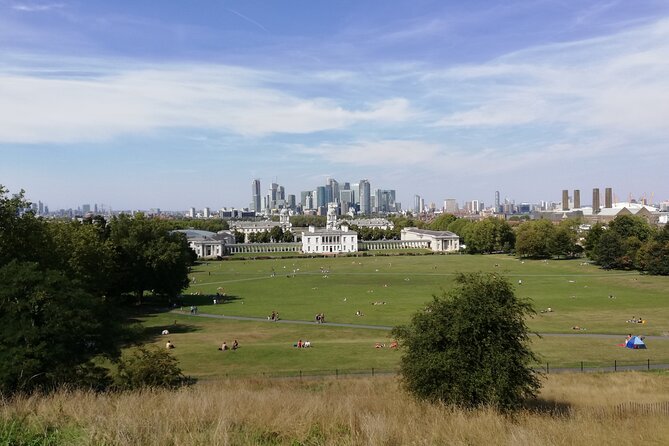
Your final stop is Queen’s House, with 45 minutes allocated and admission included. The standout is the world famous Armada Portrait of Queen Elizabeth. This is a different mood from the museum galleries, and it works well as a reset at the end.
Queen’s House also gives your group a chance to see the maritime story tied to power, image-making, and the way nations project strength. With a guide’s narration, the portrait is not just a painting behind glass. You’ll connect it to the larger theme of seafaring stakes and national identity.
In practical terms, 45 minutes is enough time to see the main artwork and absorb the atmosphere without racing. If your group tends to move fast, you can still ask a couple of focused questions and get a satisfying close.
What makes the private format worth it (especially for families)
This tour is private, limited to your group only. That sounds like a marketing line, but here it changes everything about pacing. The museum route can be broad, and the guide’s job is to make it feel structured, not overwhelming.
Families often benefit most. If you have a teenager, you’re likely to appreciate the mixture of artifacts and interactive-style engagement in the museum overall. Even when your tour focus is guided, kids and teens respond well when someone can answer their questions in the moment, instead of pointing at a label and moving on.
Two guide names show up in past experiences: Graham is praised for being helpful and full of interesting stories, and Wendy is noted for being knowledgeable on a similar Greenwich-focused route. You should not assume your guide will be either person, but it does tell you what good looks like: clear explanations, friendly service, and stories that make the objects feel alive.
Also, because this is a private tour, you can tailor your attention. Want more on Nelson? Lean that way. Curious about navigation and lighthouses? Spend a few extra minutes there. The guide can help you prioritize so you do not spend 3 hours 30 minutes bouncing around.
The museum exhibit style: where some people feel let down
Not every experience is perfect. Some visitors describe the museum as visually less exciting, more like glass cabinets and rooms rather than big sensory displays. If you are expecting heavy audio-visual moments and lots of hands-on tech, you might find parts of the museum feel more traditional than you hoped.
That criticism is useful because it changes how you should approach the visit. If you treat the museum like a photo scavenger hunt, you might miss what it’s best at. Instead, treat it like a guided story walk. Let the guide point out what to notice in each room, then read the labels only where they add a detail you did not catch from the narration.
There’s also a comparison made to another maritime museum that some people found more engaging visually. You do not need to go down that comparison rabbit hole. Just go in with the right expectations, and you’ll probably enjoy the solid artifact focus more.
Value check: is $237.59 per person a fair deal?
Let’s talk value without hand-waving. The price is $237.59 per person, and the duration is about 3 hours 30 minutes. What you get for that is a local guide, a private group experience, and included admission for Queen’s House. The museum side of the visit also comes with free admission.
That means you are paying primarily for time and guidance, not for ticket costs. If you were to visit on your own, you would still see the galleries, but you would probably spend more time figuring out what matters, and less time understanding the object connections.
To decide if this is worth it for you, consider how you travel:
- If you love learning but hate reading every label, a guided private route is often worth it.
- If you already know maritime history well and prefer to roam freely, you might find the cost harder to justify.
- If you’re traveling as a family, the guided pacing can save you from the burnout that happens when kids get bored and adults get frustrated.
One extra pricing reality: there is a minimum of 2 people per booking. If you are traveling solo and still want the private experience, this is a constraint you’ll need to plan around.
Timing and pacing tips for a smooth 12:30 start
The start time is 12:30 pm, and the end is back at the same meeting point. That loop matters. You are not leaving the area mid-tour, so you can plan a casual schedule afterward without scrambling for transit.
Because the tour includes multiple museum galleries and then Queen’s House, pacing is the real skill here. You’ll want comfy shoes, since you’ll be walking through indoor spaces that can still feel like a long stretch. The tour calls for moderate physical fitness, so plan for steady movement rather than full-on hiking.
If you want to maximize what you remember, do this: pick one theme to lean into before you start. Examples: Nelson and HMS Victory, trade and the East India Company, or the Atlantic Slavery and lighthouses pairing. When you have a theme, the guide’s route feels more like a focused story than a checklist.
Should you book this Greenwich maritime private tour?
Book it if you want a private-group tour where a guide does the connecting work. You’ll likely enjoy it most if you like history with specific objects, and you appreciate clear storytelling more than you need heavy multimedia.
Skip or reconsider if you’re mainly chasing a very modern, visually loud museum experience. Some people find this kind of museum style a bit traditional, with a lot of glass-and-label viewing. If that’s your preference, no guide can fully change the format, though narration can help a lot.
If you’re on the fence, think about your group. For families and history buffs, this is a strong match because you get both major-name objects and a clear pace that keeps everyone moving.
FAQ
Where does the tour start and where does it end?
The tour starts at Nelson’s Ship in a Bottle Herbaceous Border, London SE10 8QY, UK. It ends back at the meeting point.
How long is the National Maritime Museum private tour?
The tour lasts about 3 hours 30 minutes.
Is this a private tour or shared with other groups?
This is a private tour/activity. Only your group will participate.
What is included in the tour price?
A local guide is included. Queen’s House admission is included, and the National Maritime Museum admission ticket is free.
Are food and drinks included?
No. Food and drinks are not included. You do have an opportunity to enjoy a coffee or tea break at the museum cafe mid-tour.
What language is the tour offered in?
The tour is offered in English.
Latest to join the queue for London


Museums, compared.
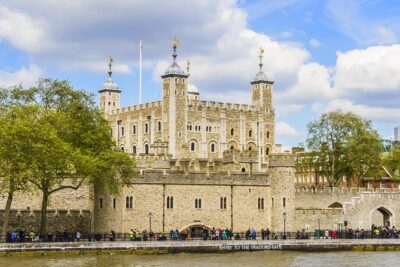
Tower of London and Crown Jewels Exhibition Ticket
Read our review →

Official tickets: Moco Modern & Contemporary Art Museum
Read our review →
British Museum London Guided Tour Semi-Private 8ppl Max
Read our review →
The British Museum London – Exclusive Guided Museum Tour
Read our review →

Skip the Line: Liverpool Beatles Museum – The perfect tribute to the Beatles
Read our review →Browse the lists this tour appears in