
Reviewed · MUSEUMS
National Gallery with Art Historian Guided Tour in London
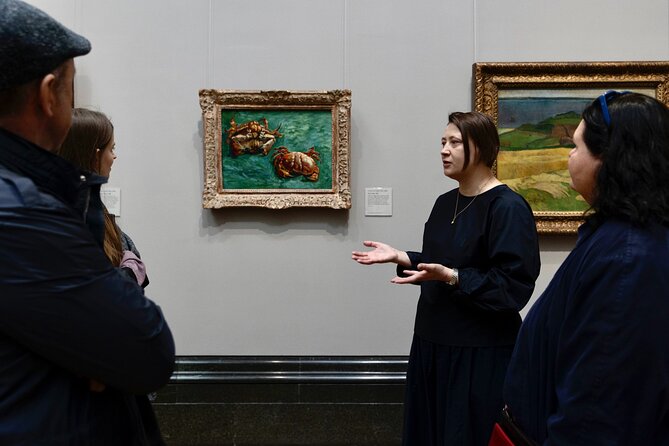
The National Gallery can feel like a maze, until someone gives you a map made of stories. This 2-hour, small-group visit with an art historian helps you read the gallery like a timeline, timed for its 200th anniversary rehung collection with 400 additional paintings on display. You’ll see why artists like Monet and Degas shocked people at the time, and how later painters borrowed from earlier giants.
I especially like two things. First, the tour connects the major names you recognize, from Claude Monet and Edgar Degas to Paul Cézanne, to the bigger shift in how artists depicted light, form, and subject. Second, you get organized stops on standout works like Holbein and Michelangelo, so you leave with a stronger sense of what matters most.
One drawback to consider is timing risk. There is a real possibility of last-minute disruption, since one past guide cancellation happened close to start time due to train problems. If that kind of thing worries you, plan a backup option for a self-guided highlights walk.
In This Review
- Key Things That Make This Tour Worth It
- Getting Oriented at the National Gallery (Trafalgar Square Start)
- How the 200th Anniversary Rehang Changes What You See
- The Impressionist and Post-Impressionist Thread You’ll Follow
- Old Masters to the Rescue: Turner, Rembrandt, Caravaggio, and Dutch Painting
- The “Jewel Stops” Inside the Gallery
- Women Artists on Display: What You’ll Learn With Limited Works Shown
- What Happens During the 2 Hours (So You Know How to Plan)
- Price and Value: Is $125.01 a Fair Deal?
- Who This Tour Suits Best
- Should You Book This National Gallery Art Historian Tour?
- FAQ
- How long is the National Gallery with an art historian guided tour?
- What language is the tour offered in?
- How many people are in the group?
- What is included in the tour price?
- Are temporary exhibitions included?
- Is photography allowed inside the gallery?
- Where do we meet for the tour?
- Do I need a mobile ticket?
- What is the cancellation deadline for a full refund?
- Do I need prior knowledge of art history or a high fitness level?
Key Things That Make This Tour Worth It
- 200th anniversary focus, with the gallery fully rehung and 400 new-to-view paintings
- Small group cap of 10, which usually means more questions and less rushing
- A clear art story arc, from Old Masters to the Impressionist and Post-Impressionist shift
- Must-see stops tied to names like Holbein, Michelangelo, Canaletto, and Moroni
- Women artists on display, including context around the limited number currently shown
- Free entry to the permanent collection, with photography allowed (no flash)
Getting Oriented at the National Gallery (Trafalgar Square Start)
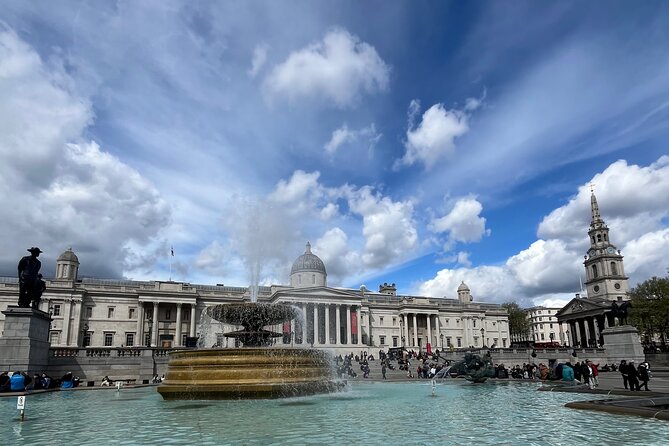
The tour starts right at the National Gallery, Trafalgar Square (WC2N 5DN), where you can also easily grab transport and a coffee before you head in. This helps a lot, because once you are inside, you do not want to waste minutes figuring out where you are.
You are looking at a 2-hour experience, which is a smart length for one afternoon. It is long enough to make real connections between paintings, but short enough that you still have energy left for the rest of Trafalgar Square.
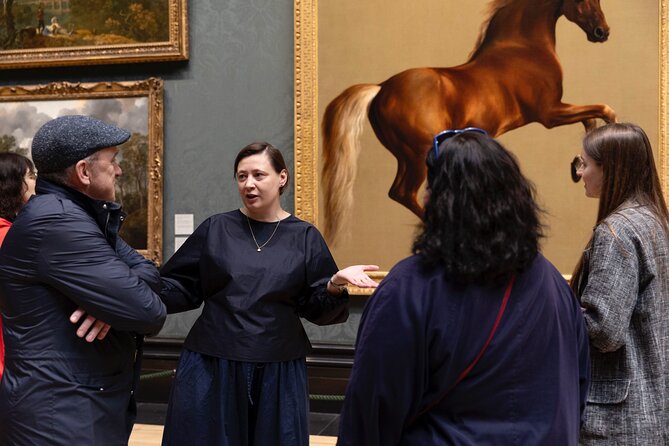
The group stays small, with a maximum of 10 travelers. That matters because an art historian can actually slow down, answer questions, and adjust the pace to what you care about.
More free halls and paid exhibitions:
How the 200th Anniversary Rehang Changes What You See
This is not just a generic overview. The tour is built around the National Gallery’s 200th anniversary celebration, when the collection was rehung throughout and expanded with 400 paintings added for display. That means the room-to-room flow can feel new, even if you have been to the gallery before.
You will hear the story of why people reacted strongly to the newer styles that came later. Artists tied to that shift, like Monet, Renoir, Degas, Morisot, Pissarro, Sisley, and Cézanne, were considered controversial in their day because they moved away from traditional methods.
What I like about this framing for you is that it turns the gallery into a cause-and-effect lesson. You are not just seeing paintings, you are seeing how artistic ideas evolve, including what artists learned by looking back.
The Impressionist and Post-Impressionist Thread You’ll Follow
A big part of the tour is about the dramatic change away from tradition. The art historian will connect those paintings to what was new in the way artists handled light, form, and subject matter.
You will spend time with artists whose names you likely already know, including Monet and Renoir, plus the group often labeled as the Impressionist movement. You will also hear about key figures like Berthe Morisot and Paul Cézanne, and why their approach mattered.
This is where the small-group format pays off. In a crowd, you often look for the next famous painting. Here, you have a chance to ask why a technique or subject might have been shocking at the time, and what that change signals in the broader art story.
Old Masters to the Rescue: Turner, Rembrandt, Caravaggio, and Dutch Painting
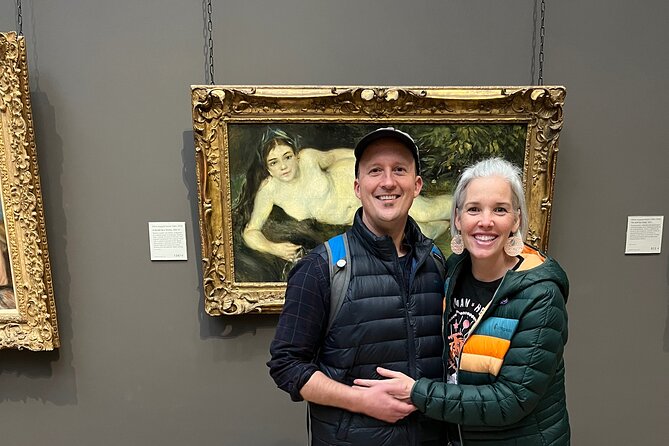
The tour also makes a point that is easy to miss if you only think in terms of style trends. The newer artists did not invent everything from scratch. They were also looking hard at the Old Masters, and the guide explains those connections clearly.
You’ll talk about influence from painters like J.M.W. Turner, Rembrandt, and Caravaggio. You will also get attention on the importance of 17th-century Dutch art, which helps you understand why realism, lighting, and everyday subjects became such big building blocks for later generations.
This part helps you avoid a common museum trap: thinking the gallery is just a bunch of unrelated masterpieces. The tour instead builds a through-line, where later changes make more sense because you can see what came before.
The “Jewel Stops” Inside the Gallery
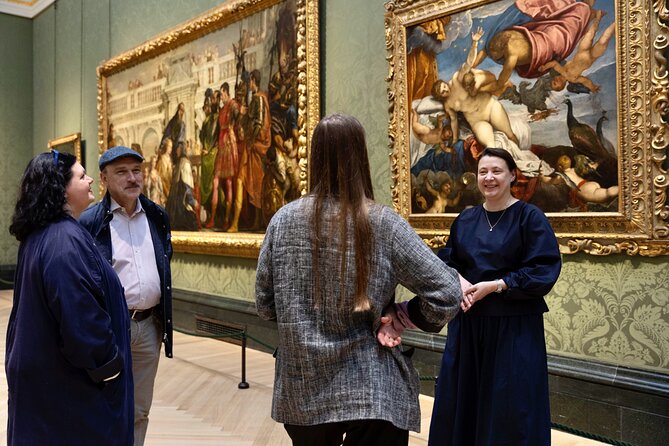
You do not wander aimlessly for two hours. You make planned stops on works the guide treats as turning points or highlights. Expect time with painters and names such as Holbein, Michelangelo, Canaletto, and Moroni.
Why these stops are worth it for you is simple: they give your eyes an anchor. When you know what you are comparing against, the rest of the room becomes easier to read.
Even if you do not know much art history, the guide’s job here is to translate. You will get context for what you are looking at, so you can tell the difference between just admiring a painting and actually understanding what makes it significant.
If your goal is to cover a lot of ground without burning out, these stop-based pacing choices are the secret sauce.
Also on in London, no fuss
- Stonehenge, Windsor Castle, and Bath from London★ 4.5 · 18,662 reviews
- London Big Bus Hop-On Hop-Off Tour with Optional River Cruise★ 3.5 · 10,803 reviews
- London Small Group Tour of Historical Pubs★ 5.0 · 10,422 reviews
- Stonehenge, Windsor Castle and Bath with Pub Lunch in Lacock★ 4.5 · 7,402 reviews
Women Artists on Display: What You’ll Learn With Limited Works Shown
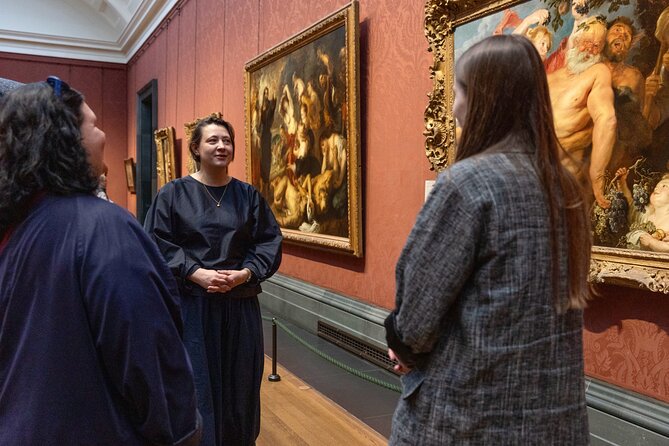
A standout element is how the tour treats women artists as part of the full story, not an afterthought. The tour notes that only four pieces by women artists are currently on display, and you will spend time talking about the history of female painters.
This is useful because it addresses an uncomfortable reality. With so few works shown at a time, it can be tempting to assume women were never making major art. The tour pushes you to think differently, using the small number on display as a starting point for the bigger context.
You should come in curious about how art systems worked. Who got trained, who was collected, and who got visibility. If you ask questions, this section can end up being one of the most memorable parts, even if you usually skip the slower context.
What Happens During the 2 Hours (So You Know How to Plan)
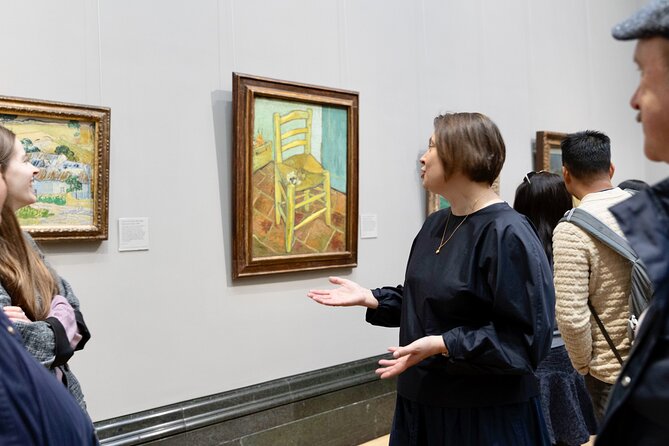
Since the tour is one main visit inside the National Gallery, it moves like a guided walk rather than a lot of separate sites. You start at Trafalgar Square, then the guide keeps you moving through the collection with a story-driven path.
Photography is permitted, as long as you do not use flash. That gives you flexibility to take reference shots of key details, especially if you like studying brushwork, lighting effects, or faces up close.
You should also keep in mind the gallery is a museum, not a classroom with seats everywhere. You have a moderate physical fitness level requirement, which likely means comfortable walking and standing in gallery spaces.
A practical tip for you: wear shoes that handle uneven stone and long indoor stretches. Two hours can sound short, but museums are dense with corners, doorways, and stairs.
Price and Value: Is $125.01 a Fair Deal?
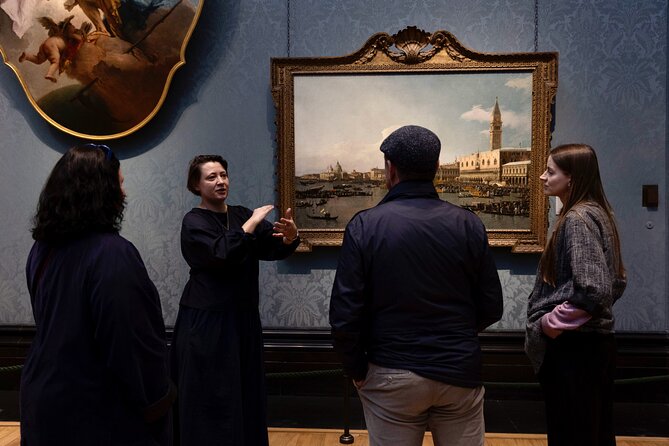
At $125.01 per person, this is not a bargain ticket. The value comes from what you actually pay for, which is expert guidance plus time saved.
Here is the value math that matters: free admission to the gallery’s permanent collection is included. The paid part is the official guided tour experience, run with an art historian, with a maximum group size of 10.
If you were to do the gallery solo, you would still need to choose what to see. This tour gives you a structured path, plus interpretation that is hard to get from a map alone.
What is not included is also important for your budget. Paid temporary exhibitions are not covered, and the cloakroom fee and refreshments are not included. If you plan to snack, go in knowing you will pay for it yourself.
For best value, think of this tour as your main way to learn the gallery. If you also plan to hit temporary exhibits that day, you may want to schedule them around your guided time so the whole afternoon still feels enjoyable.
Who This Tour Suits Best
This is a great pick if you want art history without homework. The tour is designed for all ages, and you do not need any previous knowledge to join in.
It also suits you if you like learning by comparison. The structure, from Old Masters influence to the Impressionist and Post-Impressionist shift, helps you see how artists borrow, react, and change over time.
You should also consider it if you care about clarity more than speed. With a small group, the guide can pause where it matters, and you can ask questions instead of guessing.
If you are the type who wants a completely self-guided visit, you might prefer building your own route. But if you want your two hours to feel like a guided story, this tour is the right format.
Should You Book This National Gallery Art Historian Tour?
Yes, if your goal is to get oriented fast and leave with a real appreciation, not just a list of names. The pricing makes sense when you treat the guide as the main value, especially with the small-group size and the storyline from Old Masters to later innovators.
Book it if you like structured learning and you want time for questions, since the pace is set for an intimate group. Skip it or plan a backup if you are very sensitive to last-minute travel disruptions, because even one close-to-start cancellation can derail the day.
If you want one afternoon that turns the National Gallery into an understandable art timeline, this is a solid choice.
FAQ
How long is the National Gallery with an art historian guided tour?
It runs for about 2 hours.
What language is the tour offered in?
The tour is offered in English.
How many people are in the group?
The tour has a maximum of 10 travelers.
What is included in the tour price?
The price includes free admission to the National Gallery’s permanent collection, a museum official tour with an expert guide, and access to must-see pieces. Photography is permitted without flash.
Are temporary exhibitions included?
No. Tickets for paid temporary exhibitions are not included.
Is photography allowed inside the gallery?
Yes, photography is permitted, but without flash.
Where do we meet for the tour?
The meeting point is the National Gallery, Trafalgar Square, London WC2N 5DN, UK.
Do I need a mobile ticket?
Yes. The tour uses a mobile ticket.
What is the cancellation deadline for a full refund?
You can cancel up to 24 hours in advance for a full refund. If you cancel less than 24 hours before the start time, it is not refunded.
Do I need prior knowledge of art history or a high fitness level?
No prior knowledge is required, and all ages are welcome. The tour lists a moderate physical fitness level as the expectation.
Latest to join the queue for London





Museums, compared.
Tower of London and Crown Jewels Exhibition Ticket
Read our review →

Official tickets: Moco Modern & Contemporary Art Museum
Read our review →
British Museum London Guided Tour Semi-Private 8ppl Max
Read our review →
The British Museum London – Exclusive Guided Museum Tour
Read our review →


Skip the Line: Liverpool Beatles Museum – The perfect tribute to the Beatles
Read our review →Browse the lists this tour appears in