Reviewed · LONDON TOURS & ACTIVITIES
London’s Jewish East-End.
Jewish East End stories travel by taxi. I love the private taxi format, which keeps you away from big bus crowds and gives you space for real questions. I also love the mix of moving sites and everyday streets, from medieval Guildhall walls to the Kindertransport memorial and Cable Street. The one thing to consider is that the route includes walking in small alleyways, so poor weather can make it less comfortable.
This is a guided ride through Jewish London, from medieval times to the modern streets of Brick Lane. You’ll start near the 15th century Guildhall backdrop and the Wren-designed church of St Lawrence Jewry, then track the story of arrival, persecution, expulsion, readmission, and community life.
Your guide is David the Capital Cabbie, and you’ll visit historic synagogues like Bevis Marks and Sandys Row. You stay fueled too, with bottled water and light snacks along the way.
In This Review
- Key highlights worth planning around
- Why a private London taxi works so well for this East End story
- Starting at Guildhall and St Lawrence Jewry: the first Jewish ghetto
- Tracing arrivals through Edward I and Cromwell
- Pogroms, the 1800s, and how new communities reshaped the East End
- Holocaust memory, Kindertransport, and Cable Street’s resistance
- Bevis Marks and Sandys Row: synagogue streets you can actually feel
- Spitalfields and Brick Lane: immigrants, street art, and eating your way through the story
- Price and timing: what you’re really paying for
- Who this tour suits best, and who should think twice
- Bonus detours you might get in the ride
- Final call: should you book the Jewish East End taxi tour?
- FAQ
- How long is the London Jewish East End tour?
- What does the tour cost?
- Is this a private tour?
- Is pickup offered, and where does it start?
- What’s included in the tour?
- Does the tour visit synagogues?
- What is the tour focused on?
- What if weather is bad?
- Can I cancel for a full refund?
Key highlights worth planning around
- A private London taxi route that avoids big-group pacing and lets you ask questions on the fly
- Old synagogues on the calendar, including Bevis Marks and Sandys Row
- Big history in tight spaces, from King Edward I’s persecutions to Cable Street’s stand in 1936
- Kindertransport memorial time, when the story turns heartbreaking and personal
- Brick Lane mix of culture and food, plus street art you can spot as you go through the area
- Snack and water support, so you do not have to hunt for refreshments during a heavy itinerary
Why a private London taxi works so well for this East End story
London’s Jewish East End is best seen in motion and in small doses. Big coach tours tend to shove you past places and move on fast. Here, you’re in your own private taxi, which is a practical way to handle a route with a lot of emotional and historical stops.
I also like that you’re not limited to one kind of sightseeing. This is not only about institutions and monuments. You also get streets, markets, and neighborhoods where immigrant life shows up in daily details like shops, food, and signage.
The pace matters. With a 4 to 5 hour tour window, a taxi route helps you cover more ground without turning your afternoon into a sprint. And since it’s up to five people per group, the conversation stays human.
Also on in London, no fuss
Starting at Guildhall and St Lawrence Jewry: the first Jewish ghetto
The tour begins in central London near WC2N 5DU, with the old-world feel starting immediately. You’ll look out toward the 15th century Guildhall area, then move to the Wren-designed church of St Lawrence Jewry. That setting is more than scenery. It helps you understand how far back London’s Jewish presence goes.
From there, the guide helps you piece together the idea of the first London Jewish ghetto. It’s a heavy start, but it’s also grounded. You’re learning the story in the same streets where London’s layers still show.
One practical note: this early part sets the tone for the rest of the day. If you’re someone who hates long emotional context, prepare yourself. If you’re okay with serious topics, you’ll feel like you’re building understanding instead of just collecting stops.
Tracing arrivals through Edward I and Cromwell
As the route unfolds, the focus is on arrival and integration. You’ll hear how Jewish people faced persecution and expulsion under King Edward I. Then you’ll get the shift that comes later, including readmission under Oliver Cromwell.
I like this timeline approach because it keeps the story from feeling like a series of disconnected facts. Instead, you see change over time, including how politics shaped everyday life.
You’ll also notice how the guide connects policies to streets and community spaces. That matters because these places are still there. Even if you only see fragments from the pavement, the story explains what used to be around them.
If you’re visiting London for the first time, this is also a strong way to get your bearings. You understand the East End not as a random map section, but as a destination created by arrivals and enforced by restrictions.
Pogroms, the 1800s, and how new communities reshaped the East End
Then the tour moves into the 1800s, when Eastern European Jews escaped pogroms. This part is where the story stops being only about old dates and starts connecting to neighborhood identity.
You’ll hear how the incoming communities tried to integrate into British life. That includes how culture and food change when people bring their traditions with them. You’re not just learning history in a classroom. You’re seeing why Brick Lane later becomes a focal point for community life.
This section is also where I found the taxi format useful. A neighborhood story can get lost if you keep stopping and starting on foot. In a cab, you can listen continuously, then step out when it’s time to see something you can only really understand in place.
Holocaust memory, Kindertransport, and Cable Street’s resistance
The tour does not shy away from the 20th century. You’ll encounter the horrors of the Holocaust through stories placed in the streetscape. The time for the Kindertransport memorial is especially important. It is where the story becomes about urgency, sacrifice, and the human cost of escaping danger.
This is emotionally intense. But the way it is presented helps you connect memory to place, instead of treating it like a separate chapter far from everyday London.
And then the itinerary shifts to resistance and community courage with the Battle of Cable Street in 1936. The story here is that local people stood shoulder to shoulder with Jewish communities to prevent fascists from marching through the Jewish East End. That gives the day balance. You learn what was done to people, and also what people did for one another.
If you prefer lighter topics only, this might not be your kind of tour. If you want meaning, it delivers.
While the kettle’s on in London:
- Stonehenge, Windsor Castle and Bath with Pub Lunch in Lacock★ 4.5 · 7,402 reviews
- Tower of London and Crown Jewels Exhibition Ticket★ 4.5 · 6,677 reviews
- Thorpe Park Admission Ticket★ 4.0 · 5,915 reviews
- Stonehenge, Windsor Castle and Bath Full Day Guided Tour★ 4.5 · 5,346 reviews
Bevis Marks and Sandys Row: synagogue streets you can actually feel
One of the biggest reasons to book this experience is the synagogue stop. You’ll visit some of the area’s nooks, crannies, and alleyways, including historic synagogues such as Bevis Marks and Sandys Row.
This is the part I kept thinking about after. Synagogues are not only buildings. They are signals of continuity, where community life holds steady even when the wider world becomes hostile.
What makes these visits valuable is the way the guide ties them back to arrival and integration. Instead of treating religious sites like stand-alone landmarks, you learn how they fit into the social map of Jewish London.
Practical tip: plan for short walking segments in older streets. Wear shoes you trust. Even though the taxi does a lot of the heavy lifting, you’ll step into narrow lanes where you need stable footing.
Spitalfields and Brick Lane: immigrants, street art, and eating your way through the story
From Spitalfields, the tour heads into Brick Lane territory, the hub of Jewish quarter life in the 20th century. You’ll also see how the area kept attracting new waves of arrivals, including the Huguenots, Irish, and Bangladeshis. This matters because it shows London’s East End as an immigration story, not only a Jewish one.
Later, Brick Lane becomes linked with street art. The guide points out work associated with Banksy, Stik, and Roa. If you like spotting style and story on walls, this becomes fun instead of only educational. You start seeing public art as another kind of community language.
Then there’s the food layer. Brick Lane is famous for curry houses, beigles, and beer. The tour’s strength here is not that it turns into a full meal tour. It’s that you understand why those tastes belong in the neighborhood, because immigrant histories shaped what people opened, cooked, and shared.
If you’re hungry during the day, you’re covered at least partially. Bottled water and light snacks are included, which helps you stay comfortable as the itinerary moves from solemn to casual streets.
Price and timing: what you’re really paying for
The cost is $521.04 per group, up to five people. That means the value changes fast depending on how you book. If you book as a full group, you’re effectively spreading the cost across multiple people. If you’re booking solo, it can feel like a splurge.
What you are paying for is not only information. You’re paying for a private route, a taxi driver-guide experience, and a tightly planned route that blends heavy topics with real neighborhood context. For many people, that is worth it because it saves time and keeps your experience from feeling rushed.
The tour runs about 4 to 5 hours. That length is ideal for an East End story because it gives enough time for multiple eras without burning your whole day. Also, it’s often booked around 21 days in advance, which is a clue that the time slots can fill.
You’ll also want to think about the weather. The experience requires good weather. If weather is poor, it can be rescheduled or you may receive a full refund. So if you’re traveling in a rainy season, keep some flexibility.
Who this tour suits best, and who should think twice
This is a great choice if you want a private, guided London taxi experience that focuses on Jewish arrival and integration, and how it shaped British culture, food, and society. It also fits if you like history that connects to streets you can still walk through, especially when you’re visiting synagogues like Bevis Marks and Sandys Row.
It’s also a strong pick for small groups that want shared context. Up to five people makes it feel like a real conversation, not a lecture.
On the other hand, if you want only light sightseeing with zero emotional moments, this route includes persecution, expulsion, Holocaust memory, and the Kindertransport memorial. You should go in expecting serious content.
Bonus detours you might get in the ride
A nice perk is that the guide may add bonus stops. In past tours, Jack the Ripper and Harry Potter themed sights have shown up as extra sites. You should treat these as possible extras rather than guaranteed stops.
Still, this is part of the charm. The main story stays the backbone, and the extras can make the day feel more like London, not only like a textbook.
Final call: should you book the Jewish East End taxi tour?
I think you should book it if you want more than a standard highlights loop and you care about Jewish London being told in a way that connects eras to specific streets. The private taxi format, the synagogue stops at places like Bevis Marks and Sandys Row, and the inclusion of Kindertransport memorial time make this feel purposeful.
I would book with extra confidence if you’re traveling with 2 to 5 people, since the $521.04 group price spreads out the cost. If you’re coming solo and tight on budget, it can still be worth it, but check whether you’re paying mostly for privacy and pacing.
If you do book, plan for walking in smaller alleyways, wear comfortable shoes, and bring your curiosity. This tour uses the city itself as the lesson plan, and that is exactly what makes it memorable.
FAQ
How long is the London Jewish East End tour?
The tour lasts about 4 to 5 hours.
What does the tour cost?
The price is $521.04 per group, up to five people.
Is this a private tour?
Yes. It is a private experience, and only your group participates.
Is pickup offered, and where does it start?
Pickup is offered. The start meeting point is Central London, London WC2N 5DU, UK.
What’s included in the tour?
Bottled water and light snacks are included.
Does the tour visit synagogues?
Yes. The tour includes a stop at one of London’s oldest synagogues, including Bevis Marks and Sandys Row.
What is the tour focused on?
The primary focus is the arrival and integration of Jewish people in Britain, with attention to their influence on British culture, food, and society, from medieval times to the present.
What if weather is bad?
The experience requires good weather. If it is canceled due to poor weather, you will be offered a different date or a full refund.
Can I cancel for a full refund?
Yes. Free cancellation is available, and you can cancel up to 24 hours in advance for a full refund.
Latest to join the queue for London





London Tours & Activities, compared.

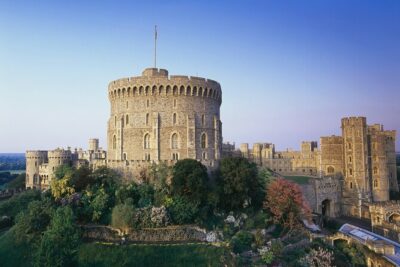
Stonehenge, Windsor Castle, and Bath from London
Read our review →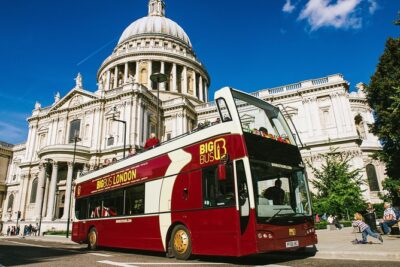
London Big Bus Hop-On Hop-Off Tour with Optional River Cruise
Read our review →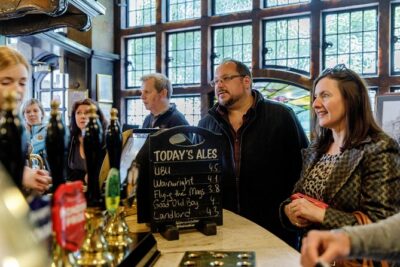
London Small Group Tour of Historical Pubs
Read our review →
Stonehenge, Windsor Castle and Bath with Pub Lunch in Lacock
Read our review →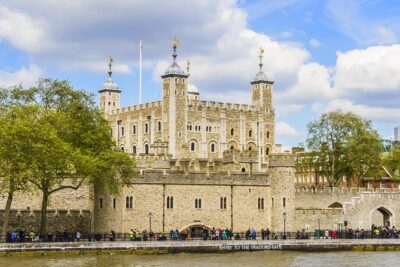
Tower of London and Crown Jewels Exhibition Ticket
Read our review →

Stonehenge, Windsor Castle and Bath Full Day Guided Tour
Read our review →