
Reviewed · STADIUM TOURS & FOOTBALL EXPERIENCES
London’s Football Stadiums Sightseeing Tour
Four stadiums, one great football day.
I love how this private format strings together iconic Wembley, Emirates, London Stadium, and Stamford Bridge without you needing to plan transit between them. The tour gives you a fast read on how each ground fits into London, not just a list of facts.
My second favorite thing is the guide-led storytelling. On this kind of day, you learn why West Ham is tied to those Olympics, why Wembley is pure engineering, and how Arsenal turned Ashburton Grove into Emirates, all while moving across neighborhoods. The one drawback to plan around is that there are no indoor stadium tours included, and admission tickets at the stops are not included either.
In This Review
- Quick hits
- How this private stadium crawl moves through London
- Wembley Stadium: that arch you can spot from across London
- London Stadium at Queen Elizabeth Olympic Park and West Ham’s identity
- Emirates Stadium in Holloway: Arsenal’s big move and the Arsenalization touch
- Stamford Bridge and Chelsea: a Victorian-era stadium that keeps expanding its reach
- Price, pickup zones, and tickets you will need to plan
- Best timing, weather reality, and photo strategy
- Who should book this stadium tour, and who should skip it
- Should you book the London Football Stadiums Sightseeing Tour?
- FAQ
- How long does the London Football Stadiums Sightseeing Tour take?
- Which stadiums are included in the tour?
- Are admission tickets included for the stadium stops?
- Is this a private tour?
- Do you offer hotel pickup?
- What meeting point is used if Parliament Square is closed?
- What ticket format do you use?
- Can I get an airport or cruise port pickup?
- What if I cancel my booking?
Quick hits
- Four major grounds in one half-to-full day, timed at about an hour each stop
- No indoor stadium tours included, so think of this as viewing and learning from the outside
- Mobile tickets and a private group, only your party participates
- Pickup only in zones 1 to 4, otherwise you’ll use public transport and it can feel more time-consuming
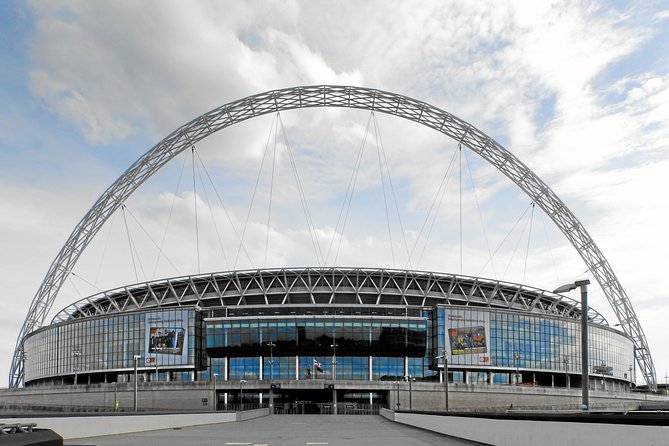
- Wembley details are specific, like the arch you can spot from far away and the stadium roof design
- Your guide can add real culture context, with club-life and match-history style explanations
How this private stadium crawl moves through London
This is built for people who want a lot of football geography in a single day. The schedule is roughly 6 to 8 hours, and each stadium stop is about an hour, with travel time added between sites.
The tour uses public transportation to avoid city traffic. That matters because a “stadium tour” can be either smooth and quick or stop-and-go and tiring. Here, expect a mix of getting on and off buses or trains, then walking a bit when you’re close to the grounds.
It’s also private, meaning it’s only your group. That’s great when you want questions answered on the spot, and when you prefer a steadier pace than a big group bus tour.
Practical note: comfortable shoes are the real ticket. The tour is listed for moderate physical fitness, and you should assume some walking plus time waiting between legs.
More tunnels walked and dugouts sat in:
Wembley Stadium: that arch you can spot from across London
Wembley is the kind of place that makes you look up, even if you’ve seen photos before. The modern stadium opened in 2007 on the site of the older Wembley, and it became the UK’s largest stadium at about 90,000 seats.
What you’ll notice first is the engineering statement. Wembley is almost circular, with a circumference of about 1 km, and the ceiling support arch is huge, designed to be visible from landmarks like the London Eye. The arch stretches 133 metres, and its angle is described as 22 degrees from perpendicular, with an elevation that matches the scale in feet as well. Even if you do not study architecture, you’ll feel how intentional it is, because the structure dominates the skyline.
Wembley is also a multi-use venue, run by a Football Association affiliate. That’s why the stadium connects to more than football, including sport, music events, and other activities. If you’re a soccer fan, it helps to hear that context, because Wembley sits at the crossroads of English football culture and big public events.
One more detail that makes the place feel unique: the movable roof is not completely closed so that all seats can be covered. On a typical visit, that can influence how bright or sheltered things feel outside the stadium bowl.
Since admission tickets are not included and indoor stadium tours are not part of the plan, treat Wembley as a “see it, understand it, photograph it” stop. Plan for photos, then move on while you still have energy.
London Stadium at Queen Elizabeth Olympic Park and West Ham’s identity
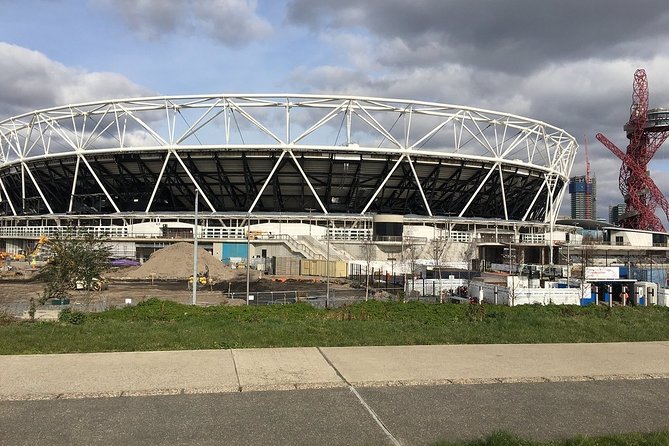
London Stadium (the one at Queen Elizabeth Olympic Park) used to be Olympic Stadium for the 2012 Summer Olympics and Paralympics. Back then, it hosted track and field plus the opening and closing ceremonies, which is why the stadium has that legacy-built feel.
This stop becomes even more interesting when you shift from Olympics to football. The stadium was renovated and is now mostly used as the home of West Ham United in the Premier League. If you want the “how does a stadium change?” story, this is your best example of reuse.
The guide can connect West Ham’s roots to the club badges and symbolism. West Ham was founded in 1895 and renamed West Ham United in 1900 by Thames Ironworks. Those two hammers on the coat of arms are a detail that’s easy to notice once someone points it out, and it makes the club feel tangible rather than abstract.
The club’s timeline also ties into Wembley. For example, in 1923 West Ham was promoted after the Wembley FA Cup Final, which is the kind of link that makes England’s football map feel small and connected.
Then there’s the Olympic Park “public moment” from 2012: the first public function was the National Lottery Olympic Park Run on 31 March 2012. The five-mile run had about 5,000 people, including British athletes and celebrities, plus the winning public.
All of that history matters because London Stadium is not just a football venue placed on a blank lot. It’s layered. Even if you’re only seeing the stadium from outside, you’re still standing in a place with major event DNA.
Drawback to keep in mind: this is mostly a viewing and learning stop. Admission is not included, and indoor access is not part of the deal.
Emirates Stadium in Holloway: Arsenal’s big move and the Arsenalization touch
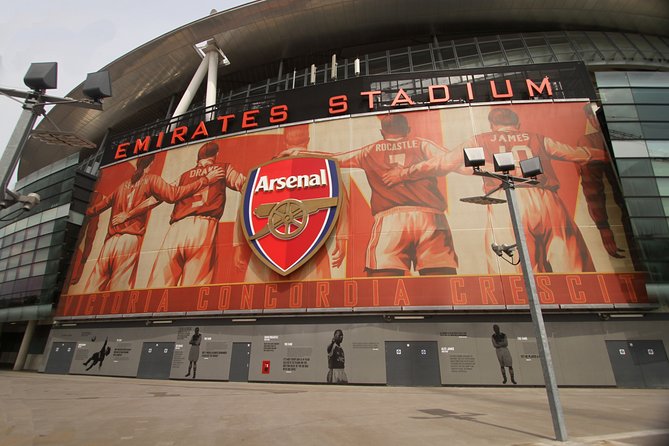
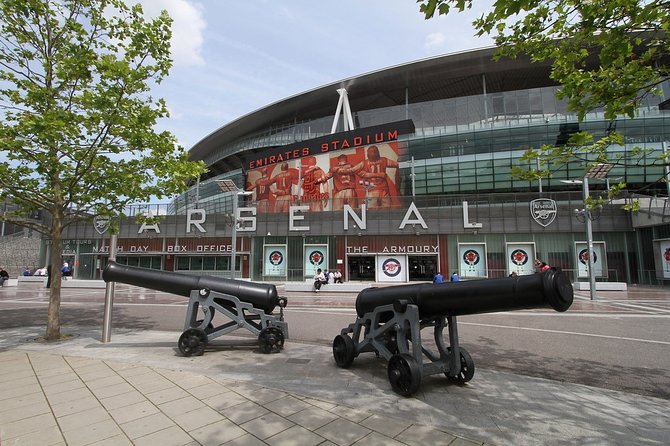
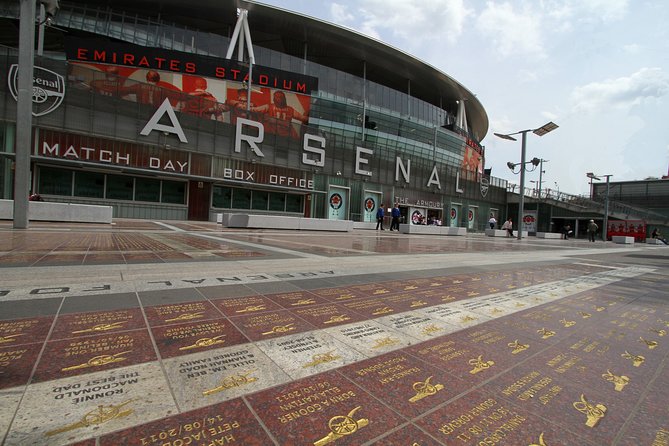
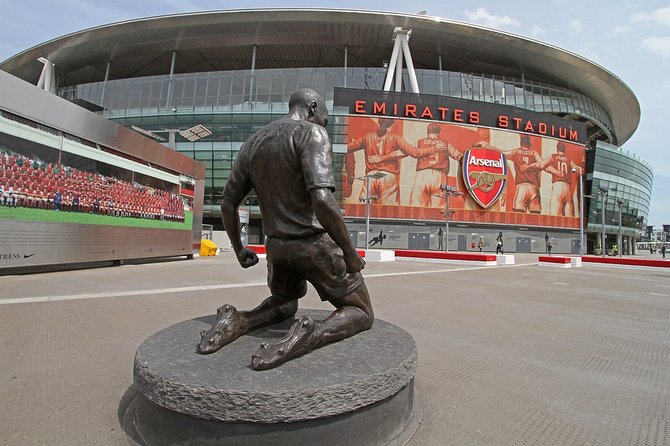
Emirates Stadium is Arsenal’s home in Holloway, and the name matters because it replaced an older identity. Before the sponsorship, it was known as Ashburton Grove and Arsenal Stadium for UEFA competitions.
Capacity is about 60,704, and Emirates is described as the 4th largest football stadium after Wembley, Old Trafford, and Tottenham Hotspur. That positioning helps explain why Arsenal’s move wasn’t just about seating, it was about building a new kind of modern home.
Arsenal’s planning story is part of the appeal, especially if you like how clubs evolve. The plan to move started in 1997 after Islington Council denied permission to extend Highbury. In 2000 Arsenal bought an industrial and waste disposal site at Ashburton Grove. One year later the board approved the building, and the stadium project came with a main sponsor that gave the ground its current name.
The scale is real: the project was completed in 2006 for around 390 million pounds. Then Arsenal preserved the old ground as housing, with Highbury Square being the apartment complex built from what used to be stadium space.
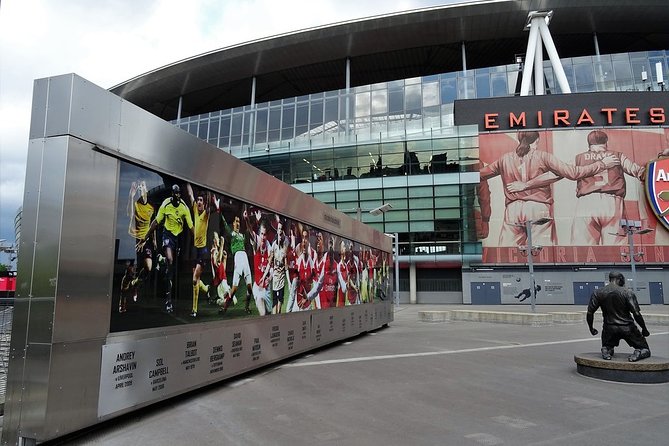
Since 2009, there’s also an “Arsenalization” phase. Translation: it’s not just a generic bowl, it’s where Arsenal culture and tradition get reinforced in the stadium experience. You may or may not spot every detail from the outside, but if your guide points out the right cues, the place starts to make sense faster.
As a bonus, the stadium has hosted international festivals and concerts, so it isn’t a one-purpose box either.
Since admission tickets are not included and indoor stadium tours are not part of the plan, you’ll focus on the exterior and the story behind the ground. It’s still a strong stop because Emirates is visually distinct and emotionally central for Arsenal fans.
Stamford Bridge and Chelsea: a Victorian-era stadium that keeps expanding its reach
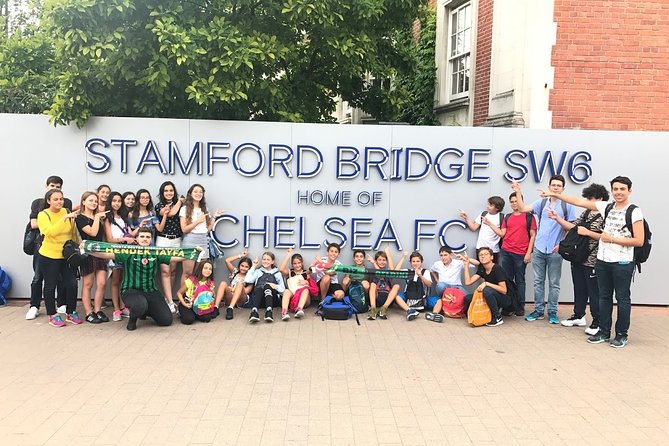
Stamford Bridge is Chelsea Football Club’s stadium in Fulham, right next to the Chelsea district. The ground’s capacity is about 41,837, and it’s described as the ninth-largest venue in the Premier League in the 2019-20 season.
Chelsea’s future planning is already in the mix. The club plans to expand capacity to about 63,000 during the 2023-24 season. They also plan to play at Wembley until they’re back in 2024 when the expansion begins. If you love stadium “then and now” stories, this makes Stamford Bridge feel like part of a longer timeline, not a finished product.
The standout reason to care about this stop is the age. Stamford Bridge opened in 1877, in the Victorian era, before Chelsea came in. The property was used by the London Athletic Club, and by 1905, Gus Mears, a new owner, formed Chelsea Football Club to take over the site.
In the 1990s, it was converted into an all-seater stadium and underwent major improvements. So you get a stadium with deep roots that still had to modernize.
Stamford Bridge also hosted major non-league events and other sports. It’s been used for cricket, rugby, speedway, greyhound racing, and baseball, plus major UK competitions like FA Cup finals and semi-finals, and Charity Shield matches. Even if you only care about football, this multi-sport past helps you understand why the venue feels like it has a pulse beyond one club.
Attendance records add a wow factor. The highest level of official attendance listed is 82,905 for Chelsea versus Arsenal in a league match on 12 October 1935. And in 1945, Dynamo Moscow was invited to tour the UK after World War II, with an estimated 100,000 people seeing a thrilling 3-3 draw.
The stop is listed as Chelsea FC Museum & Tours, but the tour is also clear that indoor stadium tours are not included. So expect the Chelsea portion to be more about club storytelling and the museum experience rather than a full behind-the-scenes pitch tour.
Also on in London, no fuss
- Stonehenge, Windsor Castle, and Bath from London★ 4.5 · 18,662 reviews
- London Big Bus Hop-On Hop-Off Tour with Optional River Cruise★ 3.5 · 10,803 reviews
- London Small Group Tour of Historical Pubs★ 5.0 · 10,422 reviews
- Stonehenge, Windsor Castle and Bath with Pub Lunch in Lacock★ 4.5 · 7,402 reviews
Price, pickup zones, and tickets you will need to plan
The price is $1,198.98 per group, up to 15 people. That pricing structure can be excellent value if you’re traveling with friends or family. For example, if you fill all 15 spots, you’re right around $80 per person. If you’re a smaller group, the per-person cost climbs fast, so it’s most cost-effective when you can share.
Pickup can be a big part of comfort. Hotel pickup is available between zones 1 to 4 only. If you’re outside those zones, you’ll likely use public transportation, and the day can feel longer or more tiring, especially if you’re also doing additional walking around the stadium sites.
You get a mobile ticket, which is convenient and reduces paper handling. Admission tickets are specifically noted as not included, so if you want to go into any paid stadium areas or museum components beyond what’s included in the tour time, you should be ready to pay separately.
A small logistics point that can save your day: if you do not require pickup, you meet at Parliament Square, with the nearest tube station being Westminster. Check-in happens 30 minutes before the booked start time, and you should be ready in the hotel lobby 15 minutes before pickup if you have it.
If there’s a daily event or closure in Parliament Square, the alternative meeting point is the London Eye area. Your guide will wait at the main exit gate of the London Eye after you cross Westminster Bridge.
One more item that I appreciate for practical travel: hand sanitizers and masks are available in the vehicles, and service animals are allowed. It’s not a dramatic thing, but it makes a difference on long travel days.
Best timing, weather reality, and photo strategy
This is a day with a lot of movement. The review-style feedback points to the same theme I’d flag: it’s walking plus riding, and rain makes it less fun. The tour itself isn’t described as a cozy, indoor-heavy route, so if London weather is doing its usual thing, bring a rain layer and a small waterproof bag for your phone or camera.
For photos, the order matters. Wembley’s arch is a signature visual, and London Stadium has that Olympic Park setting feel that reads well in wide shots. Emirates Stadium is great for front-on angles and signage, while Stamford Bridge can feel more grounded and local, because of its older stadium identity and surrounding neighborhood vibe.
Since each stop is about an hour, you don’t have unlimited time to wait for the perfect light. I’d use that time like a checklist, wide shots first, then details. At Wembley and Emirates, details are architectural and branding. At London Stadium, look for West Ham cues and the Olympic legacy. At Stamford Bridge, the “old plus modern” story is the payoff.
If you’re prone to getting tired, build in breaks where you can, like a quick stop for water between legs. You’re more likely to enjoy the football talk when your feet are still under you.
Who should book this stadium tour, and who should skip it
I’d book this if you’re a soccer fan with limited time and you want an efficient route across London’s big grounds. It’s also a smart pick if you love stadium architecture and team identity, because each venue comes with a specific storyline, not just a viewpoint.
It’s especially good for fans who like hearing how clubs and stadiums evolved, like West Ham’s link between the Olympics and Premier League football, or Arsenal’s big move from Highbury to Emirates.
You might think twice if you want pitch-level access, indoor stadium tours, or a deep museum day at each stop. The tour is clear that indoor stadium tours are not included, and admission tickets are not included at the stops. If your top priority is inside access, you’ll likely need a different type of stadium experience.
It’s also better for groups who can share the cost. At a full group size, the price can be surprisingly fair. For solo travelers, the same price can feel heavy unless you value the privacy and the four-stop route enough to justify it.
One last tip: go in expecting a “guided football day” rather than a slow, sit-down sightseeing day. If you’re ready for that pace, you’ll get your money’s worth.
Should you book the London Football Stadiums Sightseeing Tour?
Book it if you want four legendary London grounds in one guided half-to-full day, with strong context on what each stadium means and how it fits into the city. It’s a good value for groups, and the private format makes it easier to get real football culture explanations.
Skip it if your priority is indoor stadium access, ticketed stadium interiors, or a low-walking comfort level. In that case, you’ll likely feel constrained by the fact that admission is not included and indoor stadium tours are not part of the plan.
If you’re a fan who likes architecture, club identity, and a tight route, this tour is a very practical way to see a lot of London football culture fast.
FAQ
How long does the London Football Stadiums Sightseeing Tour take?
The tour runs about 6 to 8 hours.
Which stadiums are included in the tour?
The tour includes Wembley Stadium, London Stadium (Olympic Stadium area) for West Ham, Emirates Stadium for Arsenal, and Stamford Bridge for Chelsea (Chelsea FC Museum & Tours).
Are admission tickets included for the stadium stops?
No. Admission tickets are not included for the stops.
Is this a private tour?
Yes. It is private, and only your group participates.
Do you offer hotel pickup?
Hotel pickup is available in zones 1 to 4 only. If you do not require hotel pickup, you can meet the guide at Parliament Square.
What meeting point is used if Parliament Square is closed?
If there is a daily event or closure in Parliament Square, you should proceed to The London Eye area by crossing Westminster Bridge. The guide waits at the main exit gate of the London Eye.
What ticket format do you use?
You receive a mobile ticket.
Can I get an airport or cruise port pickup?
Airport and cruise port pickups and transfers are available for an extra charge.
What if I cancel my booking?
The experience is non-refundable and cannot be changed for any reason.
Latest to join the queue for London





Stadium Tours & Football Experiences, compared.


Anfield Abseil with Free Entry to the LFC Museum
Read our review →
Emirates Stadium and Arsenal Museum Entrance Ticket Including Audio Guide
Read our review →
Manchester National Football Museum Ticket Tour
Read our review →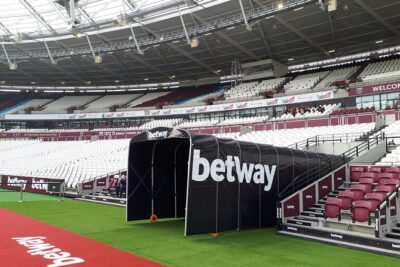
West Ham United FC London (Olympic) Stadium Tour
Read our review →Browse the lists this tour appears in