
Reviewed · STREET ART
London Street Art Tour of the East End Semi-Private 12ppl Max
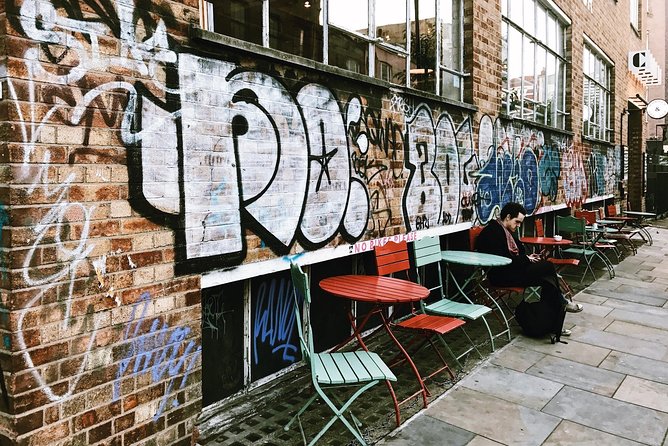
Banksy and Jack the Ripper walk together here.
This semi-private East End tour pairs street art you can spot on real streets with dark-but-fascinating London stories, guided by pros like Ivo and Darcy. You get a focused route that makes the city feel personal fast, even if this is your first time in the neighborhood.
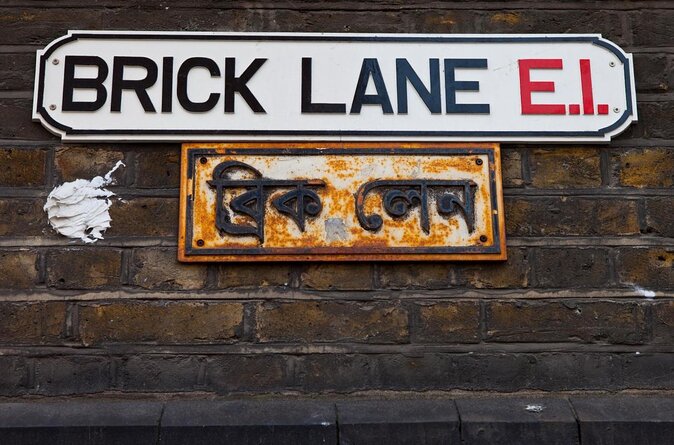
I also love the balance between art and day-to-day life, not just name-dropping. You’ll pass through places tied to Cockney rhyming slang, curry-house culture on Brick Lane, and the market energy around Spitalfields and Petticoat Lane.
One thing to plan for: it’s a walking tour with a moderate pace and it is not available for wheelchair users or guests with walking disabilities. Also, expect mostly street-level viewing since some stops cannot be visited from the inside due to security.
In This Review
- Key things you’ll notice on this East End street art tour
- Entering the East End, the city’s best starting point for street art
- Semi-private size, start and end, and how the walk actually feels
- Stop 1: East End streets, Shoreditch energy, and the art of contradiction
- Stop 2: Petticoat Lane Market, 400 years of trading vibe
- Stop 3: Artillery Passage, a quick look at 17th-century London lanes
- Stop 4: Old Spitalfields Market, Victorian halls with modern shopping
- Stop 5: Whitechapel walking stretch, Jack the Ripper streets
- Stop 6: Brick Lane, street art wall-to-wall plus curry-house reputation
- Stop 7: Shoreditch High Street, the old main street vibe
- Price and value: is $59.22 worth it for Banksy-level street art plus context?
- What kind of traveler should book this one?
- Should you book the London Street Art Tour of the East End?
- FAQ
- How long is the London Street Art Tour of the East End?
- What are the start and end points?
- What group size is this tour?
- Does the tour run in bad weather?
- Is this tour accessible for wheelchair users or guests with walking disabilities?
- What should I bring for the walk?
Key things you’ll notice on this East End street art tour
- Max 12 guests keeps it “small-group” in practice, not a huge herd.
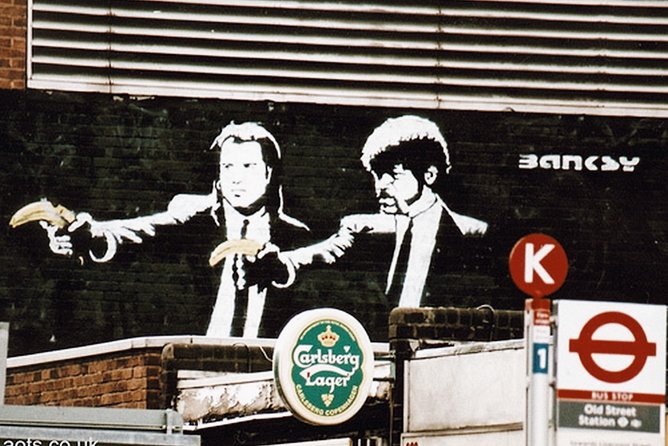
- Street art hall of fame names like Banksy and Shepard Fairey are part of the story, not just decoration.
- Whitechapel Jack the Ripper context is woven into what you see as you walk.
- Market stops give you a real feel for the area, especially around Spitalfields and Petticoat Lane.
- Old London passages show you narrow lanes and courtyards at Artillery Passage.
- Rain or shine with route changes when celebrations affect streets.
Entering the East End, the city’s best starting point for street art
The East End works because it’s a mix. You get fashion and markets next to old passages, new art next to older housing shapes, and tourist-free streets right beside the places everyone talks about. That contrast matters on a street art tour, because the walls and textures look different when a neighborhood still has its own rhythm.
This one starts in a part of London that already has a story baked in, around Liverpool Street. From the first steps, you’re guided to understand the area as a melting-pot zone where cultures overlap and change over time. That sets you up to “read” street art with more than your eyes. You start noticing how styles, messages, and artists fit the street where they landed.
And if you care about what street art means, not just what it looks like, the tour’s mix helps. It connects the walls to the people and the history, from Cockney language and daily markets to Whitechapel’s reputation and later transformations into a hub for art and nightlife.
Also on in London, no fuss
Semi-private size, start and end, and how the walk actually feels
This is a semi-private walking tour with a maximum of 12 people. In plain terms: you can hear your guide, you’re not constantly boxed in by strangers, and you’ll likely get clearer explanations of what you’re seeing. That matters because street art only makes sense when someone tells you what to look for, like techniques, local references, or why a particular wall became a canvas.
Timing is also workable. The tour runs about 2 to 2.5 hours, which is long enough to cover multiple neighborhoods without turning into an all-day marathon. You’ll finish at Shoreditch High Street Station, which is useful because it gives you a clean exit point. From there, you can train back to central London at your own expense or stay and keep exploring.
Logistics are straightforward, but pay attention to the details:
- Meet at the Kindertransport statue at Liverpool Street Station (14 Liverpool St, London EC2M 7NH).
- No hotel pickup or drop-off, so plan your own way to Liverpool Street.
- You’ll want comfortable shoes and a water bottle. Rain gear helps too since the tour runs in bad weather.
- Big bags and suitcases are not allowed, so travel light.
One more practical note: the route can shift for national celebrations. The tour still aims to hit the main highlights, but the exact walking path may change.
Stop 1: East End streets, Shoreditch energy, and the art of contradiction
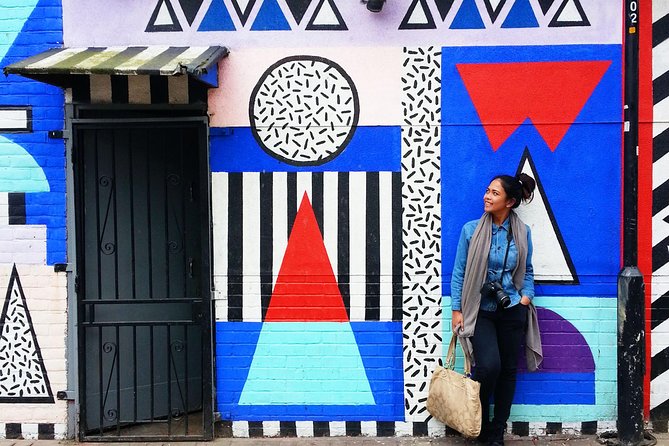
The big opening stop sets the tone. You’ll move through East End streets with an eye for how the neighborhood has changed from older slum-era London to a modern creative zone, especially around Shoreditch. The point is not just to show pretty murals. The point is to show how the area’s identity fuels the art on its walls.
This is where the tour connects multiple themes at once:
- Street art references linked to names like Banksy and Shepard Fairey
- Other artist mentions such as Eine
- Local culture through Cockney rhyming slang
- The sense of place behind later fame, including the area’s link to Jack the Ripper stories and other notorious history
If you’re a first-time visitor, I like that this opening gives you orientation. You learn the geography in a way that doesn’t feel like homework. Instead, you walk past the walls, then you understand why those walls became part of London’s “street” conversation.
You’ll also hear about local landmarks connected to food and market culture. Spitalfields Market comes up as a key flavor of the area, and Brick Lane’s curry-house reputation enters the story early, so later stops feel like they belong rather than jumping around.
How long you spend here: about 2 hours, since it’s the backbone of the walk.
What to watch for: layered meanings in street art, not just a single signature style. The guide will help you spot details that make a piece feel connected to its street.
Stop 2: Petticoat Lane Market, 400 years of trading vibe
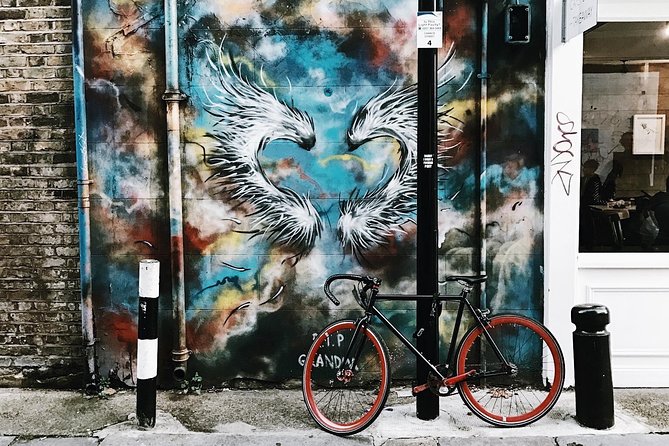
Next you head toward Petticoat Lane Market, an area that has been trading for over 400 years. The tour frames the market as part of London’s long cultural mix, tied to early sellers including French Huguenots who sold petticoats and lace.
Today it’s known more for clothes for men, women, and children. That’s exactly the kind of practical detail that makes a market stop more than a photo break. You’re not just looking at stalls, you’re understanding what kind of shopping this place still does.
Timing: short, around 10 minutes, so it’s more of a “get the feel” stop than a full shopping session.
Best use of your time: listen to the context, then browse if you want, quickly. If your goal is art plus history, keep it moving. If you want shopping, you’ll probably want extra time on your own after the tour ends.
Stop 3: Artillery Passage, a quick look at 17th-century London lanes
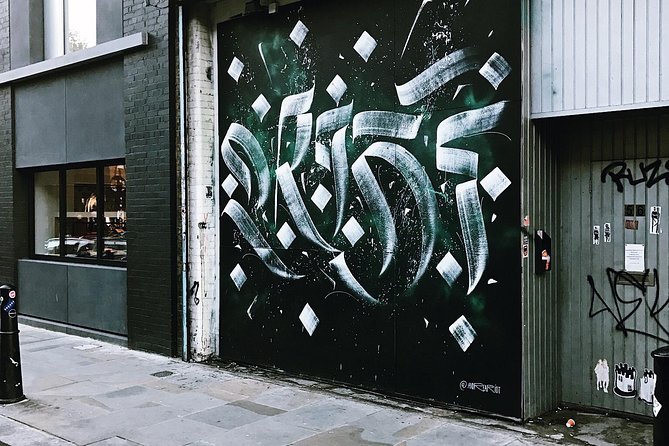
Then comes one of my favorite styles of stop on any walking tour: a passage that changes your sense of scale. Artillery Passage gives you a glimpse of older London through its conservation area feel, with narrow lanes, passages, and courtyards.
Even with modern urban changes around it, this kind of spot helps you picture the city before today’s roads and big facades. For street art tours, it also helps you understand why artists like using these spaces. Narrow lanes and tucked-away corners can make a mural feel more personal, like it’s speaking to the people who actually walk through.
Timing: around 10 minutes.
Practical takeaway: this is a great moment to slow down, look up, and notice how light and architecture affect how paint reads.
While the kettle’s on in London:
- Stonehenge, Windsor Castle, and Bath from London★ 4.5 · 18,662 reviews
- London Big Bus Hop-On Hop-Off Tour with Optional River Cruise★ 3.5 · 10,803 reviews
- London Small Group Tour of Historical Pubs★ 5.0 · 10,422 reviews
- Stonehenge, Windsor Castle and Bath with Pub Lunch in Lacock★ 4.5 · 7,402 reviews
Stop 4: Old Spitalfields Market, Victorian halls with modern shopping
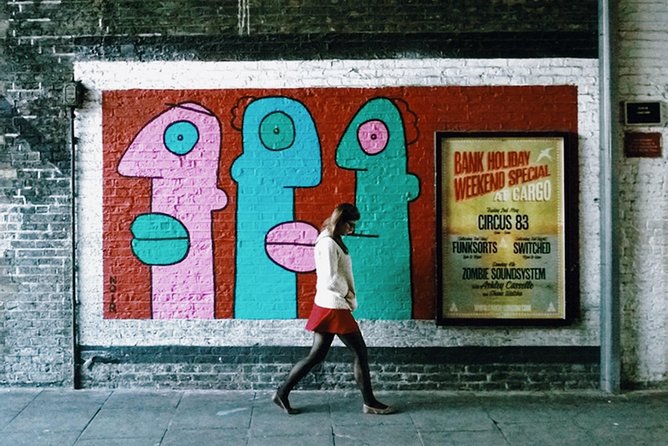
Next you explore Old Spitalfields Market, described as one of the finest surviving Victorian market halls in London. Built in the 1800s and refurbished in the early 2000s, it’s now a mix of boutique stores, lifestyle spots, and restaurants.
This stop adds a different flavor than the outdoor markets. You’re moving from street trading into a covered market hall, and it changes the sound and rhythm instantly. That’s helpful because the East End experience is not only street art. It’s also how people shop, eat, and meet.
Timing: short, about 10 minutes.
What you can do with it: if you like to browse, this is your chance to pick one place to return to later. Since the stop is brief, don’t expect a long meal here during the tour.
Also, this is one of those places where you might wonder about inside access. The tour notes that some attractions cannot be visited from the inside due to security measures. So treat this as a mostly walk-and-look experience, with occasional opportunities depending on the day.
Stop 5: Whitechapel walking stretch, Jack the Ripper streets
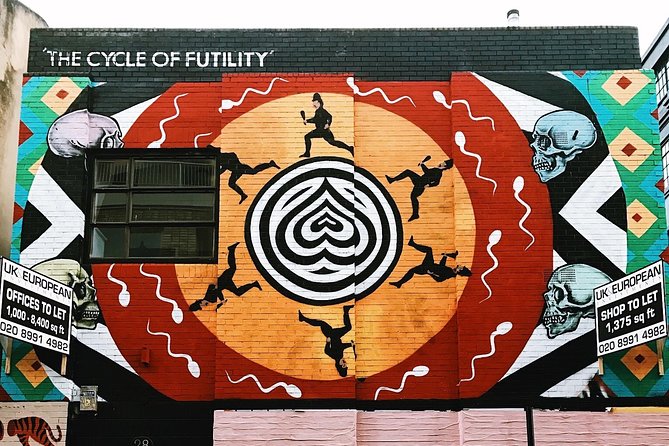
Then you move through Whitechapel, directly connected to the Whitechapel Murders of the late 1880s tied to Jack the Ripper.
This is where the tour does something important: it doesn’t treat the dark history as a jump-scare story. It ties it back to the street layout and the neighborhood context. When you walk the streets, you understand why the area became so notorious and how later legends stuck to the place.
Timing: around 10 minutes.
How to approach it: keep it respectful and listen for cause-and-effect. The value here is connecting what you heard to what you see around you, not treating it like pure horror entertainment.
Stop 6: Brick Lane, street art wall-to-wall plus curry-house reputation
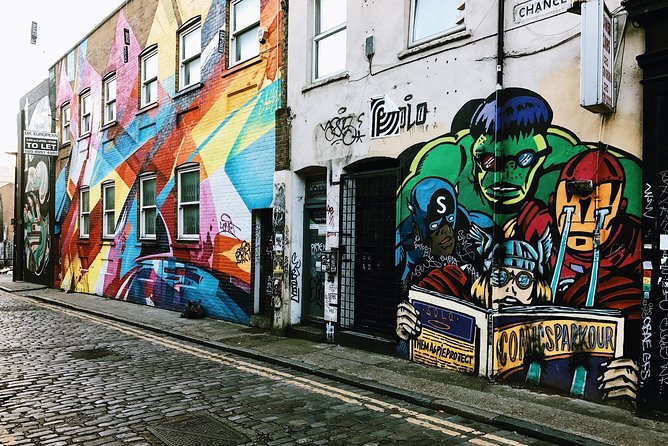
Brick Lane is where the tour turns more upbeat again. You’ll walk along this famous East London street known for breweries, markets, and a strong artistic community. It’s also where the curry-house side becomes part of the day’s pacing.
This stop is short, about 10 minutes, but it’s built for seeing a lot. You’re moving along the street while your guide points out street art and explains why certain styles and messages work in that setting.
If you’re hungry, Brick Lane is also the kind of place where you’ll want to plan a meal before or after your tour. The tour gives you the reference point, and then you can choose your own stop based on what you’re in the mood for.
What to watch for: the way art changes along the street, and how different walls feel like they belong to different “micro-eras” of the neighborhood.
Stop 7: Shoreditch High Street, the old main street vibe
Finally, you’ll walk along Shoreditch High Street, described as the old main street of Shoreditch and a base for trendy bars and authentic restaurants. This is a practical end-zone stop, because it feeds your next move.
By now, you’ve seen the art, heard the history, and gotten market context. Shoreditch High Street gives you the “what now?” answer. If you still have energy, it’s the logical place to keep exploring on your own rather than rushing back to central London immediately.
Timing: about 10 minutes before ending near Shoreditch High Street Station.
Smart move: if you want photos, this is a good place to do a quick final sweep of what you missed, then head out.
Price and value: is $59.22 worth it for Banksy-level street art plus context?
At $59.22 per person, this tour isn’t bargain-bin cheap, but it also isn’t priced like a private car and guide. You’re paying for a professional tour guide, a semi-private group capped at 12, and a route that blends street art spotting with neighborhood history and market stops.
Here’s how that can translate into value for you:
- You save time. Instead of picking streets and guessing where the best walls are, you follow a path built around major East End touchpoints.
- You get interpretation. Street art names like Banksy and Shepard Fairey are much more useful when someone explains what to notice.
- You get more than art. The Whitechapel connection, plus market culture and Brick Lane food references, makes the walk feel like London, not just graffiti sightseeing.
If your priority is strictly street art photography with no history, you might feel you want more time at the walls. But if you want the kind of tour that helps you understand why the art exists in this place, the price starts to make sense.
What kind of traveler should book this one?
I think this tour is a great fit if you:
- Want a first-timer friendly East End introduction that still feels local
- Like street art but also want context like references, themes, and neighborhood meaning
- Prefer walking in a small group where you can actually hear your guide
It’s not the best match if you:
- Use a wheelchair or need accommodations for walking disabilities
- Carry large suitcases or bulky bags
- Hate walking and short, frequent transitions between streets and passages
If you’re traveling with kids, they must be accompanied by an adult, and the stops are short enough that you can manage breaks and keep attention moving.
Should you book the London Street Art Tour of the East End?
Yes, if you want a guided East End walk that treats street art as part of London life, not just an Instagram loop. The small group size helps you get real explanations, and the mix of artists plus Jack the Ripper context plus markets gives your afternoon texture. It’s also a smart choice if you like mixing “serious” stories with the kind of neighborhood energy that makes London feel like a place, not a checklist.
If you’re sensitive to walking time or need wheelchair access, skip it. Also, if you want long shopping or museum-style indoor time, plan extra time on your own after the tour, since this is mostly street-level viewing and brief stops.
FAQ
How long is the London Street Art Tour of the East End?
It runs about 2 to 2.5 hours, with an approximate total duration of around 2 hours 30 minutes.
What are the start and end points?
You meet at the Kindertransport statue at Liverpool Street Station (14 Liverpool St, London EC2M 7NH) and the tour ends in Shoreditch near Shoreditch High Street Station.
What group size is this tour?
It is semi-private with a maximum of 12 guests.
Does the tour run in bad weather?
Yes, the tour will run rain or shine.
Is this tour accessible for wheelchair users or guests with walking disabilities?
No. The tour is not available for those with walking disabilities or using a wheelchair.
What should I bring for the walk?
Wear comfortable shoes. Bring a bottle of water, an umbrella if rain is possible, and a hat during summer. Large bags or suitcases are not allowed.
Latest to join the queue for London






Street Art, compared.
London Bike Tour: Landmarks, Secret Gems, Pub Stop & Street Art
Read our review →

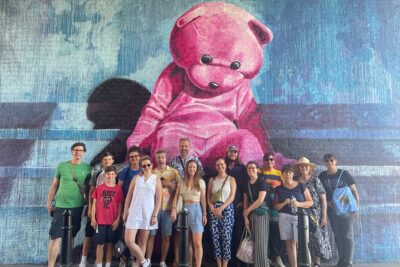
Shoreditch Street Art and Graffiti Tour (Private Group Booking)
Read our review →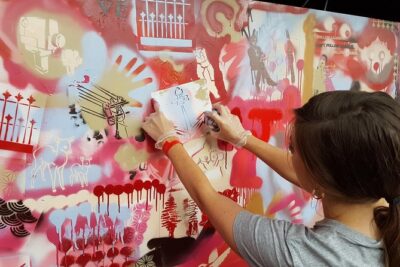
Street Art Tour and Spray Painting Workshop in London
Read our review →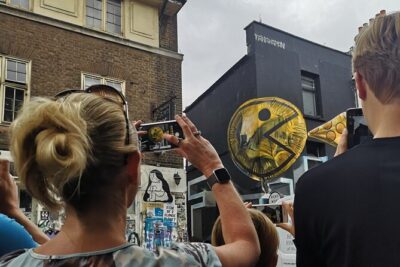
Street Art Walking Tour and Workshop in London
Read our review →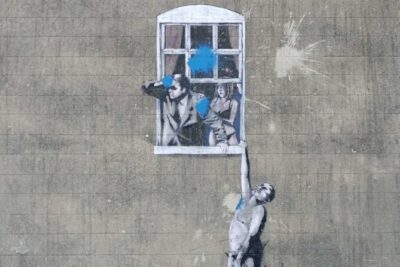
Bristol Street Art: Banksy Exploration Game and Tour
Read our review →
Urban Canvas: Exploring Shoreditch’s Vibrant Street Art
Read our review →Browse the lists this tour appears in