
Reviewed · GUIDED WALKS IN LONDON
London Mystical and Dragons Walking Tour
Stop chasing maps and start chasing symbols. This London Mystical and Dragons Walking Tour turns everyday streets into a story about dragons, sacred stones, and old religious symbols you usually miss. You’ll get a walk that blends legend, Roman-era mystery, and the kind of City of London details that make you look up and then look again.
What I like most is the focus on small, specific sites, not big photo stops. I also like the way the guide, Arjun, connects the dots so it feels like one theme, not random trivia, and you finish with a PDF so you can revisit the places later.
One drawback to keep in mind: some churches and buildings can be closed or limited at certain times, so you may sometimes view things from the outside or through images. If you are hoping for every interior to be open, plan to be flexible.
In This Review
- Key highlights to look for on this walk
- London Stone to Temple Bar: A myth thread through the City
- Small group with Arjun: how the walk stays personal
- Following lost rivers: Walbrook, the Bank area, and Ludgate Circus
- London’s Roman mystery: Mithras and the occult clues you can spot
- St Mary Le Bow, Cheapside, and St Paul’s Phoenix symbolism
- Medieval symbol hunts: St Martin-within-Ludgate, St Dunstan, and Temple Church
- Dragon protectors at Temple Bar: the walk’s punchline
- Price, pace, and the practical stuff that actually matters
- Who should book this tour, and who should skip it
- Should you book this London Mystical and Dragons Walking Tour?
- FAQ
- FAQ
- Where does the London Mystical and Dragons Walking Tour start?
- Where does the tour end?
- What time does the tour begin?
- How long is the tour?
- How much does the tour cost?
- How large is the group?
- What language is the tour offered in?
- Do I receive a PDF of the locations?
- Do I need a printed ticket?
- What happens if the weather is bad?
- Can I cancel and get a full refund?
Key highlights to look for on this walk
- Dragon lore tied to real landmarks, not just spooky talk
- Lost rivers stories that explain why certain spots matter
- Roman Mithras stop, with esoteric clues explained on the ground
- Church symbolism at multiple sites, including bells and phoenix imagery
- Small group size (max 8) that keeps the pace human
- Take-home PDF map, useful for a second visit after the walk
London Stone to Temple Bar: A myth thread through the City
This tour is built like a trail of clues. You start in the City of London, where stone buildings, narrow lanes, and quiet corners make it easy to forget that the area used to be shaped by older rivers and older belief systems. The walk keeps pulling you back to the same question: what do these shapes, stones, carvings, and street legends mean?
The City of London theme matters because the area is packed with layers. You’re not just seeing one era. You’re moving from local legend, to Roman religion, to medieval churches, to the dragon-protectors of the City itself. The result feels like London is teaching you how to read it, one stop at a time.
You’ll also notice a practical rhythm. Each stop is short enough to keep energy up, but long enough to actually explain why that exact location is on the route. If you like walking tours that give you something to notice on your own after you leave, this one fits that style.
More Guided Walks in London
Small group with Arjun: how the walk stays personal
A maximum group size of 8 is a big deal on a tour like this. It means the guide can answer questions instead of rushing past them, and it also means you can hear the explanations clearly on sidewalks that are not exactly wide.
Arjun’s storytelling is the engine here. People tend to love tours where the guide keeps researching and brings that extra care into the way they explain things. You can feel that in how the tour doesn’t just list facts, it makes connections, like water, symbols, and power all linking back to how people used to think.
There’s also an interactive feel. Even on a family-style afternoon, the walk can work for different ages because Arjun seems comfortable tailoring explanations on the fly. If you have teens who roll their eyes at history tours, this kind of symbolism-based approach is often the safer bet than a pure museum lecture.
Following lost rivers: Walbrook, the Bank area, and Ludgate Circus
London’s rivers are often described as if they were either gone or forgotten. This tour uses that idea to make a map in your head. You learn about the Walbrook river through stops that reference the stream’s earlier importance, and you keep hearing how the City’s layout connects to water paths that are now harder to see.
You’ll also get a sense of how power centers grew where they did. When the route reaches the Bank of England area, the focus isn’t on trading headlines. It’s on the idea of a seat of power built over older, forgotten water. That framing is useful because it gives you a reason to slow down and pay attention, even in modern surroundings.
Then the tour continues with more “lost river” references, including Ludgate Circus. This is one of those places where, if you are just passing through, you would never think about what’s underground. The walk turns that casual moment into a history-and-myth checkpoint, with a story that adds meaning to what you’re seeing above ground.
London’s Roman mystery: Mithras and the occult clues you can spot
One of the standout stops is the Roman temple site tied to Mithras. The tour presents it as a place connected with Roman worship of the sun god and the kind of secret knowledge people associated with that tradition.
The value here is not only the subject. It’s the method. You are given a way to look at symbols and themes rather than treating the topic as a one-off oddity. You’ll understand why Roman-era religious spaces still echo in how later cultures thought about mystery, protection, and meaning.
If you’re the type who likes “how did they think?” questions, you’ll probably enjoy this section most. It’s where the tour leans hardest into the mysticism side while still staying grounded in real London stonework and real place names.
Practical note: the stops around historic sites can mean uneven walking and a lot of looking up, so it helps to wear shoes with grip and plan for short bursts of standing.
St Mary Le Bow, Cheapside, and St Paul’s Phoenix symbolism
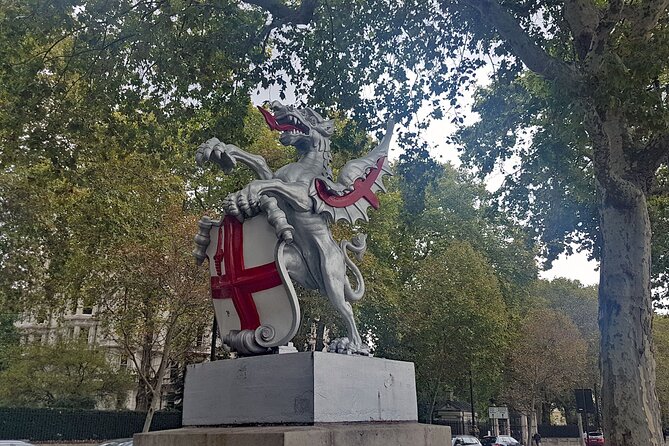
The route doesn’t treat churches as just pretty buildings. It treats them as symbol machines. At St Mary Le Bow, the tour focuses on sidelined or easily overlooked symbolism connected with the Bow Bells tradition. That’s a fun angle because it teaches you to notice details that you’d normally ignore while walking past.
From there, Cheapside brings a surprising contrast. The idea of the oldest tree in the City of London, plus the memory of trees now lost, gives the walk a more human, even gentle, tone. It’s a reminder that the City’s myths are not always about big monsters. Sometimes they are about the absence of something, and what people chose to keep in memory.
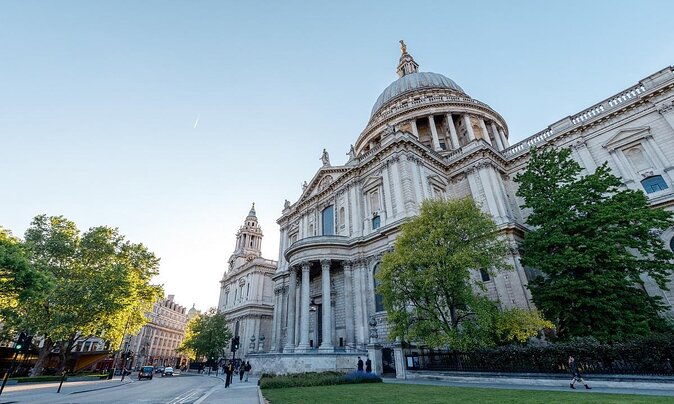
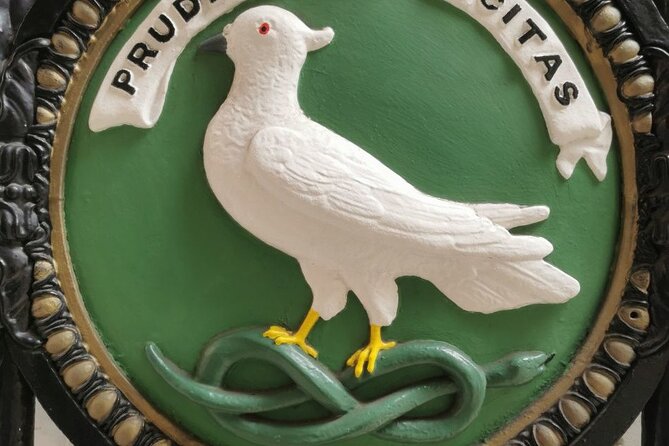
Then comes St Paul’s Cathedral, where the tour leans into ceremony and the phoenix symbol. The phoenix theme works well here because it connects with the broader motif of London renewing itself after change. The guide also frames it so it doesn’t feel like a random myth stop. It feels like another symbol in the same reading language the tour has been teaching you from the start.
If you care about details, you’ll likely enjoy this leg because you’ll start spotting patterns in the way the City’s buildings and church features express beliefs.
More England on foot, brolly optional:
- Westminster Guided Walking Tour with Abbey Entry★ 5.0 · 1,282 reviews
- Walking Tour of London Westminster Abbey, Big Ben, Buckingham★ 4.5 · 1,213 reviews
- London West End Musical Silent Disco Walking Tour Top 1% Rated★ 5.0 · 1,057 reviews
- Westminster 3 Hour Walking Tour and Visit of Churchill War Rooms★ 5.0 · 967 reviews
Medieval symbol hunts: St Martin-within-Ludgate, St Dunstan, and Temple Church

The middle of the walk keeps the energy up by mixing longer explanations with quiet streets and small pauses. St Martin-within-Ludgate is described as a church with a long history and ancient enigmas, and that sets expectations perfectly. You are not just rushing from church door to church door, you are learning how to decode meaning.
Next, St Bride’s Church adds another layer with pagan history and a well. That’s the kind of detail that changes how you see religious sites in London. Instead of thinking of churches as sealed-off spaces with one purpose, you see how layered beliefs were, and how symbolic objects could be reused or repurposed over time.
St Dunstan In The West then brings medieval symbolism to the front. This is a short stop, but it matters because it keeps you in the habit of reading shapes and motifs. Once you get that mental habit going, the later big-ticket stop lands better.
Temple Church is the one that many people remember the most, especially because of the Knights of the Templar connection and its architectural inspiration tied to the Church of the Holy Sepulchre. The tour presents it as a place that reveals esoteric wisdom, and it’s easy to see why. Even when the explanation stays focused, the building itself feels designed for symbolism.
One important caution: interiors can sometimes be closed. One review specifically called out Temple Church as not open during their visit. If a stop is closed, the guide typically compensates by spending more time on other sites and using images to keep the story moving, but you should still expect some exterior-only viewing on certain days.
Dragon protectors at Temple Bar: the walk’s punchline
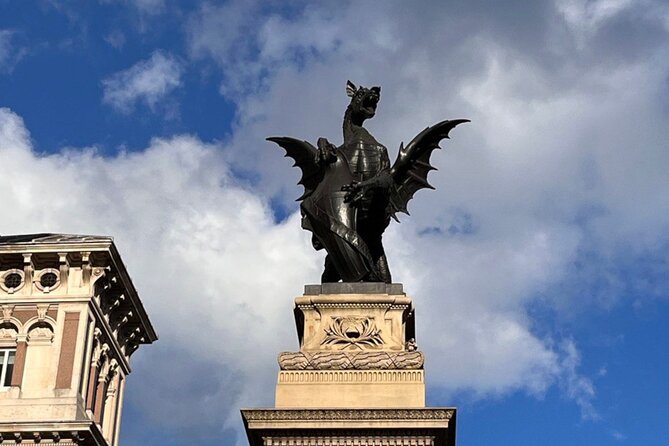
The tour ends at Temple Bar Memorial, positioned near the Royal Courts of Justice. This is where the dragon theme becomes literal, at least in the way the City tells stories about protection and guardianship.
Temple Bar is presented as the fiercest of the City’s protector dragons, and the mythology connections are explained in a way that makes them feel less like fantasy trivia and more like a pattern. The tour links mythic references back to well-known dragon and guardian themes you’ve likely heard before, including Beowulf, Tiamat, and St George.
This ending works because it pulls together earlier ideas. Sacred stones, hidden rivers, and symbol-heavy churches are all part of the same theme of protection and meaning. You finish the walk with a strong mental image of how the City uses legends to explain itself.
If you’re the kind of person who likes to take one symbolic detail home, this is the stop to photograph carefully.
Price, pace, and the practical stuff that actually matters
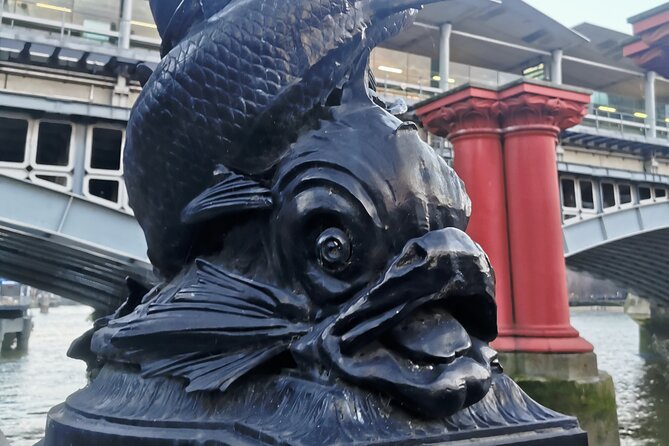
At about $29.48 per person for a 2 to 3 hour walk, you’re paying for storytelling, site access through a guided route, and a take-home PDF. That sounds simple, but it’s good value in London, where many self-guided walks end up feeling like you walked past interesting things without learning what you were looking at.
The small group size helps your money go further. With max 8 people, the guide can keep the pacing conversational, and you’re less likely to feel swept along like you’re in a big bus-style crowd.
Walking time is real. You’ll cover a lot of ground across City streets, including standing at churches and memorial points. The tour style is “many short stops,” so it doesn’t feel like a long slog, but you will want solid walking shoes.
A fun tip: look for dragons, but also look for other symbols near them. One visitor mentioned missing a dragon on a church weathervane, which is a perfect reminder that the details are sometimes small and high up. If you bring a phone camera, take a few quick top-down photos so you can zoom in later.
What about the PDF? The tour includes a PDF take-home of the locations you saw. That’s useful for turning the walk into a mini scavenger hunt on your own schedule. If you have not received it after the tour, it may help to check your email and spam folders, since one review noted a disappointment about not getting the PDF right away.
Who should book this tour, and who should skip it
If you love mythology, symbolism, and learning why people cared about certain places in the first place, you’ll likely enjoy this one a lot. It’s also a solid fit if you have already done the big mainstream sights in London and want a route that feels more personal and off the usual tourist radar.
It’s especially good for people who don’t want a lecture. The tour stays light on formalities. It’s more like a guided walk where the city becomes a puzzle board.
Families can work well here too. One review mentioned the tour was enjoyable for a 10-year-old, with good pacing and patience while answering questions. Since the dragon and symbol theme is visual, it can hold attention in a way that straight history does not.
If your idea of a great tour is mostly indoor access, then manage expectations. Historic interiors can be closed, and the tour includes churches and temple-like sites that might not always be open. On those days, you may still get strong storytelling, but you could get more outside viewing than you hoped.
Should you book this London Mystical and Dragons Walking Tour?
Book it if you want to see London through a symbolism lens and you like walking between small, meaningful stops. The combination of City of London sites, Roman Mithras context, and dragon-protector storytelling creates a tour that feels different from the typical “look and go” sightseeing circuit.
Skip it if you need guaranteed interior access at every stop, or if you dislike tours where you look up at details and think about meaning more than architecture alone. Also, if you’re visiting on a day when closures are likely, bring flexibility. Some stops may be limited, and the guide may use images or extra time elsewhere to keep the narrative moving.
FAQ
FAQ
Where does the London Mystical and Dragons Walking Tour start?
It starts at 113 Cannon St, London EC4N 5AW, UK.
Where does the tour end?
The tour ends at the Temple Bar Memorial in the City of London, London EC4A 2LT, near the Royal Courts of Justice.
What time does the tour begin?
The start time listed is 1:30 pm.
How long is the tour?
The duration is about 2 to 3 hours.
How much does the tour cost?
The price is $29.48 per person.
How large is the group?
This tour has a maximum of 8 travelers.
What language is the tour offered in?
It is offered in English.
Do I receive a PDF of the locations?
Yes. The tour includes a take-home PDF of the locations you saw on your tour.
Do I need a printed ticket?
No. It uses a mobile ticket.
What happens if the weather is bad?
This experience requires good weather. If it is canceled due to poor weather, you will be offered a different date or a full refund.
Can I cancel and get a full refund?
Yes, you can cancel for a full refund if you cancel up to 24 hours in advance. If you cancel less than 24 hours before the experience starts, the amount paid is not refunded.
Latest to join the queue for London







Guided Walks in London, compared.

Tour for Muggles The Ultimate Harry Potter Walking Tour in London
Read our review →
Changing of the Guard Guided Walking Tour in London
Read our review →
The Great British Rock and Roll Walking Tour
Read our review →
Westminster Guided Walking Tour with Abbey Entry
Read our review →
Walking Tour of London Westminster Abbey, Big Ben, Buckingham
Read our review →
London West End Musical Silent Disco Walking Tour Top 1% Rated
Read our review →
Westminster 3 Hour Walking Tour and Visit of Churchill War Rooms
Read our review →
WW2 London Walking Tour & Churchill War Rooms Entrance Ticket
Read our review →Browse the lists this tour appears in