
Reviewed · GUIDED WALKS IN LONDON
London: Money & Power – Babylon to Bitcoin Walking Tour
Money makes people act weird. This walking tour takes you through London’s Square Mile and shows why. You start with early ideas of money and power, then keep going all the way to modern digital talk, with stops you’d usually skip on a normal sightseeing loop.
I especially loved how the guide links money to everyday places, not just banks and museums. And I really liked the tour’s focus on free entry at each stop, so your money goes to the experience, not ticket math.
One thing to consider: it’s still a nearly 3-hour walk. If churches and heritage buildings are not your thing, some stops may feel more like history-of-ideas than big visual wow moments.
In This Review
- Key things that make this walk worth your time
- Money & Power in the Square Mile, not the usual tourist loop
- Price and timing: what $30.57 buys you in real terms
- Before you start: how to set yourself up for an easy 2h45
- Stop 1: Guild Church of St Mary Aldermary, where money meets magic and authority
- Stop 2: Royal Exchange, 1566 trading power in a neoclassical shell
- Stop 3: London Mithraeum at Bloomberg SPACE, money myths before the Romans
- Stop 4: St Edmund the King Church, where modern western banking gets its birthplace story
- Stop 5: Jamaica Wine House, a first coffee house and early finance
- Stop 6: Change Alley, the 17th to 18th century center of finance
- Stop 7: Bank of England Museum, modern money and the cost of power
- Stop 8: Duke of Wellington statue, pigeons, war news, and market moves
- Stop 9: Statue of James Henry Greathead, the Industrial Revolution meets finance
- Stop 10: St Mary Woolnoth Church, debt, slavery, and Christian values in the same frame
- Stop 11: 1 Lime St, insurance and empire shaping the world
- Stop 12: Plantation Lane, tides and power in an outdoor installation
- Stop 13: Leadenhall Market, back to financial roots and a dragon theme
- Stop 14: Hogarth Court, Gilt of Cain and the City’s role in transatlantic slave trade
- Stop 15: Garden at 120, a fresh perspective and the view to close out
- Who this tour fits best (and who might want a different type of London day)
- My practical tips to get the most from the walk
- Should you book London: Money & Power, Babylon to Bitcoin?
- FAQ
- How long is the London: Money & Power walking tour?
- What is the price per person?
- Is the tour offered in English?
- Do I need paid tickets for the stops?
- How big is the group?
- Where does the tour start and where does it end?
- Is free cancellation available?
Key things that make this walk worth your time
- Square Mile focus: You get out of the “top attractions only” rhythm and into the real financial heart of London.
- Storyline from Babylon to Bitcoin: The guide connects ancient money-thinking to today’s digital debates.
- Small groups (max 8): More chance to ask questions and keep the pace human.
- Free-entry stops: Each listed site is marked ticket-free, so you can stay present without scrambling for admissions.
- Practical, human guide energy: Arjun stands out for being well prepared and engaging, and it shows in how smoothly the facts connect.
Money & Power in the Square Mile, not the usual tourist loop
London’s Square Mile can feel like a blur if you only use it as a route between sights. This tour slows that down and gives you a map made of meaning. You’re not just looking at old buildings, you’re learning why they mattered for trade, trust, and control.
What makes it work is the pacing and the framing. The tour starts with the deep roots of money, then keeps returning to power, politics, and who gets to set the rules. It ends on modern money themes, including digital currency, without turning it into pure tech talk.
And I like that you’re walking where the story happened. You see the setting, you hear how people used it, and you start noticing the City’s “signals,” even when no one is shouting about them.
More Guided Walks in London
Price and timing: what $30.57 buys you in real terms
At $30.57 per person for roughly 2 hours 45 minutes, you’re paying for a guided narrative across multiple stops. The big value is not the number of buildings, it is the way your guide strings them together into a single explanation.
Also, many of the stops are marked with free entry. That matters because it keeps the experience from turning into a pay-more-please itinerary. You can focus on the learning instead of budgeting for add-ons.
Finally, the tour includes time for travel between points in the total duration. So you can plan your day without guessing how long you’ll be “in transit” on top of the walking.
Before you start: how to set yourself up for an easy 2h45
You begin at Pret A Manger, 90 Queen St (EC4N 1SA), and the walk ends at Garden at 120, 120 Fenchurch St (EC3M 5BA). You finish on top of a building where you can keep enjoying the view and, if you want, grab a bite or drink afterward.
Because the stops include churches and special sites, wear shoes that handle uneven paving and standing time. Bring a small bottle of water if you tend to get thirsty on walks, even though it is only a half day.
If you like connecting history to current life, you’ll have a great time. If you prefer purely scenic sightseeing, you might want to mentally switch gears and treat this like a walking lesson with great locations.
Stop 1: Guild Church of St Mary Aldermary, where money meets magic and authority
You begin at the Guild Church of St Mary Aldermary, framed as the point where the story of money, magic, and power starts to make sense. The key idea here is that early financial thinking was not separate from religion and belief systems.
This is a smart opener because it sets expectations. You’re not going to get a dry timeline. You’ll see how people explained risk, value, and legitimacy using the tools they already had.
A practical note: it’s a short stop, about 10 minutes. Use it to get oriented with the tour’s theme words, because the guide builds on them immediately after.
Stop 2: Royal Exchange, 1566 trading power in a neoclassical shell
Next is the Royal Exchange, founded in 1566 as England’s first purpose-built trading floor. Fires forced rebuilding twice, and today you also see luxury shops under a neoclassical facade.
This stop is valuable because it shows how the physical place and the financial purpose can outlive the original structure. Even if you’ve never studied the City’s commercial past, you can feel the difference between a marketplace that is designed for trust versus one that is just busy.
Drawback: if you want only dramatic interiors, you might not get that here. The impact is more about the meaning of the building and the way the City organized trade.
More England on foot, brolly optional:
- Westminster Guided Walking Tour with Abbey Entry★ 5.0 · 1,282 reviews
- Walking Tour of London Westminster Abbey, Big Ben, Buckingham★ 4.5 · 1,213 reviews
- London West End Musical Silent Disco Walking Tour Top 1% Rated★ 5.0 · 1,057 reviews
- Westminster 3 Hour Walking Tour and Visit of Churchill War Rooms★ 5.0 · 967 reviews
Stop 3: London Mithraeum at Bloomberg SPACE, money myths before the Romans
The London Mithraeum at Bloomberg SPACE shifts the focus to deep origins. The guide points to the “origin of money magicians,” the oldest financial transaction, and money from before the Romans arrived.
Even if you already know a bit about ancient religions, this is the kind of stop that makes you re-check what you think you know. It also keeps the tour from becoming a straight-line story that starts in medieval London and ends in modern tech.
This stop is about 20 minutes, which is longer than the average stop. Take that time to let the guide’s connections land before you move on.
Stop 4: St Edmund the King Church, where modern western banking gets its birthplace story
At St Edmund the King Church, the theme becomes origin and birth. The guide explains how modern western banking was birthed around this area.
This is one of those moments where you’re learning the “why” behind a landmark, not just the landmark itself. Banking in the real world depends on systems, routines, and trust. A church location is a reminder that those systems grew inside existing community structures.
Potential consideration: if you’re expecting a full museum-style exhibit, you may find the explanation is mostly through conversation and the setting. The value is in hearing how the guide frames the area as a starting point.
Stop 5: Jamaica Wine House, a first coffee house and early finance
Next comes the Jamaica Wine House, with the tour’s quick move into informal finance. The guide connects the first coffee house in London to early finance and explains why that kind of social space mattered.
Coffee houses were more than places to sip and chat. They worked like early networks for information, which is a big deal in markets. You start seeing that money moves when people share news and ideas.
This stop is only 5 minutes, so let it be a spark rather than a deep lecture. If you ask a question, this is a good moment because the guide can connect it back to the rest of the day.
Stop 6: Change Alley, the 17th to 18th century center of finance
Then you’re at Change Alley, described as the epicenter of London’s financial world in the 17th and 18th centuries. This is the tour’s “speculation and speed” stop.
The practical value is that it helps you understand why finance needs locations that concentrate buyers, sellers, rumors, and contracts. When those things cluster, you get rapid price changes and sharper incentives to act quickly.
If you like historical fun facts around money, this is where you may hear them connected to everyday language too, including how phrases like the short end of the stick can trace back to financial practices.
Stop 7: Bank of England Museum, modern money and the cost of power
The tour then hits the Bank of England Museum for about 20 minutes. Here the focus becomes modern money and trade, plus the big human consequences behind it.
The guide connects themes like the beheading of a King, companies that developed an empire, and the shift toward modern money. And yes, the tour brings it into the present with the advent of the digital dollar and bitcoin.
This is one of the stops where you’ll feel the tour’s biggest promise. It doesn’t treat money like math only. It treats it like power, and power always has winners and losers.
Consideration: this is also a busy, high-interest stop. Expect to stand and listen more than you walk and explore. If you get antsy in museum-like settings, you’ll want to keep your attention on the guide’s big storyline.
Stop 8: Duke of Wellington statue, pigeons, war news, and market moves
At the Equestrian Statue of the Duke of Wellington, the tour turns to a very specific kind of influence: communication speed. The guide explains how a speedy pigeon reporting war (Wellington and Napoleon) enabled massive manipulation of the markets.
This stop is fun, but it is also serious. Markets react to information, and whoever receives it first can shift outcomes. You start seeing that technology changes the speed of power, not just the speed of news.
This is a short stop at about 5 minutes, so it works best as a pattern-spotter. Match the pigeon story to the earlier coffee house and Change Alley themes.
Stop 9: Statue of James Henry Greathead, the Industrial Revolution meets finance
Next is the Statue of James Henry Greathead, where the guide discusses what the Industrial Revolution meant for the City and points you toward one of its pioneers.
Even without extra technical detail, this helps you connect money to infrastructure. Big economic systems run on movement, production, and transport. When those change, financial patterns change too.
This is a 10-minute stop. Use it to think about the City as a machine, not just a collection of offices.
Stop 10: St Mary Woolnoth Church, debt, slavery, and Christian values in the same frame
At St Mary Woolnoth Church, the tour addresses something uncomfortable: the center point of history of debt and slavery, alongside Christian values. That combo is part of the tour’s core lesson about money and morality.
This stop may hit harder for some people because it refuses to treat finance as neutral. Money decisions were made by humans, and humans carried values, excuses, and harm with them.
Practical consideration: it is about 10 minutes. You won’t have time to process everything like you would alone in a longer visit. The guide’s job is to give you context quickly so you can connect it to the next stops.
Stop 11: 1 Lime St, insurance and empire shaping the world
At 1 Lime St, the tour highlights how an insurance company helped shape empire and the world. This is one of those “quiet power” themes.
Insurance is boring to some people until you realize it enables risk-taking, trade expansion, and long-range decisions. When you understand insurance’s role, it becomes easier to see why money institutions spread outward.
This stop is about 10 minutes, and it works well if you like the practical side of financial history, not just the drama.
Stop 12: Plantation Lane, tides and power in an outdoor installation
Then you get a breather with Plantation Lane, described as an outdoor installation that helps you consider movements of times and tides of money and finance and power.
This stop is around 5 minutes and it’s designed more for reflection than facts. It is a smart contrast to churches, statues, and institutional buildings.
If you tend to get overwhelmed on walking tours, this kind of short pause helps you reset your focus before the last stretch.
Stop 13: Leadenhall Market, back to financial roots and a dragon theme
Next is Leadenhall Market, where the tour returns to financial roots and talks about dragons. The dragon element is a playful way to bring attention to symbols, storytelling, and local identity in the City.
This is a more “alive” setting than a church doorway, and you’ll likely feel the change in atmosphere. It is still connected to the theme though, because markets are where money becomes real.
This stop is about 10 minutes. It is also a good chance to look around, because this is where you can connect history to present-day street life.
Stop 14: Hogarth Court, Gilt of Cain and the City’s role in transatlantic slave trade
At Hogarth Court, the tour points you to public space and the Gilt of Cain sculpture, memorializing the City’s role in the transatlantic slave trade.
This stop anchors the moral side of the story again. The tour is not trying to be cheerful. It’s trying to be honest about how finance can fund systems that harm people.
Potential drawback: if you want only uplifting stories, this may feel heavy. If you want context, though, this is where the tour becomes more than entertainment.
Expect about 10 minutes here.
Stop 15: Garden at 120, a fresh perspective and the view to close out
Finally, you end at the Garden at 120 on top of the 120 Fenchurch St building. The tour frames the conclusion as taking a fresh perspective.
The practical payoff is that the view helps you bring everything together. You’ve been moving through powerful places at street level, now you look out and get a sense of scale.
You can also continue with a drink or snack if you feel like turning your learning into a relaxed finish.
Who this tour fits best (and who might want a different type of London day)
This is a strong choice if you like economic history, political power, or the real-world mechanics of how markets react to information. It’s also great if you enjoy learning through place, where a building or churchyard becomes a classroom.
It is especially appealing for students or people curious about finance as a concept. One reason it lands is that the tour keeps translating money into stories you can remember, not just terms you forget.
If you’re the type who wants museums with lots of hands-on exhibits, you might find the shorter stops lean more on conversation and context. But if you like sharp facts and clean connections, this style should suit you.
My practical tips to get the most from the walk
Arrive ready to listen. This tour is about the guide’s storyline, so give them your attention in the first 30 minutes and you’ll catch the pattern.
Bring questions. The tour is capped at a small group size, and when the guide is engaged, your curiosity is part of the fun.
Take quick notes if economics is your interest. Even a few keywords like banking origin, coffee houses and information, insurance and risk, and modern digital money will help you remember the flow.
And save energy for the last stop. The climb into the ending viewpoint is where the day’s meaning clicks into place.
Should you book London: Money & Power, Babylon to Bitcoin?
Yes, if you want a Square Mile walk that connects ancient money-thinking to modern digital currency in one coherent theme. The price is reasonable for a guided, multi-stop narrative, especially since the listed sites are ticket-free when you arrive.
Also book it if you care about how money and power shape people, institutions, and even language. This tour doesn’t just point at buildings, it explains why those places mattered.
Skip it if you want a purely visual highlights tour with lots of time inside major attractions. This one is more about learning and interpretation than slow museum wandering.
If you’re curious, think of it as a compact economics and power story told at street level, with a guide like Arjun who keeps the facts connected and the pace engaging.
FAQ
How long is the London: Money & Power walking tour?
The tour runs for about 2 hours 45 minutes.
What is the price per person?
It costs $30.57 per person.
Is the tour offered in English?
Yes, the tour is offered in English.
Do I need paid tickets for the stops?
The listed stops are marked as admission ticket free.
How big is the group?
The tour has a maximum of 8 travelers.
Where does the tour start and where does it end?
It starts at Pret A Manger, 90 Queen St, London EC4N 1SA, and ends at Garden at 120, 120 Fenchurch St, London EC3M 5BA.
Is free cancellation available?
Yes. You can cancel for a full refund up to 24 hours in advance of the experience’s start time.
Latest to join the queue for London



Guided Walks in London, compared.
Tour for Muggles The Ultimate Harry Potter Walking Tour in London
Read our review →
Changing of the Guard Guided Walking Tour in London
Read our review →
The Great British Rock and Roll Walking Tour
Read our review →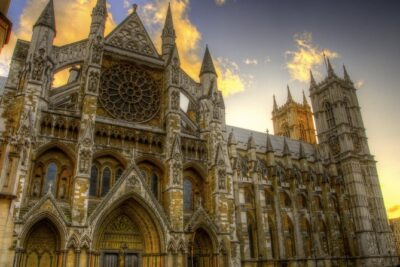
Westminster Guided Walking Tour with Abbey Entry
Read our review →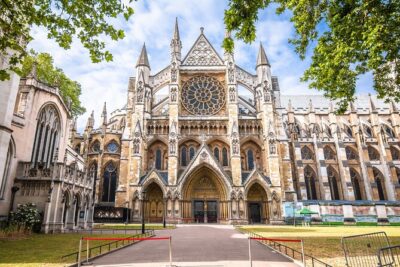
Walking Tour of London Westminster Abbey, Big Ben, Buckingham
Read our review →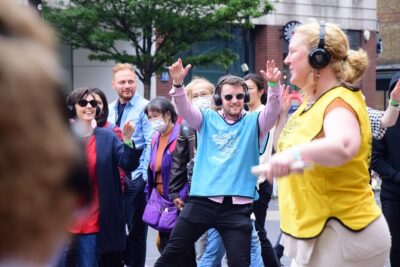
London West End Musical Silent Disco Walking Tour Top 1% Rated
Read our review →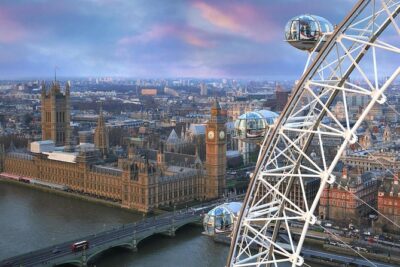
Westminster 3 Hour Walking Tour and Visit of Churchill War Rooms
Read our review →
WW2 London Walking Tour & Churchill War Rooms Entrance Ticket
Read our review →Browse the lists this tour appears in