
Reviewed · MUSEUMS
London: British Museum Guided Tour
Two hours, and you finally understand the British Museum. This small-group tour puts your feet on the exact route that hits headline objects like Rosetta Stone and the Parthenon sculptures (Elgin Marbles), with a guide turning big names into clear stories. You get admission with your ticket, so you are not juggling options while the museum pulls you in 10 directions.
What I like most is the way a good guide helps you read the galleries like a map, not a maze. I have seen guides such as Filomena and Maya praised for pointing out details people miss when they wander solo, including how objects connect across time and geography. With a maximum group size of 20, the experience stays interactive enough to ask basic questions.
One thing to consider is pacing. In a few cases, the tour style can include lots of small stories and side comments, and one mention noted a strong accent that made parts harder to catch. If you prefer a fast, object-first run, you may want to ask for a clearer focus early on, especially in a busy season.
In This Review
- Key highlights to look for
- The value of a 2-hour hit at the British Museum
- Meeting at Great Russell Street, then getting your bearings
- Enlightenment Rooms: Hans Sloane and the King George III Library
- Rosetta Stone: the object that changes everything
- Hoa Monument and the Tree of Life: unexpected meaning in unexpected places
- Benin Bronzes, Assyrian Monuments, and the Parthenon sculptures
- Greeks in Italy and Cyprus, plus Romans and Rome
- Price and logistics that actually affect your experience
- How the guide style changes what you take home
- Who this British Museum tour is best for
- Should you book this British Museum guided tour?
- FAQ
- How long is the London British Museum guided tour?
- Is admission included?
- What is the tour price per person?
- What language is the tour offered in?
- Where does the tour start and end?
- What is the cancellation policy?
Key highlights to look for
- Rosetta Stone, in context: see the original and understand why it matters
- Elgin Marbles, with orientation: learn what you are looking at before the building overwhelms you
- Benin Bronzes, close up: brass plaques and sculptures from the Kingdom of Benin
- Hoa Monument (Easter Island): a moai statue that surprises people in London
- Tree of Life made from decommissioned weapons: a stark object with a message about peace
- A tight route across Egypt, Assyria, Greece, and Rome: you leave with the big story stitched together
The value of a 2-hour hit at the British Museum
The British Museum is one of those places where “just go in” can turn into “where did two hours go?” fast. This tour is built for reality: you get about 2 hours, you get a live guide, and you get admission included. That matters because the museum itself is free for regular access, but your time is not.
At $31.55 per person, you are paying for two things: someone to choose a smart route and someone to explain what you are seeing. In other words, it is not about seeing every gallery. It is about leaving with a working mental model of what the museum is doing, why certain objects are famous, and how different civilizations echo each other.
You will also feel the benefit of the group size. With up to 20 people, the guide can usually keep everyone moving and still handle questions. If you go in summer or during school breaks, that small-group feel helps when the museum is packed.
More free halls and paid exhibitions:
Meeting at Great Russell Street, then getting your bearings
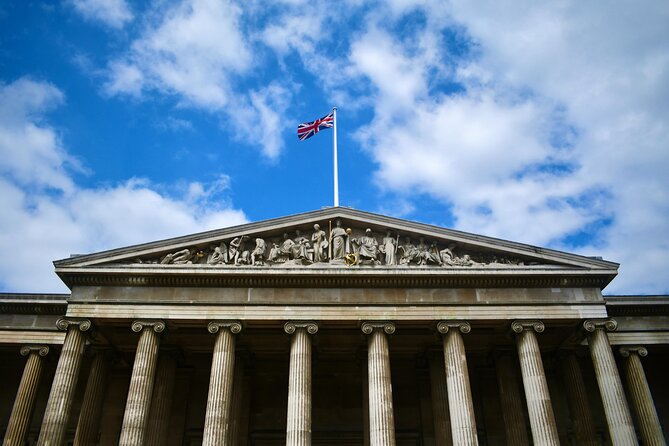
The tour starts at the British Museum, Great Russell St, London WC1B 3DG. You end back at the meeting point, so you do not have to build a second plan just to get out of the museum.
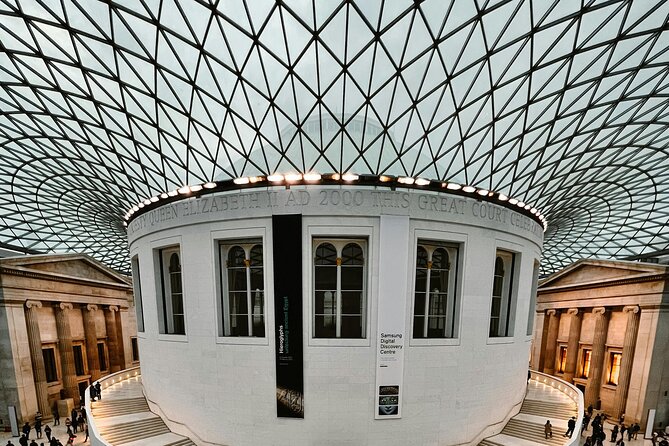
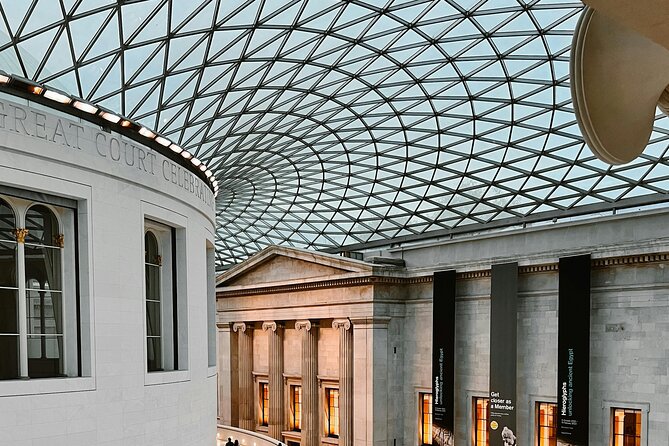
This matters more than it sounds. The British Museum’s layout can be confusing, especially if you walk in cold and expect to remember which building you came from. Having the guide’s route from the start helps you get your bearings fast, so your energy goes into the objects, not the hallways.
Because it is offered in English, you can expect explanations and directions in that language. The biggest practical tip: if English is not your first language and you have trouble with accents, try to sit where you can hear clearly at the front or closest to the guide.
Enlightenment Rooms: Hans Sloane and the King George III Library
Your route begins in the British Museum, then heads toward the Enlightenment Room and major intellectual backstories. One highlight on the tour is the Hans Sloane Collection. Sir Hans Sloane is known for collecting both human-made objects and natural specimens, and this room is where the museum’s early “world in one place” idea becomes visible.
What I like about starting here is that it changes how you read the rest of the museum. Instead of thinking of it as random treasures, you start to see a collection driven by curiosity and classification. It also sets up why people connect so strongly with the British Museum, even when they only come for one famous item.
Next comes the King George III Library. It is a reminder that these collections were not only about objects. They were also about books, scholarship, and how Enlightenment-era thinkers built knowledge step by step.
If you are short on time, this early stop is one of the best uses of a guided tour. You learn what the museum’s founders were trying to accomplish, so later rooms do not feel like a giant warehouse of artifacts.
Rosetta Stone: the object that changes everything
Then you hit the big one: the Rosetta Stone. The guide explains it as the key artifact for deciphering Egyptian hieroglyphs, which is exactly why it sits at the top of many museum wish lists.
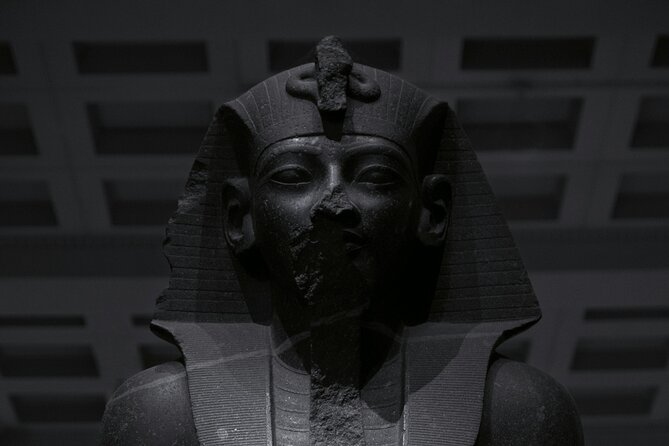
In plain terms, this is where the story shifts from “cool relic” to “scientific breakthrough.” The Rosetta Stone matters because it helped crack a writing system that had been unread for a long time. Seeing it with context makes the stone feel less like a celebrity exhibit and more like a turning point in knowledge.
The tour includes the Egypt section, the Real Rosetta Stone stop as well, plus Portals of Life, which focuses on ancient Egyptian beliefs about death and the afterlife. That pairing is smart. After you understand what the Rosetta Stone unlocks, you get a sense of what Egyptians believed about what comes next.
Possible drawback: if you are hoping for a long, quiet moment staring at the stone like it is a religious experience, a group tour is not that. This tour is designed to keep moving. Still, you will get a clearer explanation than you would from signage alone.
Hoa Monument and the Tree of Life: unexpected meaning in unexpected places
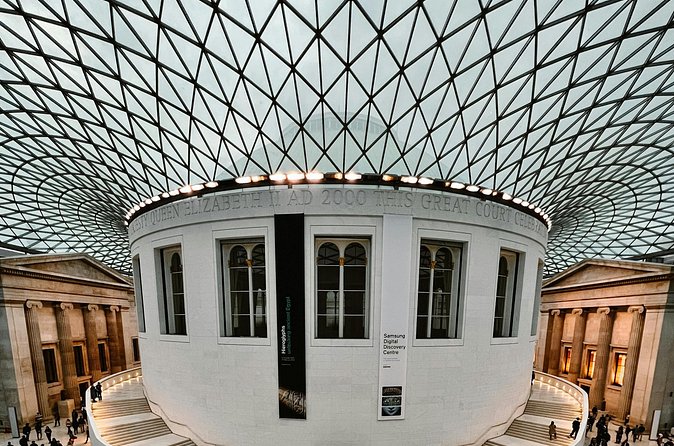
One of the most memorable parts of the route is in the Africa section, where you encounter the Hoa Monument, described as a moai statue from Easter Island. A moai in London can feel like the museum is playing tricks, but that is exactly the point of seeing it with guidance.
The guide helps you connect why an object can travel far from its original place and still carry its identity. Even if you do not get every historical detail, you will leave understanding what the object represents and why it is displayed here.
Right after, the tour covers Benin Bronzes and then the Tree of Life. The Benin pieces are brass plaques and sculptures from the Kingdom of Benin, and they tend to stop people in their tracks because they look engineered, patterned, and intentional. When a guide points out design elements and the social meaning behind the work, your attention shifts from “ornate” to “structured.”
The Tree of Life is another big moment: it is made from decommissioned weapons and symbolizes peace. That combination can feel heavy, and it is meant to. With a guide, you are not left guessing what it is saying.
This part of the tour is also a good reminder that the British Museum is not only about one region or one time period. You are seeing how objects carry meaning across the world, even when they are displayed far from home.
Also on in London, no fuss
- Stonehenge, Windsor Castle, and Bath from London★ 4.5 · 18,662 reviews
- London Big Bus Hop-On Hop-Off Tour with Optional River Cruise★ 3.5 · 10,803 reviews
- London Small Group Tour of Historical Pubs★ 5.0 · 10,422 reviews
- Stonehenge, Windsor Castle and Bath with Pub Lunch in Lacock★ 4.5 · 7,402 reviews
Benin Bronzes, Assyrian Monuments, and the Parthenon sculptures
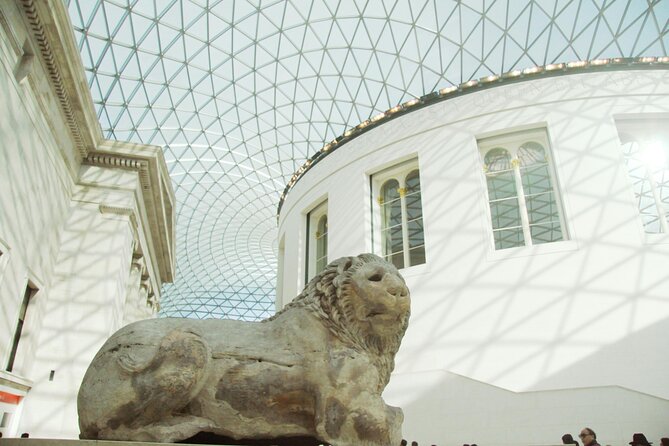
The itinerary continues with Assyrian Monuments, where you see stone reliefs and sculptures. Assyrian art is often about power, campaigns, and authority, and the guide’s job is to help you read those scenes instead of just registering them as carved figures.
Then you move into one of the museum’s most famous groupings: Parthenon Sculptures from the Parthenon in Athens, often called the Elgin Marbles. These sculptures are famous for many reasons, but the key for your experience is orientation. A guide can explain what parts you are seeing and how the figures fit the larger program.
I like covering them on a guided route because the Parthenon sculptures can feel like “a lot of marble people” if you do not know what you are looking at. With context, you start to notice the narrative design and the visual logic.
A balanced caution: the tour route is selective. You will not see every gallery, and you will not study every sculpture like you could on a multi-hour solo visit. If your goal is slow looking and deep reading, you will still want independent time later. But for a guided primer, this part is excellent.
Greeks in Italy and Cyprus, plus Romans and Rome
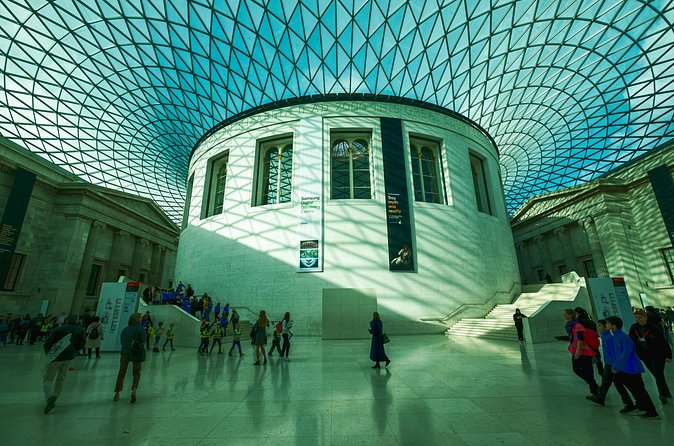
Next up is the bridge from Greek influence into later Mediterranean culture. The tour highlights Greeks in Italy and Cyprus, with artifacts that show Greek cultural influence. This is the kind of stop that makes you realize how ideas travel. You start to see Greek art and style not as one place, but as a set of influences that spread.
Then comes Romans and Rome, focused on the impact of the Roman Empire. Romans borrowed, reworked, and expanded earlier ideas, especially in art and public life. A guide helps you spot those shifts instead of treating the Roman section as separate from the Greek one.
What you will likely notice across these stops is repetition in different forms. Motifs reappear. Themes change shape. Style becomes politics. When you have the guide’s thread, the museum feels less like separate exhibitions and more like one long argument about culture.
If you are pairing this tour with other London plans, this timing works well. The museum is huge, but you get a structured sweep that sets you up to choose what to return to after.
Price and logistics that actually affect your experience
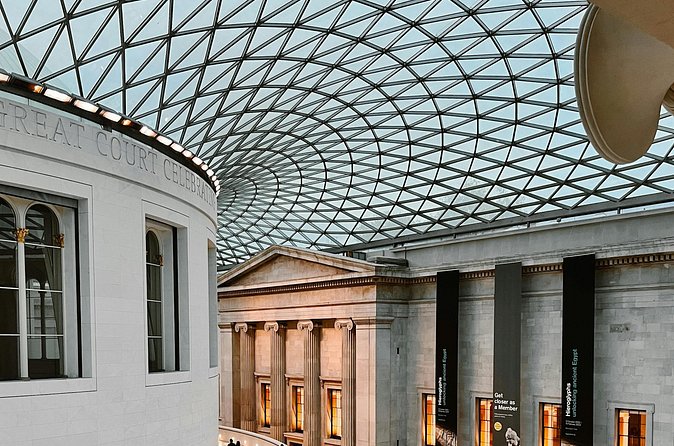
Let’s talk practical value. You pay $31.55 for a 2-hour guided experience in English, and admission ticket is included. You also get a live tour guide, with a maximum of 20 travelers. Those details matter because the whole thing is designed to run at museum pace, not street-tour pace.
Not included are coffee and/or tea, an air-conditioned vehicle, and brunch. Translation: plan your own snack strategy. If you go at a warm time of day, bring water, or plan a quick stop before or after. The tour itself is focused on walking between rooms and listening.
You should also plan your afternoon around the fact that the tour ends back at the meeting point. That is helpful. You can map your next stop near Great Russell Street without guessing.
As for timing, the tour is commonly booked about 39 days in advance on average. That is a hint that popular times can fill. If you are traveling in summer or around major events, booking earlier tends to make life easier.
How the guide style changes what you take home
A guided tour can either sharpen your attention or blur it. This tour depends heavily on the guide’s style, and you can see that in the variety of feedback.
Filomena has been praised for clear passion and for pointing out historic detail, but one note also mentioned a strong accent that was difficult to understand. Maya is praised for being very knowledgeable and for having seen things firsthand in real life across countries.
So here is my practical advice: if you prefer fast, factual interpretation, position yourself where you can hear well and pay attention early. If you notice the tour turning into lots of side stories, gently redirect your focus. A simple question like what to see next or what that object tells you can pull the route back to what you want.
Also, bring the right mindset. This is a highlights route. You get a museum orientation plus major objects, not a detailed lecture on every dynasty and inscription.
Who this British Museum tour is best for
This is a strong pick if you want the British Museum in one afternoon block. I think it is especially good for first-time visitors who do not want to spend time figuring out what matters.
It is also good if your party includes people with different interests. The tour touches Egypt, Assyria, Greece, Rome, plus the Hoa Monument and Benin Bronzes. That cross-world sweep gives everyone something to react to.
If you are traveling with kids, one note mentioned narration that can work for children. Still, this is not described as a dedicated family program, so keep your expectations flexible. The group size and guide’s style will influence how kid-friendly it feels.
If you are an object-nerd who wants long reading time and quiet study, this tour will feel short. In that case, use the tour as a primer, then plan extra solo time afterward for your top two rooms.
Should you book this British Museum guided tour?
Book it if you want a smart route through the British Museum’s headline collections in about two hours, with admission included and a guide who can explain why the big objects matter. At $31.55, you are paying for time savings and for interpretation, not for a long museum day.
Skip it, or pair it with extra self-guided time, if you need deep study of one area. This is a highlights format, so you will trade breadth limits for clarity.
My final take: if you want to walk out with the Rosetta Stone, Benin Bronzes, Elgin Marbles, and the major links between civilizations in your head, this guide-led sweep is a solid value use of an afternoon.
FAQ
How long is the London British Museum guided tour?
It runs for about 2 hours.
Is admission included?
Yes. Admission ticket is included with the tour.
What is the tour price per person?
The price is $31.55 per person.
What language is the tour offered in?
The tour is offered in English.
Where does the tour start and end?
It starts at the British Museum, Great Russell St, London WC1B 3DG, UK, and ends back at the meeting point.
What is the cancellation policy?
You can cancel for a full refund up to 24 hours before the experience starts. After that cutoff, the amount paid is not refunded.
Latest to join the queue for London







Museums, compared.
Tower of London and Crown Jewels Exhibition Ticket
Read our review →

Official tickets: Moco Modern & Contemporary Art Museum
Read our review →
British Museum London Guided Tour Semi-Private 8ppl Max
Read our review →
The British Museum London – Exclusive Guided Museum Tour
Read our review →


Skip the Line: Liverpool Beatles Museum – The perfect tribute to the Beatles
Read our review →Browse the lists this tour appears in