
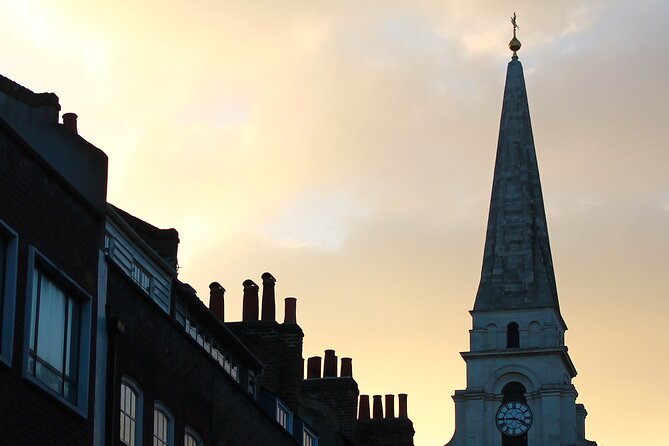
Reviewed · JACK THE RIPPER & GHOST WALKS
Jack the Ripper – What About the Women?
A women-only lens changes the whole Jack the Ripper story. This 2-hour Whitechapel walking tour follows six real women tied to the murders, while also explaining what day-to-day life was like for working-class residents in Victorian East London. It starts near Aldgate and moves through markets, churches, and street corners that still shape the neighborhood today.
I like how the route blends crime history with social history, so you understand the conditions, not just the headlines. I also like the practical pacing, short stops at each site, and the fact that the experience stays non-graphic and respectful, with no grisly pictures or graphic descriptions.
One thing to consider: this is a story-heavy walk at street level, so you should be ready for some uneven sidewalks and getting a bit of East London weather on you, since it runs in the evening and aims to keep things outdoors.
In This Review
- Key highlights at a glance
- Why this Jack the Ripper tour feels different
- Price and timing: a compact 2-hour night route
- Getting there: Aldgate meeting point and small-group comfort
- Stop 1 on Whitechapel Road: Martha Tabram and Polly Nichols’ world
- Stop 2 in Brick Lane: the pub site, alcoholism, and the mosque stop
- Stop 3 by Spitalfields Market: Truman Brewery to Ten Bells and the name change
- Stop 4 at Old Spitalfields Market: 1887, Crispin Street refuge, and Mary Jane Kelly
- Stop 5 at Petticoat Lane Market: the textile industry in miniature
- Stop 6 at St Botolph’s Aldgate and Mitre Square: Elizabeth Stride and Catherine Eddowes
- The guide matters: factual, respectful storytelling in a small group
- What you should expect walking this route at night
- Who this tour suits best
- Should you book? My practical recommendation
- FAQ
- FAQ
- What is the meeting point for the tour?
- What time does the tour begin, and how long is it?
- How much does it cost?
- Is the tour in English?
- Are the attractions on the route extra cost?
- Is it family-friendly or non-graphic?
Key highlights at a glance
- Six women, real lives first: You hear the stories of Martha Tabram, Polly Nichols, Annie Chapman, Mary Jane Kelly, Elizabeth Stride, and Catherine Eddowes.
- Victorian East End context: The guide connects the sites to work, housing, and poverty, not just names and dates.
- Markets plus night streets: Old Spitalfields Market, Petticoat Lane, and the East End feel like one connected neighborhood.
- Shifts the focus from the myth: The tour gives the victims dignity and pushes back against the usual killer-centered narrative.
- Built-in cultural stops: Brick Lane includes a mosque visit and a look at immigration and community change.
- Small group feel: The tour caps at 20 travelers, which helps you hear the guide and ask questions.
Why this Jack the Ripper tour feels different
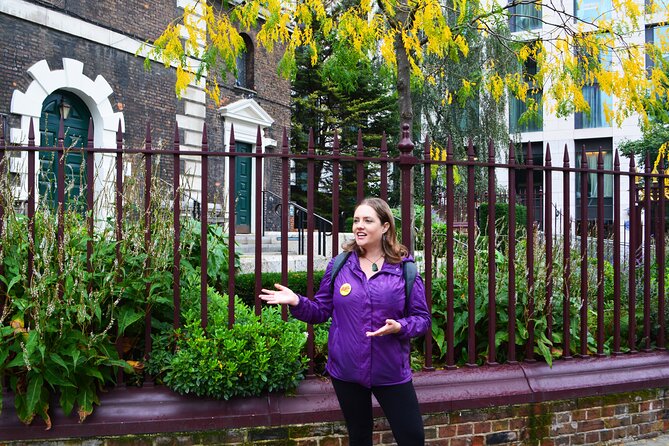
If you have ever done one of the typical Jack the Ripper walks, you may notice how often the story becomes a kind of obsession with the mystery itself. This tour takes a sharper, more humane route: it puts the women and their lives at the center, then uses the murders to explain a larger system. You get dates, yes, but you also get context like workhouse realities, cramped lodging, and how vulnerability can be created by poverty and limited options.
The result is a tour that feels closer to a focused history walk than a shock-driven true crime session. The vibe is thoughtful. Even the way the guide talks about tragedy stays grounded in evidence and in what those women faced in everyday life.
And it is not stuck in the past. Along the way, you see signs of the neighborhood today, including charities still active in the area. That contrast is part of why the tour lands: it is about people in a place, not just an infamous chapter.
More Ghost Walks in London
Price and timing: a compact 2-hour night route
This tour costs $34.28 per person and runs for about 2 hours in the evening. For London, that is not just a cheap bus ride disguised as walking. It is priced like an actual guided neighborhood experience, with an experienced guide, multiple stops, and time set aside to sit or listen when the route allows.
You also get a lot of “useful walking” for the time. The schedule moves through key Whitechapel and Spitalfields sites without wasting your evening looping back on itself. Starting at 6:30 pm makes sense because you are walking in the after-work light, when East London feels lived in and you can better picture how people moved through the streets at night.
One practical note: it is outdoors, and it depends on weather. If London is doing its usual damp impression, you will want a jacket that can handle mist and light rain.
Getting there: Aldgate meeting point and small-group comfort
You meet at Aldgate High St, London EC3N 1AH, near the Aldgate station area. That is convenient because you can plug into multiple tube and bus connections. For an evening tour, that matters. You do not want your trip ruined by a long scramble across the city.
The group size max is 20 travelers, and that changes the feel. Smaller groups tend to mean fewer people competing to hear, more chance to ask a question, and better control of pacing when roads get busy.
Bring comfy shoes. You are on a walking itinerary, and the route includes markets and street corners where your feet will do most of the work. Also, if you are sensitive to cold, pack a layer. Evening in London can drop fast, especially when the route shifts from market alleys to open street sections.
Stop 1 on Whitechapel Road: Martha Tabram and Polly Nichols’ world
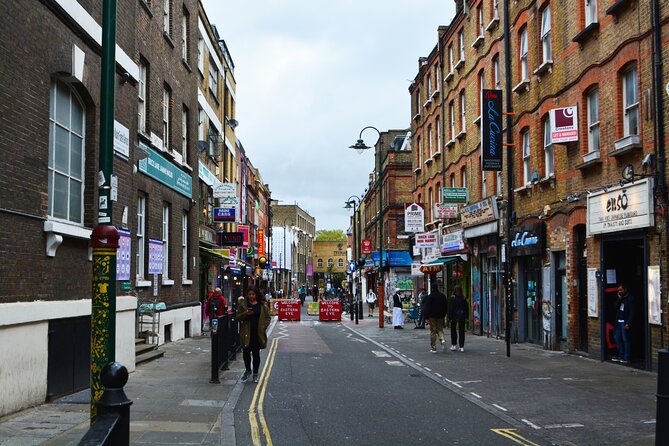
The first stop sets the tone. On Whitechapel Road, you hear the stories of Martha Tabram and Polly Nichols while the guide explains what working-class life looked like in the Victorian East End.
This is where the tour earns its name, because the emphasis is not just on who, but on how people lived. You learn about harsh living conditions for the poor, including types of accommodation and common local realities such as dosshouses and workhouses. The goal is to help you understand why these women were where they were, in the systems they were stuck in.
The guide also points out charities still carrying out work in the area. That gives the stop a modern anchor. You are not just touring a tragedy, you are seeing how a neighborhood responds when it has been scarred and then left to heal.
Expect a roughly 20-minute stop here, with the pacing designed to keep you listening while still giving you breaks as the tour continues.
Stop 2 in Brick Lane: the pub site, alcoholism, and the mosque stop
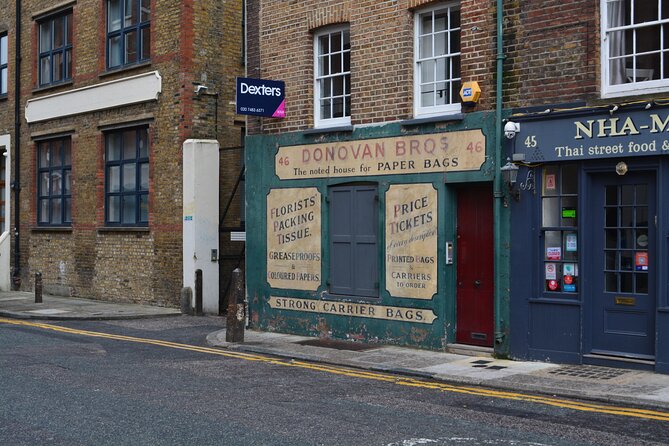
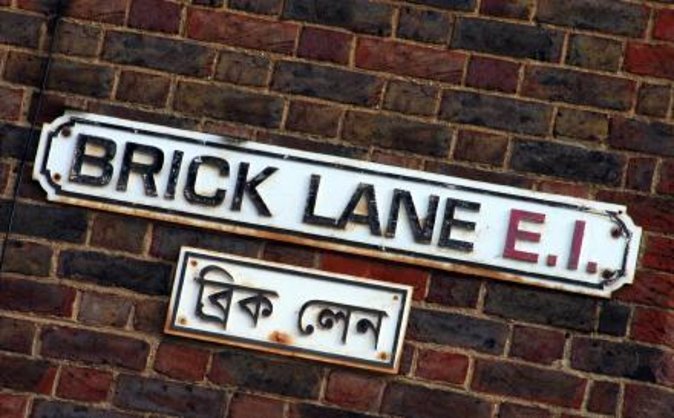
Next comes Brick Lane, where you connect to Polly Nichols’ final night at the site of a pub. This part matters because it addresses addiction and alcoholism in the Victorian era, rather than treating the story like it happened in a vacuum. You are shown how social problems, limited support, and desperation could intersect in a place like Whitechapel.
Then there is a thoughtful pivot. You stop at the Brick Lane Mosque, where the guide explains the story of immigration into the East End and the cultural diversity you see today. In a tour about murders, that cultural stop might seem unexpected, but it actually does a lot of good work for your understanding. It reminds you that East London is not only an archive. It is a living community with layers of people moving in and building new homes.
This stop is about 15 minutes, so you get enough time for context without dragging your evening too long in one location.
Practical tip: Brick Lane can be active, so be ready for a busier street feel here than at some of the quieter market corners.
More gaslit lanes after dark:
- The Original Jack the Ripper : Guided Tour★ 5.0 · 1,264 reviews
- Ghost Bus Tour of London★ 4.0 · 961 reviews
- Ghastly Ghost Walking Tour in London★ 5.0 · 878 reviews
- Jack the Ripper Walking Tour in London★ 5.0 · 354 reviews
Stop 3 by Spitalfields Market: Truman Brewery to Ten Bells and the name change
At Spitalfields Market (E1), the tour blends industrial London and street-level tragedy. You visit the old Truman Brewery, once described as the largest brewery in the world. Standing around brewery grounds helps you picture the economic engine that fueled nearby working lives.
From there you move to 29 Hanbury Street, where Annie Chapman was found the morning of September 8. The tour also includes the Ten Bells Pub, which is central to the area’s story. You hear about Annie’s life and the heartbreak around her.
One of the more interesting modern elements here is how the pub’s name connects to public memory. The guide explains that the movement Reclaim the Night helped push for the pub to return to the name Ten Bells, rather than leaning into the Jack the Ripper brand.
This is a subtle but powerful theme: how communities decide to remember tragedy. Do you use victims as marketing fuel, or do you keep the focus on dignity and history?
This stop runs about 10 minutes, so the guide keeps it tight and anchored to a few key points.
Stop 4 at Old Spitalfields Market: 1887, Crispin Street refuge, and Mary Jane Kelly
Old Spitalfields Market is where the tour adds a strong sense of time. You visit a market opened in 1887, the year of Queen Victoria’s Golden Jubilee, and the year before the Whitechapel murders began. That timing gives you a built-in contrast. This is the late Victorian world, with celebration and empire on one hand, and extreme pressure and poverty close by.
At this point the guide also helps you interpret physical space. Near Crispin Street, you see the site of a refuge for working-class people that actually worked. That phrase matters. It points to real social support, not just institutions with good intentions on paper.
Then you look across to a former residence site tied to Mary Jane Kelly, the last victim, described as the most mysterious. The tour does not turn this into sensational storytelling. Instead, it uses the site as a place to discuss what was known and how uncertainty and fear shape how stories get told over time.
This stop is about 15 minutes, and it gives you room to slow down and absorb the contrast between old market life and the darker chapter the area later carries.
Stop 5 at Petticoat Lane Market: the textile industry in miniature
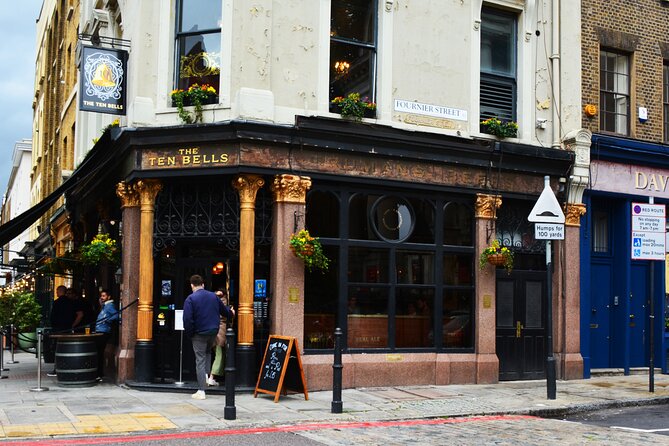
The walk then moves to Petticoat Lane Market, described as the former heart of the textile industry in the East End. Even though this is a short stop, about 5 minutes, it does a lot of useful work.
It reminds you that these were not empty streets. There were jobs, trades, and daily commerce. The textile industry shaped who lived nearby and how the neighborhood functioned.
This is one of those moments where the tour quietly refocuses your brain. Before you move on to the church and square associated with the later victims, you get a reminder that the East End was a workplace as much as it was a stage for a tragedy.
Stop 6 at St Botolph’s Aldgate and Mitre Square: Elizabeth Stride and Catherine Eddowes
The last major segment starts at St Botolph’s without Aldgate. Here the guide introduces Elizabeth Stride, originally from Sweden, including the traumatic beginnings in Gothenburg and later adventures in London. Bringing her origin into the story matters because it widens the lens beyond Whitechapel itself. London drew people in, and for some, the move came with risk and instability.
After St Botolph’s, the tour finishes close by in Mitre Square, where Catherine Eddowes was discovered. You hear about Catherine as a feisty person from Wolverhampton, and the guide uses that tone to avoid reducing her to a case file.
This final stop runs about 25 minutes, and it is the longest one on the itinerary. It is also where you usually feel the tour’s impact most, since you have heard multiple women’s stories by then. You end with the sense that the murders were not just “events.” They were losses that landed on families, neighbors, and communities.
The guide matters: factual, respectful storytelling in a small group
A tour like this lives or dies on the guide’s approach. The strong versions keep things factual and careful, and they do not use violence as entertainment.
Guides like Cecily and Ellie have been singled out for being friendly, informed, and respectful while keeping the storytelling grounded. In practice, that shows up in how they balance facts with context, how they explain misconceptions, and how they help you connect Victorian conditions to why so many women were vulnerable.
Another point you will appreciate: the tour avoids grisly pictures and does not focus on graphic details about how women were murdered. That keeps the tone human and helps the tour work for a wider range of visitors, including mature teens who can handle serious topics without needing explicit gore.
What you should expect walking this route at night
Because this is an evening East London by night experience, the feeling will be more street-level than museum-like. You will look up at church façades, stand near old market entrances, and connect locations by walking the neighborhood.
Expect frequent stops. The itinerary has short segments and then longer listening points at Whitechapel Road and the final church and square area. That structure helps you avoid the “walk, listen for ten seconds, walk again” trap that some city tours fall into.
Also, you do not need prior knowledge. You can start with the women’s stories and the Victorian context, and the guide will build the rest. If you have read modern scholarship about the victims, you may recognize the shift toward their real lives and away from the killer myth.
Who this tour suits best
This is a great fit if you want a Jack the Ripper tour that prioritizes victims, not sensational crime reenactment energy. It is ideal for:
- History-minded travelers who like social context and everyday life
- Visitors who are tired of killer-centered stories
- Anyone who prefers a respectful, non-graphic approach to difficult history
- Small families or groups where you want serious content without explicit gore
If you are looking for a maximum mystery hunt, with big speculative theories and dramatic storytelling beats, this may feel more restrained. The focus stays on women and on what shaped their choices and vulnerabilities.
Should you book? My practical recommendation
Book it if you want a London walking tour that is emotionally intelligent and historically grounded. For $34.28, you get a compact night route, an experienced guide, six women’s stories, and the kind of context that makes the sites make sense in your head.
Skip it only if you specifically want a killer-first, graphic true-crime experience. This tour is the opposite of that. It keeps the emphasis on the women and on how East London worked, struggled, and changed.
FAQ
FAQ
What is the meeting point for the tour?
The tour starts at Aldgate High St, London EC3N 1AH, UK, and the meeting point is near Aldgate station.
What time does the tour begin, and how long is it?
It starts at 6:30 pm and lasts about 2 hours.
How much does it cost?
The price is $34.28 per person.
Is the tour in English?
Yes, it is offered in English.
Are the attractions on the route extra cost?
The itinerary lists admission ticket free at the stops.
Is it family-friendly or non-graphic?
The tour avoids grisly pictures and does not focus on graphic details of how the murders happened, which helps keep it appropriate for children who can handle a serious topic.
Latest to join the queue for London




Jack the Ripper & Ghost Walks, compared.
London Jack the Ripper Guided Tour with Ripper-Vision
Read our review →
Ghost, Ghouls and Gallows Tour : Guided Tour with Boat Ride
Read our review →
Ultimate Jack the Ripper : Guided Tour of London
Read our review →
Shadows of York: Ghost Walk and Horrible History.
Read our review →
The Original Jack the Ripper : Guided Tour
Read our review →

Browse the lists this tour appears in