
Reviewed · JACK THE RIPPER & GHOST WALKS
Jack the Ripper Tour Whitechapel
Victorian London whispers in Whitechapel’s dark corners, and this Jack the Ripper walk turns everyday streets into a case file you can actually follow. You start with the human reality of late-1800s East London, then move step by step through key locations linked to the murders. It is the kind of tour where the directions matter, because each stop connects to what came before.
I love how the guides bring the story to life with clear visual aids on a large iPad, while still keeping the tone respectful to the people involved. I also like the structure: short walks between focused stops, so you never feel lost or stuck listening for too long.
One drawback to plan for: this is not a light, squeaky-clean history walk. It is murder-focused content, and it is not recommended if you are nervous or squeamish, plus it is limited to age 14 and up (14 to 16 must go with an adult).
In This Review
- Key highlights at a glance
- Whitechapel at 7:00 pm: what the walk is really like
- Before the clues: meeting at The White Hart (and why the intro matters)
- Gunthorpe Street workshops: Martha Tabram’s murder site
- Brick Lane and 9-11: the last drink detail at The Frying Pan
- Hanbury Street: Annie Chapman and the case pattern
- E1 6QH near 4 Princelet St: the double event in a long-standing building
- Puma Court letters at 6 Puma Ct: why small clues get big
- Spitalfields Market cornering: Ten Bells and Mary Kelly near Brushfield St
- London Fruit & Wool Exchange: Mary Kelly at 13 Millers Ct and suspects inside
- Guides and delivery: what consistently earns top marks
- Price and value: is $23.31 worth it?
- Who this Whitechapel Jack the Ripper tour suits best
- Should you book the Jack the Ripper Tour in Whitechapel?
- FAQ
- How much does the Jack the Ripper Tour Whitechapel cost?
- How long is the tour?
- What time does the tour start and where do I meet?
- Is the tour offered in English?
- What do I need to bring?
- How many people are in a group?
- Is this tour suitable for children?
- Is it okay if I am nervous or squeamish?
Key highlights at a glance

- Street-side storytelling that builds from poverty and social conditions into the crime locations
- Large iPad visuals that make names, places, and evidence easier to keep straight
- No microphone feel from the guide, with enough projection to hear the story on the move
- Real corners of Whitechapel you can picture long after the tour ends
- A respectful approach that focuses on context, not cheap shock value
- A small-group cap of up to 40 people for a manageable walking pace
Whitechapel at 7:00 pm: what the walk is really like
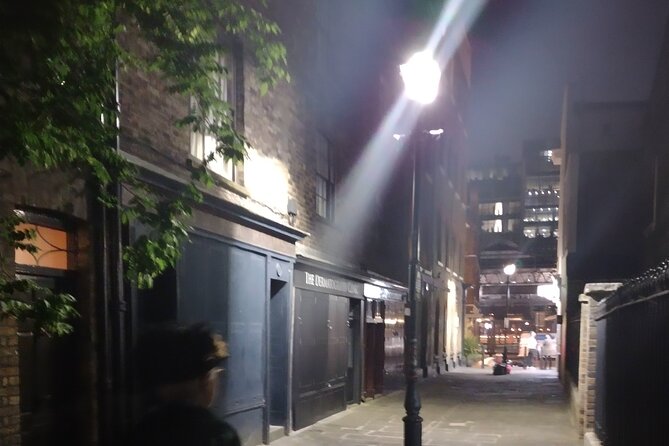
This tour runs in the evening, starting at 7:00 pm, and it is designed as a street-by-street experience rather than a sit-down lecture. With an approximate duration of 1 hour 15 minutes, it is long enough to feel like you saw a lot, but short enough to keep energy up.
Even so, you should expect the pace to vary. Some sessions can run longer, so if you are pairing this with dinner, I’d give yourself a buffer to avoid rushing. The route also stays outdoors for much of the time, so dress for cool East London air, especially in winter.
The group size limit of up to 40 travelers matters. You should be able to hear the guide well, and it still feels like a group walk instead of a crowd event. And because it is a mobile ticket tour, you can travel lighter, just pull up your ticket on your phone.
More Ghost Walks in London
Before the clues: meeting at The White Hart (and why the intro matters)
The tour starts behind White Hart Pub, 89 Whitechapel High St, London E1 7RA. The meeting point is a short walk from Liverpool Street Station, and your guide directs you from there.
This first stop is more than a warm-up. You are set down in a part of Whitechapel where you can feel the social deprivation of the era. That matters because it changes how you process the murders. Instead of viewing the case as a spooky mystery only, you see the environment that shaped daily life, work, housing, and vulnerability.
You also get your bearings early. The intro at the beginning helps you understand why the later street corners are not random on a map. They connect to real people trying to survive in tight, harsh conditions.
Gunthorpe Street workshops: Martha Tabram’s murder site
Next you head to Gunthorpe Street Workshops, positioned opposite the murder site of Martha Tabram. This is a quick stop, but it is an important one because it anchors the story in a specific place tied to the timeline.
What I like about starting with Tabram is how it frames the case as part of a wider pattern rather than a single moment. You learn to read the neighborhood like a map of choices and risks: routes people walked, areas they passed through, and why certain streets mattered.
A practical note: this is a walking tour, and stops can be brief. If you like to take photos, plan to do it efficiently so you do not slow the group.
Brick Lane and 9-11: the last drink detail at The Frying Pan
At 9-11 Brick Lane, you focus on Polly Nichols and the spot described as her last drink location at The Frying Pan. Brick Lane is familiar to many people today, but on this walk you get a different lens. You are not just passing a famous street, you are connecting that street to a specific evening and a specific person.
The value here is the “last drink” detail. It’s small, but it makes the story feel immediate. You can picture the moment before the rest of the case unfolds.
Also, Brick Lane is one of the more photogenic sections of the route. If your camera roll is your way of processing a tour, this is one of the stops where you’ll likely want extra time. Some sessions also mention cobbled streets in this area, which adds texture to the atmosphere.
Hanbury Street: Annie Chapman and the case pattern
Then you move to Hanbury Street, marked as the murder site of Annie Chapman. This stop is short, but it helps you see repetition in location choices and in the type of vulnerability being targeted.
If you tend to get lost in murder-mystery narratives, this is where the tour’s structure pays off. You are given a clear geographic beat: here is where it happened, here is why the street mattered, and here is how it fits into the broader case you are building in your head.
The drawback is that, like most walking tours tied to real crimes, there is no way to make the subject matter comfortable. This is history with hard edges, and that is part of why it feels serious.
More gaslit lanes after dark:
- The Original Jack the Ripper : Guided Tour★ 5.0 · 1,264 reviews
- Ghost Bus Tour of London★ 4.0 · 961 reviews
- Ghastly Ghost Walking Tour in London★ 5.0 · 878 reviews
- Jack the Ripper Walking Tour in London★ 5.0 · 354 reviews
E1 6QH near 4 Princelet St: the double event in a long-standing building
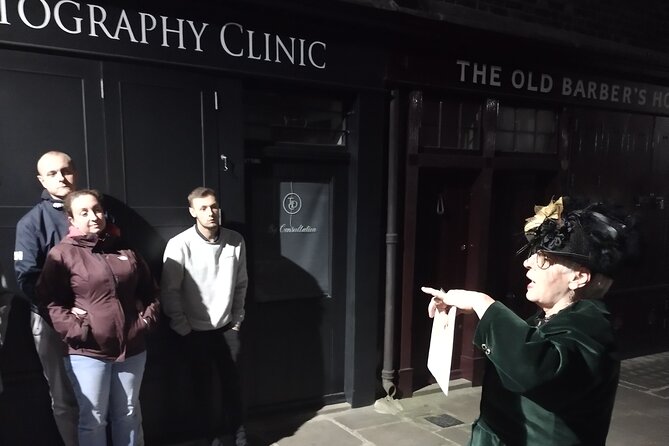
At E1 6QH, the story turns to the night of the double event, referenced near 4 Princelet St, including a building noted as having stood since the 1700s. This stop gives the tour a “layered time” feeling. You’re not just thinking about 1888. You are thinking about older walls still present, older streets still in use, and how the neighborhood keeps changing while some shapes remain.
I like how this portion nudges you from “what happened” into “why the streets kept witnessing things.” Buildings and corners that have existed for centuries become quiet witnesses, and you start to understand how a mystery like Jack the Ripper can persist in public memory.
Tip: if you struggle with small signage and street numbering, pay attention here. This is the kind of stop where names and addresses do real work.
Puma Court letters at 6 Puma Ct: why small clues get big

The tour stops at 6 Puma Ct, focusing on letters associated with the case. This is one of the more “detective-work” moments on the route, because it shifts you from physical locations to the idea of messages, claims, and how information shaped public fear.
The letters section can be especially engaging if you like the puzzle side of the story. It also helps you understand why the case became a media event, not just a local crime.
Because this stop is brief, I recommend keeping your questions for the group’s Q and A moments, if the guide offers them. You will likely get more out of your curiosity when you are not trying to talk while everyone is moving.
Spitalfields Market cornering: Ten Bells and Mary Kelly near Brushfield St
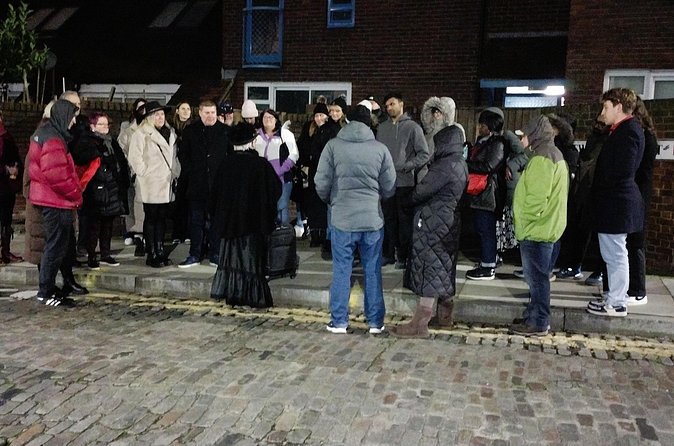
Next you reach Spitalfields Market, with a stop outside the Ten Bells Pub and near the Mary Kelly corner at Brushfield St and Commercial St. Ten Bells is one of the best-known landmarks in this part of Whitechapel, so even if you have read about the case before, you’ll feel a stronger connection in person.
This section is often where the atmosphere clicks. You’re standing at a recognizable spot in a neighborhood that still has that working-street energy. The tour uses the location to explain not only the murder but the surrounding day-to-day life around markets and streets that were always busy.
If you’re hungry, you’ll be tempted to snack here. I’d wait until after the tour so you stay fully focused. That market area is worth taking in, but you want to see it while the story still has momentum.
London Fruit & Wool Exchange: Mary Kelly at 13 Millers Ct and suspects inside
The final stop is at the London Fruit & Wool Exchange, with discussion tied to Mary Kelly’s murder at 13 Millers Ct and possible suspects connected to the case, including what is described as inside the courtyard. This ending has a satisfying “wrap” feel. You return to the idea of place and evidence, but now you’re looking at the case with a broader set of questions.
Courtyards also work well on a tour like this. They hold sound, they shape sight lines, and they make the story feel contained. It’s a chance to step back and process what you’ve heard: the sequence of locations, the social conditions, and the theories people debate even today.
Practical point: because the tour ends at Bell Lane, Bell Ln, London E1 7LA, plan for a quick exit. You’ll likely want to head somewhere warm or grab dinner right after.
Guides and delivery: what consistently earns top marks
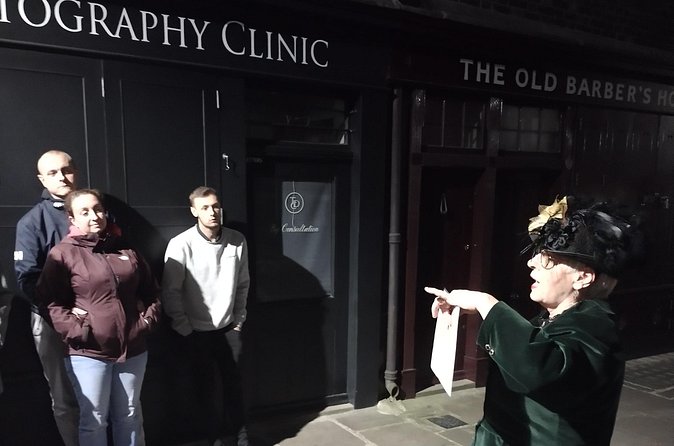
The strongest praise for this tour centers on the people running it and how they run it. Guides such as Celine, Jenny, and Lindsay are noted for being engaging and for making the story easy to follow without feeling like a dry lecture.
A big plus is the use of clear visual aids on a large iPad. That means you get names and places tied to images as you walk, and it helps your brain lock onto the “who” and “where” fast. Some sessions also include visuals connected to memorials, which can be emotionally heavy, but also adds weight and humanity.
Another high point is delivery without a microphone feel. That matters for a street tour, because if you cannot hear the guide, the whole thing turns into wandering. Here, you should be able to keep up through the full walk.
Finally, the tone is repeatedly described as respectful toward the deceased, with an emphasis on context and everyday life. If you want a tour that treats the victims like real people and not like props, this is a strong fit.
Price and value: is $23.31 worth it?
At $23.31 per person, this is priced like an easy add-on to a London day. The value comes from what you actually get for that money: a live guide, multiple outdoor stops linked to the case, and visual support that helps you follow the story instead of just hearing rumors.
You should think of it like this. You are paying for three things:
1) a route through meaningful locations
2) a guide who can explain why those locations matter
3) a way to keep the story coherent while you’re walking
At this price, it is especially good if you already enjoy London walking tours and you want something focused instead of broad sightseeing. If you are looking for a long, museum-style deep dive, this is likely too short and too street-level for that. But if you want a strong case-file walk with context, it hits a sweet spot.
Who this Whitechapel Jack the Ripper tour suits best
This experience is best for adults and teens 14 and up who can handle dark subject matter. It is also for people who like history tied to real neighborhoods, street corners, and real names.
You’ll likely enjoy it more if you:
- like walking tours that use facts and places rather than generic storytelling
- want social context alongside the mystery
- appreciate guides who use images and help you visualize what they mean
- plan an evening when you can stay outside for a bit
You should skip it if you know you are easily rattled. The content includes violent crime and is explicitly noted as not recommended for nervous disposition or if you are squeamish. Also, it is not built for under-14s.
One small caution I’d give: it is a short tour with brief stops. If you like long stops to read plaques and wander on your own, you may wish you had extra independent time before or after.
Should you book the Jack the Ripper Tour in Whitechapel?
I’d book this if you want a clear, well-paced evening walk through Whitechapel that treats the subject seriously and uses visuals to keep you oriented. The guides stand out, especially for engaging delivery and respectful storytelling. For the price, the combination of multiple mapped stops plus live context is a solid deal.
I would not book it if the topic will stress you out. Even with a respectful tone, it is still a murder-focused walk, and it asks you to confront real history in real streets.
If you are on the fence, a practical strategy helps: wear comfortable shoes, bring a layer for the evening, and plan where you will go afterward. This tour ends at Bell Lane, so aim to have your next stop warm, close, and low-pressure. That way you can take in what you learned, then decompress without rushing.
FAQ
How much does the Jack the Ripper Tour Whitechapel cost?
The price is $23.31 per person.
How long is the tour?
It is listed as approximately 1 hour 15 minutes.
What time does the tour start and where do I meet?
The start time is 7:00 pm. Meet behind White Hart Pub at 89 Whitechapel High St, London E1 7RA, and your guide directs you. The tour ends at Bell Lane, Bell Ln, London E1 7LA.
Is the tour offered in English?
Yes, it is offered in English.
What do I need to bring?
A guide is included, but bottled water is not included, so you should bring your own if you want it.
How many people are in a group?
The tour has a maximum of 40 travelers.
Is this tour suitable for children?
No under 14s are allowed due to content. Ages 14 to 16 must be accompanied by an adult.
Is it okay if I am nervous or squeamish?
The tour is not recommended for people with a nervous disposition or those who are squeamish.
Latest to join the queue for London


Jack the Ripper & Ghost Walks, compared.
London Jack the Ripper Guided Tour with Ripper-Vision
Read our review →
Ghost, Ghouls and Gallows Tour : Guided Tour with Boat Ride
Read our review →
Ultimate Jack the Ripper : Guided Tour of London
Read our review →
Shadows of York: Ghost Walk and Horrible History.
Read our review →
The Original Jack the Ripper : Guided Tour
Read our review →
Browse the lists this tour appears in