
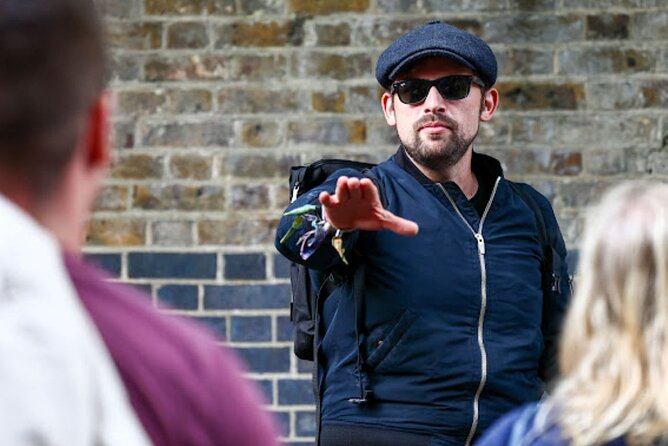
Reviewed · JACK THE RIPPER & GHOST WALKS
Jack the Ripper and Victorian London Beyond the Shadows
Jack the Ripper made real life feel dangerous. This East End walk is built around victims and Victorian hardship, plus a stop at Ten Bells tied to the case, and the stories are told in a way that keeps you switched on. One thing to plan for, it’s a walking tour, so expect a fair amount of pavement in about 2 hours 30 minutes.
You start in the heart of London’s East End and end at Spitalfields Market, so the evening naturally shifts from street-level history to today’s food-and-shop energy. I like that the route doesn’t just chase legends. It also points out how this neighborhood has changed over recent decades, so the case lands in a real, lived-in place.
If you’re the type who hates dark true-crime topics, you might want to think twice. This tour focuses on murders and the survival conditions around them, and it does not treat the victims as props.
In This Review
- Key things I’d circle before you go
- Chasing the case through Brick Lane’s changing East End
- Spitalfields Market and the meaning of a neighborhood that keeps moving
- Ten Bells, the pub stop that turns story into place
- Walking the footsteps to Goulston Street
- Why the tour centers victims and survival, not just the killer myth
- Duration and route reality: what 2 hours 30 minutes feels like
- Price: why $24.98 can feel fair for this route
- Who this tour suits best
- Tips to help you enjoy it even more
- Should you book Jack the Ripper and Victorian London Beyond the Shadows?
- FAQ
- How long is the tour?
- What does the tour cost?
- Where does the tour start and end?
- What time does the tour begin?
- What stops will we see on the route?
- Is the tour offered in English?
- How large is the group?
- Is there a mobile ticket?
- Is free cancellation available?
Key things I’d circle before you go
- East End route that connects the dots, from Brick Lane to Spitalfields Market and then into the grim streets tied to the case
- Ten Bells pub visit, a named landmark with strong links to Jack the Ripper in film and documentary storytelling
- Goulston Street walk-through, with context that ties the murders of Elizabeth Stride and Catherine Edowes (30 September 1888) to later unrest
- Victims first approach, centering real lives and the pressure of Victorian London survival rather than just the killer’s myth
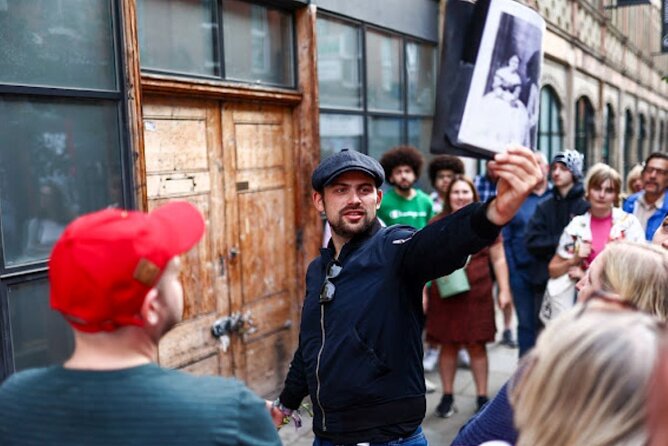
- A guide who uses storytelling tools, including real historical images on a device for added clarity
Chasing the case through Brick Lane’s changing East End
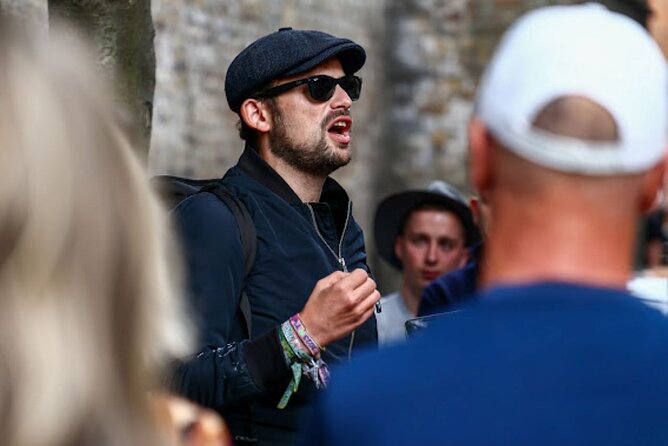
The tour kicks off at Braham Street (E1), right where the East End starts to feel like more than a postcard. Brick Lane is your first stop, and the emphasis is on people, money, and daily strain in 1888. You get the sense of how socio-economic pressure shaped where people lived, how they worked, and how quickly life could flip from routine to catastrophe.
What I like here is that you’re not only learning the case facts. You’re also learning the human geography that makes those facts make sense. When a neighborhood is under pressure, everything becomes tighter, riskier, and harder to escape. That framing helps you understand why the victims’ stories mattered beyond the headlines.
Brick Lane also sets up the “then and now” theme. The area you walk through today has its own cultural identity, and part of the value is seeing how it’s developed across the years rather than freezing it in Victorian time. If you love history, this helps you connect the dots between past and present.
One practical tip: plan to arrive a few minutes early so you can settle in with the group before the story begins. It’s a night tour, and you’ll want your bearings before you start moving.
More Ghost Walks in London
Spitalfields Market and the meaning of a neighborhood that keeps moving
After Brick Lane, you head to Spitalfields Market, one of those places where London feels like it runs on layers. Here, the tour shifts from the 1888 mindset to the neighborhood rhythm that locals and tourists still enjoy.
This stop matters because it shows how the East End kept going. Markets are where you can feel the mix of class, trade, and culture in one place. And because Spitalfields is visited by people looking for food, clothes, and music, it also helps you balance the heavier story beats that come later.
I also appreciate that the tour doesn’t treat the market like a distraction. It’s framed as part of the East End’s evolution. You’re seeing that this isn’t only a “crime map.” It’s a working community space with its own modern energy.
Small consideration: markets can be busy, and your group may need to slow down and reform in tighter spaces. If you’re sensitive to crowds at night, wear shoes that let you shift quickly and comfortably.
Ten Bells, the pub stop that turns story into place
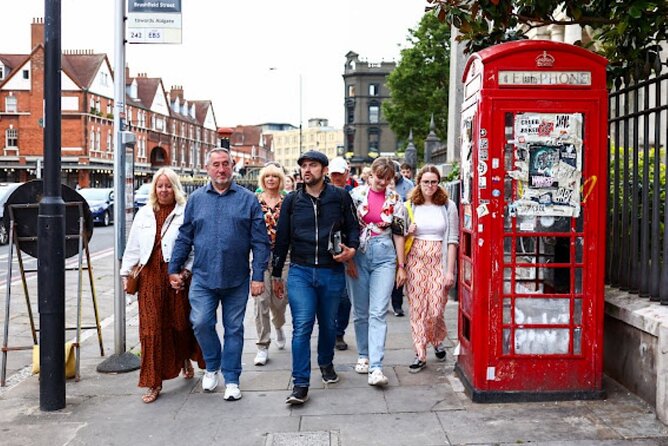
Then comes one of the most important atmosphere shifts: the historic Ten Bells pub. This is where the case stops feeling like a textbook outline and starts feeling like real streets you can picture.
Ten Bells is heavily associated in documentaries and films about the Ripper story, and the tour uses that connection to anchor you. Instead of making you guess how people moved around Whitechapel, you’re guided toward a specific, recognizable landmark that helps the wider story click into place.
What I like most is the tone. The strongest versions of this kind of tour avoid turning tragedy into entertainment. Here, the emphasis stays on victims’ lives and the pressures of Victorian London, which keeps the stop grounded and respectful.
You might find your guide brings extra clarity with visual aids. One earlier experience notes the guide used real photographs shown on a device while telling the story. Even if you do not see that exact format, it’s smart to expect some historical visuals to support the narrative.
Tip for this stop: if you have questions, now is a good time to ask. Ten Bells is a natural pause point, and the guide’s answers often tie back to the exact street-level details you’ll cover next.
Walking the footsteps to Goulston Street
The last major location is Goulston Street, where the tour follows paths tied to both the case and the wider unrest in 1888. This is the part that leans into atmosphere, because you’re walking through the same kind of urban corridors where fear would have traveled fast.
The guide links the story to the murders of Elizabeth Stride and Catherine Edowes on 30 September 1888. And then the tour adds a second layer: the riots of 1888 that followed. That connection is crucial, because it shows how a murder case didn’t stay isolated. It rippled outward, feeding anger, rumor, and public tension.
If you’re coming as a true crime fan, this is where you’ll feel the difference between myth and context. It’s not only about who might have done what. It’s about how the city reacted, and how quickly a community could go from shock to conflict.
Also, look at the sidewalks and street scale as you walk. In a place like this, distances matter. Streets are tight, sightlines can be limited, and what feels like a short walk today might have felt like a long, risky movement after dark in Victorian times.
Comfort tip: this segment can feel longer than the clock says, because you’ll be thinking. Keep your pace steady, and if you need to pause for a photo or a question, do it when the group stops so you don’t break flow.
Why the tour centers victims and survival, not just the killer myth
A lot of Jack the Ripper content zooms straight in on the legend of the person behind the crimes. This tour takes a different angle by focusing on the victims’ lives and what survival meant in Victorian London.
From a value standpoint, that approach makes the story less sensational and more meaningful. When you understand the conditions people faced, the murders stop feeling like random horror and start feeling like the grim end of a system under strain. You also start to notice how women’s vulnerability was shaped by daily reality, not only by the crimes themselves.
The best part is how this framing changes your listening. You’ll likely find yourself paying attention to details about work, risk, and the social pressures of the East End. That also helps you separate fact from the oversimplified versions of the story that get repeated too often.
One review highlights that the guide focused on the women rather than the killer label, and I think that’s the right way to do it. If you care about justice, dignity, and accuracy, you’ll probably appreciate that tone.
And if you’re more casual about true crime, this victim-first approach still works. It makes the case emotionally heavier, but also more educational. It turns the walk into a history lesson you can actually picture.
More gaslit lanes after dark:
- The Original Jack the Ripper : Guided Tour★ 5.0 · 1,264 reviews
- Ghost Bus Tour of London★ 4.0 · 961 reviews
- Ghastly Ghost Walking Tour in London★ 5.0 · 878 reviews
- Jack the Ripper Walking Tour in London★ 5.0 · 354 reviews
Duration and route reality: what 2 hours 30 minutes feels like
This tour runs about 2 hours 30 minutes, and it’s built as a walking route. The maximum group size is 40, which is a good sign for staying together and hearing the guide clearly.
You start at 7:30 pm at Braham Street and finish at Spitalfields Market on Brushfield Street. That end point is practical because Spitalfields is transit-friendly and also easy to grab a late snack after the tour. It’s a nice way to transition from dark history to regular city life.
I also like the pacing across the stops. You’re not stuck in one theme for the whole evening. You begin with East End framing at Brick Lane, get a modern contrast at Spitalfields Market, visit Ten Bells, and then finish with Goulston Street context. That variety helps you stay engaged.
What to wear: comfortable walking shoes are non-negotiable. Even if you’re fit, the combination of evening light, street corners, and frequent stopping for storytelling can add up.
If you want to get the most out of the tour, arrive ready to listen and ask questions. One experience mentioned the guide was interactive and involved the group, so you’ll likely get more out of it if you engage instead of treating it like a lecture.
Price: why $24.98 can feel fair for this route
At $24.98 per person for about 2.5 hours, this sits in a reasonable range for a themed walking tour in London. What makes it feel like value is the combination of specific stops tied to the case, plus real local context about the East End’s transformation.
You’re not paying only for the “Jack the Ripper” label. You’re paying for guided interpretation of place: Brick Lane’s 1888 socio-economic context, Spitalfields Market as part of neighborhood life, Ten Bells as a landmark connected to the story in media, and Goulston Street as a site tied to the case and subsequent unrest.
Also, the group size cap of 40 helps with the cost-to-attention ratio. It’s not a massive herd experience where your questions get swallowed.
One more value note: the tour includes a mobile ticket, which makes it easier to manage at night. You can focus on finding your guide and staying with the group, instead of dealing with printouts.
Who this tour suits best
This is ideal if you fall into one of these buckets:
- You love true crime, especially when it’s grounded in context
- You enjoy Victorian London history, not just dates and names
- You want a route that shows the East End’s then-and-now evolution
- You appreciate storytelling that treats the victims with respect
If you’re bringing family members, it can work well for teens and older kids who can handle true crime content thoughtfully. One experience described a multigenerational group including grandchildren, and the guide’s approach seemed inclusive, with a focus on the victims’ lives and the neighborhood.
If your idea of a fun night is only upbeat sights and light jokes, you might feel the tone too heavy. But if you want something honest and memorable, this has a strong chance of landing well.
Tips to help you enjoy it even more
Here are a few things that make a real difference on this kind of tour.
Wear shoes you trust. Expect lots of walking, and you want your feet to feel good by Ten Bells and Goulston Street.
Bring a question. If the guide is using visuals or tracing timelines, ask where the uncertainty is, or how the neighborhood conditions influenced the story. One earlier note praised the guide’s factual approach and respectful tone, so questions are likely welcome.
Plan for the night mood. It’s an evening tour at 7:30 pm, so bring a light layer if you run cold. It also helps to keep your phone brightness reasonable so you can follow the guide’s directions without losing attention.
Finally, stay present for the victims’ stories. If you treat those parts as optional, you’ll miss what makes this tour stand out from the typical “Ripper facts and frenzy” style.
Should you book Jack the Ripper and Victorian London Beyond the Shadows?
Book it if you want a Jack the Ripper walk that prioritizes victims and Victorian hardship over spectacle, and you like a route that makes the East End feel real. The Ten Bells stop plus the Goulston Street context tied to the 30 September 1888 murders and the riots gives you a more complete picture than a purely legend-driven tour.
Skip it if you want a quick, casual story with no darkness, or if you dislike walking tours in the evening. Otherwise, at $24.98 for roughly 2.5 hours, you’re paying for specific landmarks, strong storytelling, and a guided tour of a neighborhood that continues to exist beyond the legend.
FAQ
How long is the tour?
The tour lasts about 2 hours 30 minutes.
What does the tour cost?
It costs $24.98 per person.
Where does the tour start and end?
It starts at Braham Street (Braham St, London E1, UK) and ends at Spitalfields Market (65 Brushfield St, London E1 6AA, UK).
What time does the tour begin?
The start time is 7:30 pm.
What stops will we see on the route?
You’ll visit Brick Lane, Spitalfields Market, Ten Bells pub, and walk through Goulston Street.
Is the tour offered in English?
Yes, the tour is offered in English.
How large is the group?
The tour has a maximum of 40 travelers.
Is there a mobile ticket?
Yes, the tour includes a mobile ticket.
Is free cancellation available?
Yes, you can cancel for a full refund up to 24 hours before the experience’s start time.
Latest to join the queue for London







Jack the Ripper & Ghost Walks, compared.
London Jack the Ripper Guided Tour with Ripper-Vision
Read our review →
Ghost, Ghouls and Gallows Tour : Guided Tour with Boat Ride
Read our review →
Ultimate Jack the Ripper : Guided Tour of London
Read our review →
Shadows of York: Ghost Walk and Horrible History.
Read our review →
The Original Jack the Ripper : Guided Tour
Read our review →

Browse the lists this tour appears in