
Reviewed · GUIDED WALKS IN LONDON
Guildford Walking Tour
Guildford reads like a living history book. This walk threads together church architecture, Norman-era castle grounds, and a relaxed riverside finish, guided by locals like Emily.
I love that you get real access, not just point-and-stare views, with Guildford Castle gardens, the moat area, and the Royal Bowls Green in the route. I also like how the stops feel linked, from a Palladian church rebuild to trading life under Tunsgate Arch.
One drawback to consider: the experience depends on good weather, so come ready for a one hour fifteen walk and some standing time at key sights.
In This Review
- Key highlights you will actually feel
- In 1 hour 15 minutes, Guildford makes sense fast
- Holy Trinity Church: Palladian style after a 1740 collapse
- The Three Pigeons pub: a mid 1700s stop with a local ghost story
- Tunsgate Arch: corn merchants and the guildhall ground floor
- Guildford Castle: Norman roots, plus garden and moat access
- Castle Gardens: kings, queens, and prisoners in the keep
- The oldest church and medieval wall painting, plus Lewis Carroll
- White House Bridge and the River Wey: navigation and summer markets
- Price, private-group feel, and what $37.68 buys
- Practical tips for getting the most from Emily’s route
- Should you book this Guildford Walking Tour?
- FAQ
- How long is the Guildford walking tour?
- Is pickup offered for this tour?
- Do I need to print tickets?
- Is this a private tour?
- Where does the tour start and where does it end?
- Are admission tickets included?
- What weather conditions are required?
- What is the cancellation policy?
Key highlights you will actually feel
- Palladian Holy Trinity Church built in the 1750s after a 1740 collapse, with Roman-style inspiration
- Three Pigeons pub from the mid 1700s, plus local ghost lore for spooky fun
- Tunsgate Arch tied to corn merchants and events on the guildhall ground floor
- Castle access included, including gardens, Royal Bowls Green, and the moat area
- Lewis Carroll connection, preached at the town’s oldest church during Oxford visits
- River Wey finishing stretch at White House Bridge, where summer markets often appear
In 1 hour 15 minutes, Guildford makes sense fast
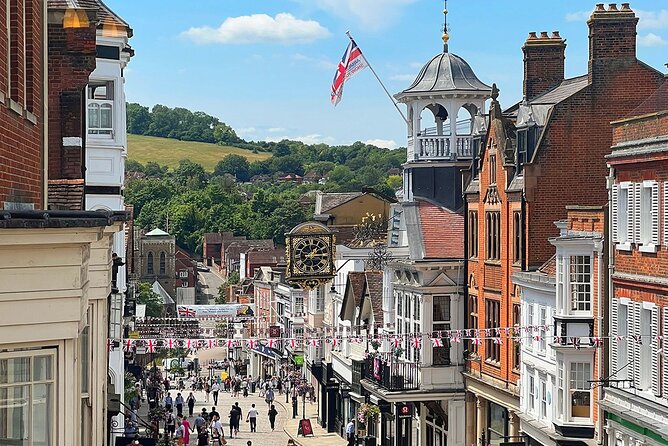
If you like figuring out a new place without getting lost, this tour is built for that. It starts in the Tudor district and ends at a riverside pub, so you move through different eras while your feet do the wayfinding.
The timing is what makes it work. You are not stuck all afternoon, and you still get seven stops with enough narration at each one to connect the dots. You also get a private tour setup, meaning it is just your group, so it is easier to ask questions and stay on pace.
A practical note: there is pickup offered and you will have a mobile ticket. If you are arriving without a car, that helps you focus on the walk itself instead of hunting down meeting points.
For my money, the biggest value is not any single building. It is the way the route connects religion, trade, power, and daily life into one smooth loop you can repeat later on your own.
More Guided Walks in London
Holy Trinity Church: Palladian style after a 1740 collapse
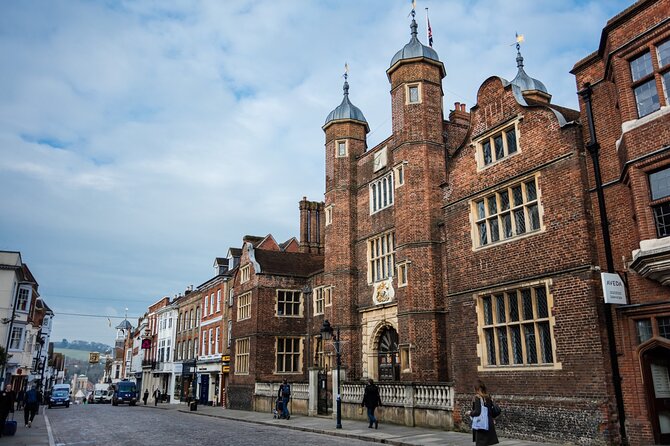
Holy Trinity Church anchors the tour with a story you do not expect on a short walk. The current building dates to the 1750s, built after the medieval church fell down in 1740. That cause-and-effect detail matters, because it shows how towns rebuild, not just how they decorate.
The church is described as Palladian, inspired by Roman architecture. So even if you are not a design nerd, you will understand what you are looking at, and why that style shows up here. It is one of those stops where you can stand back, look up, and feel the architectural logic.
The timeline also hints at deeper roots. The information notes the first church was probably around 950, long before the 1750s rebuild. That contrast helps you see Guildford as a place with continuity, not a collection of unrelated postcards.
What to watch for at this stop: give yourself a moment to absorb the exterior lines before you move on. The pace here is short, and the guide’s explanation will make more sense if you start by visually mapping what you are seeing.
The Three Pigeons pub: a mid 1700s stop with a local ghost story
From the church, the route slips toward everyday life at The Three Pigeons in Guildford. It is described as one of the oldest pubs in town, dating from the mid 1700s, right across from the stop point.
This is a fun change of gear. You still get context, but it is lighter, more social, and easier to digest if you are traveling with someone who likes history but does not want it to feel like a lecture hall.
The big extra here is the legend angle. The pub is said to be haunted, and the tour frames that in a way that fits the building’s age and local storytelling tradition. Even if you do not take ghost stories literally, it is a nice way to connect the present to the past with a human touch.
A small consideration: because it is a short stop, you will want to decide quickly what you want most, a quick exterior look or a moment to soak in the mood. If you want photos, position yourself early, since the group movement picks up.
Tunsgate Arch: corn merchants and the guildhall ground floor
Tunsgate Arch is one of those places that looks simple until you hear what happened underneath it. In the 16th and 17th centuries, corn merchants did their trade on the ground floor off the guildhall, and the space was used for a range of events over time.
That is a key lesson for travelers: the town center was never only about sightseeing. It was about commerce and getting things done. So when you see Tunsgate Arch as part of a walking route, you are not just admiring stonework. You are picturing deliveries, negotiations, and daily bustle.
Another value here is how the stop bridges the tour’s theme. You move from church rebuilding to tavern tradition to trade infrastructure. By the time you reach the castle, the idea of Guildford as a working town is already in your head.
Drawback to factor in: if you are expecting a long, dramatic view or a huge monument, this stop is more about meaning than scale. It is still worthwhile, especially if you like historical cause-and-effect.
Guildford Castle: Norman roots, plus garden and moat access
Now you get the big one. The tour includes access into Guildford Castle gardens, the Royal Bowls Green, and the moat area of the castle keep. That access is a practical win, because it lets you experience the grounds rather than just reading a sign.
The background is tied to the Norman invasion of 1066. The castle was built by William the Conqueror or one of his barons shortly after the invasion. Even if you know this history already, it lands better when you are standing on the kind of terrain that once helped defend a strategic position.
Royal Bowls Green is a fun detail because it adds a lighter, everyday royal angle. It helps the castle feel human, not just military. The moat area gives you the defensive picture, so you get both the charm and the seriousness.
What you should do here: take a slow look around before you listen too hard. The guide’s explanation will make more sense if you first get your bearings in the gardens and see how the moat shapes the space.
One caution: castle garden time is not long. Bring your best camera timing, because you will not have an hour to linger. You also might want to wear shoes with good grip, since garden paths can be uneven depending on the day.
More England on foot, brolly optional:
- Westminster Guided Walking Tour with Abbey Entry★ 5.0 · 1,282 reviews
- Walking Tour of London Westminster Abbey, Big Ben, Buckingham★ 4.5 · 1,213 reviews
- London West End Musical Silent Disco Walking Tour Top 1% Rated★ 5.0 · 1,057 reviews
- Westminster 3 Hour Walking Tour and Visit of Churchill War Rooms★ 5.0 · 967 reviews
Castle Gardens: kings, queens, and prisoners in the keep
The next portion stays in the castle area, focused on what the castle meant in use. You learn about kings and queens who visited Guildford Castle, and you also learn about prisoners held in the castle keep.
This stop matters because it balances the story. A castle is not only a symbol. It is also a system, for receiving power and controlling people. That two-sided framing helps you avoid a one-note version of medieval life.
It also gives you a more complete mental picture as you continue. After seeing the moats and gardens, you now understand why those spaces mattered, not just how they look.
If you like stories, this is the moment where the tour’s narration can really click. You will probably find yourself imagining visitors arriving, officials moving, and prisoners being held, because the stop is built to connect spaces to actions.
Possible drawback: if you prefer light, happy storytelling only, some of the prisoner details may feel heavy. Still, for most people it is a grounding part of the experience, and it keeps the castle history honest.
The oldest church and medieval wall painting, plus Lewis Carroll
Next you hit the town’s spiritual and artistic layer. The route includes a look at what is described as the oldest church in the town, with medieval wall painting. Even in a short visit, wall paintings are a great way to understand what people once prioritized visually and emotionally.
Then there is the Lewis Carroll connection. The information notes that Lewis Carroll would preach here on his visits from Oxford. That is a terrific detail because it takes a medieval and early-modern religious setting and ties it to a real, familiar name.
This stop also includes the modern overlay of older life. The current shopping centre is on the site of a Dominican friary. So while you are standing in a part of town that looks commercial today, the guide’s explanation helps you picture friars being present in earlier centuries.
What makes this stop valuable for you: it shows how Guildford layers time on top of itself. You get to see that the town did not reset and start over. It kept reusing space, with new meanings added each era.
Small consideration: this part is listed as free, so you should not expect admissions or ticketed access. Still, it is a great pause in the walk if you want to slow down and absorb the details without moving through another payment checkpoint.
White House Bridge and the River Wey: navigation and summer markets
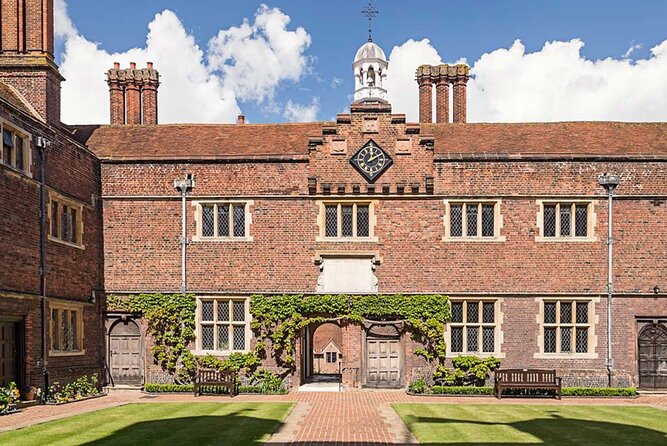
The final stretch brings you to White House Guildford at the bridge over the River Wey. The tour frames this as a practical and scenic ending, and it also explains why the river mattered historically.
The information notes that the River Wey was one of the first British rivers to be made navigable and was opened to navigation early. That matters because it turns the river from background scenery into an engine for trade and movement, which pairs nicely with the earlier Tunsgate Arch corn-merchants theme.
You also learn that markets often appear along here in summer. That is useful if you are traveling in the warmer months, because it helps you think about what you might be able to tack onto the end of your walk, depending on the day.
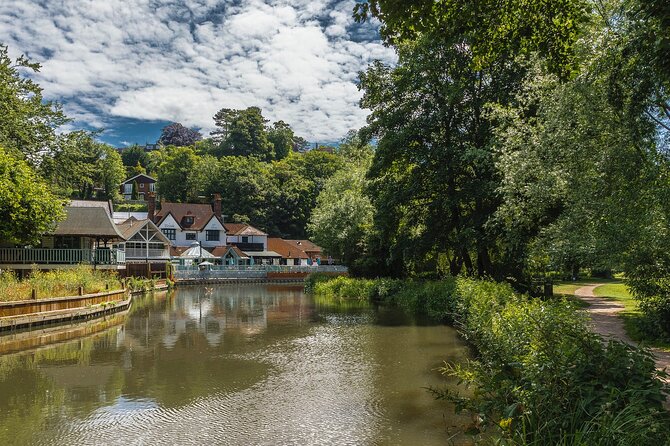
The route ends at a riverside pub, which makes sense. After history, trade, and stone, you get a simple place to sit and reset. It is a good way to turn the tour into an actual day out instead of a quick checklist.
If you are sensitive to wind or cold at the river, plan accordingly. Riverside weather can change quickly, even when the rest of town feels mild.
Price, private-group feel, and what $37.68 buys
The price is $37.68 per person for about 1 hour 15 minutes. That is not a bargain you forget, but it is also not priced like a premium, long-haul experience. The real question is what you get for the cost.
Here is the best value angle: you have admission tickets included for multiple stops, including Holy Trinity Church, the Three Pigeons, Tunsgate Arch, Guildford Castle, and the castle gardens area. That inclusion adds up, and it reduces the mental load of figuring out what costs extra.
Then there is the private-group advantage. Since it is just your group, the guide can keep the pace comfortable and focus on your questions. In the past, Emily has been described as laid back and easy to interact with in small groups, which is exactly the kind of guide style that makes a short walking tour feel personal instead of rushed.
One more value signal: the tour is commonly booked about 19 days in advance on average. That usually means it is popular enough that you should lock your date sooner rather than later, especially if you want a specific time window.
A balanced caution: a couple of past situations have involved guide or operator communication problems. That does not mean it will happen to you, but it does mean you should treat this like any real-world booking. Check your confirmation, know the start point in advance, and keep your phone accessible.
Practical tips for getting the most from Emily’s route
First, wear good walking shoes. This is short, but you still cover enough ground that you will feel it if your feet are not happy.
Second, plan for quick transitions. Most stops are around 5 to 15 minutes, with multiple short admissions. If you want photos, do them early at each stop so you are not trying to hold a group in place.
Third, make use of the Q and A. This format works best when you ask one or two pointed questions, like why the Palladian rebuild happened, what the corn trade would have looked like, or how Lewis Carroll fits into the local story. If Emily is your guide, she is noted as speaking English, French, and Spanish, which can make it easier if your group has mixed language comfort.
Fourth, factor in weather. The experience requires good weather, so if rain is in the forecast, consider whether you have a backup day or at least bring a light rain layer.
If you need it, the tour also allows service animals, and it is near public transportation, so you do not have to rely entirely on a car to make the day work.
Should you book this Guildford Walking Tour?
Book it if you want an efficient way to get oriented in Guildford and you like your history told through real places, not just plaques. I think it is especially good for couples, friends, and small groups because the private setup makes questions and conversation easier. The mix of Holy Trinity Church, the castle grounds, and the River Wey ending gives you variety without dragging on.
Skip or reconsider if you need an ultra-flexible schedule or you are traveling during unpredictable weather. Also keep an eye on day-of communication based on past issues, and arrive prepared so you are not stuck waiting if anything goes sideways.
If your ideal day is part architecture, part local trade, and part a relaxing finish by the water, this is a smart, value-friendly way to spend a little more than an hour in town.
FAQ
How long is the Guildford walking tour?
The tour runs for about 1 hour 15 minutes.
Is pickup offered for this tour?
Yes, pickup is offered.
Do I need to print tickets?
No, you can use a mobile ticket.
Is this a private tour?
Yes. It is listed as a private tour/activity, meaning only your group participates.
Where does the tour start and where does it end?
The tour begins in the Tudor district and ends at a riverside pub.
Are admission tickets included?
Admission tickets are included for several stops, while at least one stop is listed as free.
What weather conditions are required?
The experience requires good weather, and if it is canceled due to poor weather, you will be offered a different date or a full refund.
What is the cancellation policy?
You can cancel for free up to 24 hours in advance for a full refund, with no refund if you cancel within 24 hours of the start time.
Latest to join the queue for London



Guided Walks in London, compared.

Tour for Muggles The Ultimate Harry Potter Walking Tour in London
Read our review →
Changing of the Guard Guided Walking Tour in London
Read our review →
The Great British Rock and Roll Walking Tour
Read our review →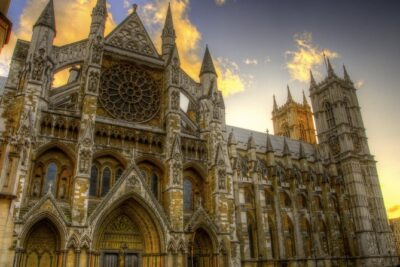
Westminster Guided Walking Tour with Abbey Entry
Read our review →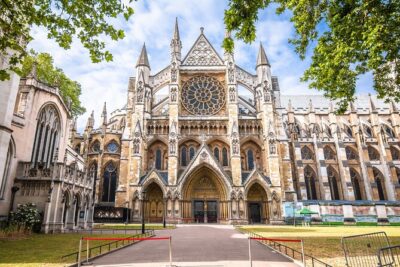
Walking Tour of London Westminster Abbey, Big Ben, Buckingham
Read our review →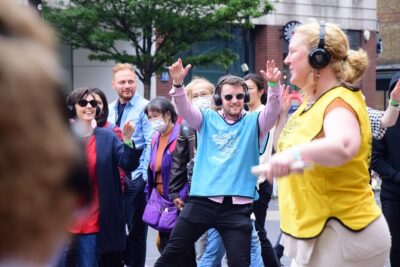
London West End Musical Silent Disco Walking Tour Top 1% Rated
Read our review →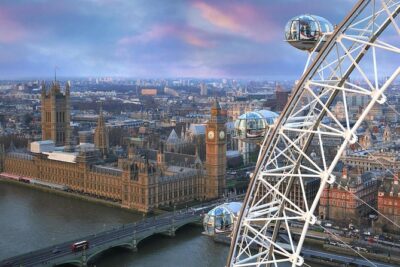
Westminster 3 Hour Walking Tour and Visit of Churchill War Rooms
Read our review →
WW2 London Walking Tour & Churchill War Rooms Entrance Ticket
Read our review →Browse the lists this tour appears in