
Reviewed · OXFORD TOURS & ACTIVITIES
Follow the Money Tour – by Uncomfortable Oxford™
Oxford money can feel very real. This walk uses the city itself to question who paid for it and what that means.
I love the stop-by-stop approach. You move from place to place, learning what each landmark suggests about Oxford’s funding choices. I also like the discussion-first format, where you are asked to think and talk, not just listen.
One possible drawback: if you want a straight history lesson with zero debate, this tour may feel a bit heavy, because it directly tackles contested donors and ethics.
In This Review
- Key takeaways before you go
- Oxford money you can walk through
- Quick facts: price, time, and how it runs
- Start at Saïd Business School: Wafiq Saïd and the ethics question
- Middle Fisher Row Gardens: a green pause on the housing crisis
- Nuffield College: Lord Nuffield and the argument over memory
- Bodleian library with a controversial name: beauty meets controversy
- Wellington Square: the former workhouse site
- Finish at Blavatnik School of Government and the coming Stephen A. Schwarzman Centre
- How the guided discussion works, and how to contribute
- Price value: what you are really paying for
- Who should book this tour
- Practical tips for your walk
- Should you book Follow the Money?
- FAQ
- How long is the Follow the Money tour in Oxford
- What does the tour cost
- Where does the tour start and end
- Is the tour offered in English
- Is there an admission fee for the stops
- How many people are in the group
- What is the cancellation policy
Key takeaways before you go
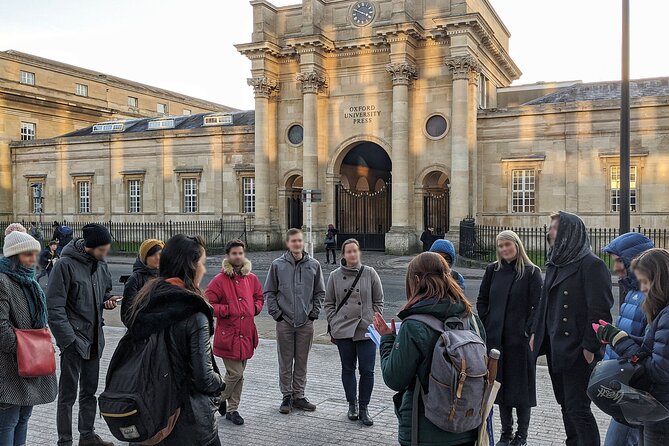
- Small group size (max 15) keeps the conversation manageable and more personal
- Six focused stops link money and power to specific Oxford locations you can still see today
- Free entry at each stop means your time goes to the story, not ticket hassles
- Mobile ticket and a clear start and end make logistics simple
- English only keeps it straightforward for most visitors
- Facilitated group discussion gives you space to form your own view
Oxford money you can walk through
If you have ever stared at Oxford and thought, okay, but who funded all this, you will like this tour. It takes big name donors and turns them into street-level questions. You look at buildings and gardens, then you talk about why funding decisions matter in a city that is still grappling with fairness.
The best part is that it is not just a list of controversy. It is a guided walk that nudges you to weigh a moral line. How far would you go to secure money for education? That question runs through the whole experience.
And yes, the cityscape is doing real work here. You are not tucked away in a lecture hall. You are outside the Saïd Business School at the start and you end near major institutional projects. The walk makes you connect what you see to who paid for it.
Also on in Oxford, no fuss
Quick facts: price, time, and how it runs
This is a 1 hour 30 minutes walking experience in Oxford, England. It costs $89.12 per person and is offered in English.
A few practical points that affect value:
- Limited group size (max 15) helps the discussion stay alive rather than turning into a lecture
- Admission is free at each stop, so you are paying for guided interpretation and conversation, not extra entry fees
- Mobile ticket simplifies check-in
- It is near public transportation, which matters in Oxford when you do not want to fight parking or long walks
It is also an activity that tends to get booked ahead. On average, it is reserved about 11 days in advance, so if you are traveling in peak season, plan early.
Start at Saïd Business School: Wafiq Saïd and the ethics question
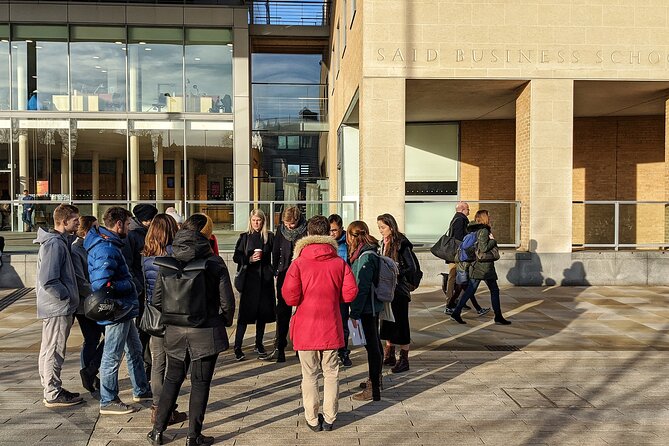
You begin outside Saïd Business School on Park End Street, at Saïd Business School, Park End St, Oxford OX1 1HP. The tour starts by focusing on Wafiq Saïd and the controversies around his large donations to the University.
What I like about starting here is that it sets a tone fast. You immediately see how money becomes identity. A business school is not just a building. It is a public face of institutional power, and the tour asks you to consider what that power costs.
This part also helps you understand how the tour is built. You get context on the donor, then you shift from facts to judgment. You are not being pushed toward one conclusion. You are being invited to compare values and tradeoffs.
Potential consideration: if you are allergic to political or ethical debate, this opening may feel direct. On the other hand, if you want honesty about funding, this is a strong hook.
Middle Fisher Row Gardens: a green pause on the housing crisis
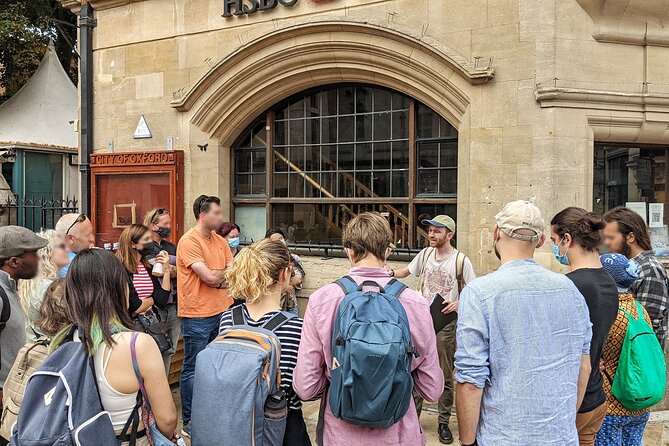
Next you head to Middle Fisher Row Gardens, a small, calming space where the conversation turns to the ongoing Oxford housing crisis.
This stop matters because it prevents the tour from staying stuck in donor names alone. Housing is where abstract power becomes daily life. Even if you do not have a deep interest in university funding, housing pressures are something you can relate to quickly.
The setting also changes the pacing. You get a break, some shade and quiet, and then you refocus. That is a smart design choice for a walking discussion tour, because it keeps people from burning out before the more controversial institutional sites.
What you should watch for: the garden stop is short. You will get a prompt, not a long essay. Come ready to think on your feet, and you will get more out of it.
Nuffield College: Lord Nuffield and the argument over memory
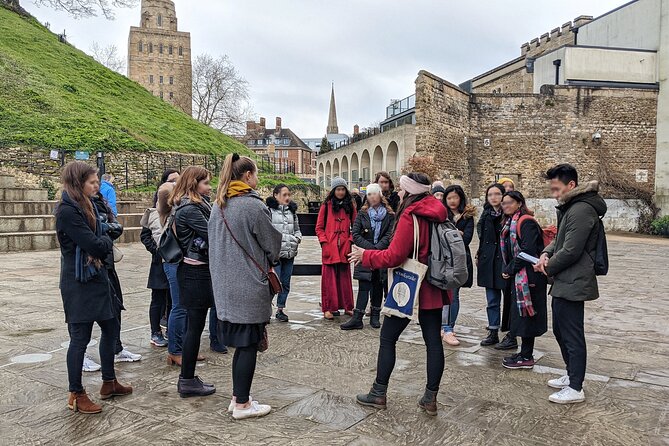
After the gardens, you visit Nuffield College and learn about Lord Nuffield plus tensions around his memory in the city.
This is where the tour shifts from funding to remembrance. It is one thing to ask who paid. It is another to ask how public space keeps those choices in view over time. The tour uses Nuffield as a case study for how reputations can stay complicated.
I like that this stop makes you consider a second question: what do we owe the past, especially when donors or benefactors are tied to hurtful outcomes? The tour encourages you to grapple with that tension rather than treat history as a fixed story.
Possible drawback: if you prefer clean timelines and dates, you might find these stops feel more interpretive than archival. That said, Oxford is full of plaques and names, and this approach gives you a way to read them critically.
While the kettle’s on in Oxford:
- Oxford Official University & City Tour★ 5.0 · 1,134 reviews
- City Sightseeing Oxford Hop-On Hop-Off Bus Tour★ 4.5 · 1,042 reviews
- Harry Potter Walking Tour of Oxford Including New College★ 4.5 · 930 reviews
- Oxford Sightseeing River Cruise Along The University Regatta Course★ 4.5 · 652 reviews
Bodleian library with a controversial name: beauty meets controversy
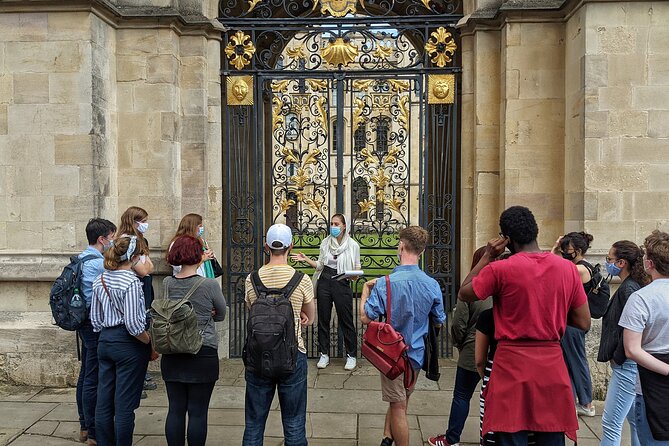
Then you pause at Bodleian Art, Archaeology and Ancient World Library. The focus here is the Romanesque library and the fact that it is named after the controversial Sackler family.
This stop is visually rewarding, and the tour makes a point of not letting visuals distract you. You can admire the architecture while also asking what it means for a major cultural space to carry a contentious name.
This is also one of the best places on the walk to slow down. The building is the kind of Oxford scene that people photograph quickly. The tour instead turns it into a prompt: are you looking at art and scholarship, or are you looking at branding tied to moral compromise?
What you might find challenging: separating the building’s aesthetic value from the ethics behind its naming is emotionally awkward. But it is also exactly the point of the experience.
Wellington Square: the former workhouse site
At Wellington Square, you enter a peaceful garden that was once the site of the Oxford Workhouse.
This stop adds depth to the theme. The tour is not only about wealthy donors funding institutions. It also looks at how society treated ordinary people. Workhouses are a reminder that “charity” and “care” were often tangled up with control and hardship.
The quiet garden setting helps you feel the contrast. You go from donors and naming controversies into the lived reality of how people were processed by systems long ago. It makes the ethical discussion less abstract.
If you are short on time elsewhere in Oxford, this is the stop that helps you connect the dots between university power and broader social history.
Finish at Blavatnik School of Government and the coming Stephen A. Schwarzman Centre
Your walk ends beside the Blavatnik School of Government at 120 Walton St, Oxford OX2 6GG, with a final look at two major projects connected to controversial billionaires. The tour highlights the Blavatnik School and also the soon-to-be Stephen A. Schwarzman Centre for the Humanities.
This ending is smart because it is future-facing. You do not just learn about the past. You see how funding models keep shaping what Oxford builds next.
I like that the walk ends with a pair of related sites. You get a cleaner comparison, and the final conversation feels less like a closing lecture and more like a prompt you can carry with you. You are thinking about ethics, influence, and what institutions choose to represent publicly.
Potential consideration: because the tour ends at an institutional cluster, you may want to plan your post-tour route so you do not rush right away. Give yourself a few minutes to absorb what you just learned while the walk is still fresh.
How the guided discussion works, and how to contribute
This tour is built for conversation. The format, at least in the way it is described through past experiences, tends to be information plus participant reflection. One guide name that comes up is Hera Jay, and another is Julie. In both cases, the common thread is facilitation that keeps the tone thoughtful and allows multiple viewpoints to exist.
So how do you get the most out of it?
- Treat each stop as a mini argument, not a trivia stop
- Share what you think, even if you are unsure, because that is often what sparks the best discussion
- Listen for the question behind the question: what would you accept, and what would you refuse, to fund education or public culture?
If you tend to be quiet in groups, you can still participate by asking one clear question at a stop. The small group size makes it easier to do that without feeling put on the spot.
Price value: what you are really paying for
At $89.12 per person, this is not a cheap casual stroll. But you are paying for:
- A tightly timed 1 hour 30 minutes focused on interpretation rather than wandering
- Free access at each stop, so your cost is mainly the guided storytelling and discussion
- A small group cap of 15, which supports real talk
- A theme that many Oxford walks do not address directly: who funds the university and how that shapes public spaces
If you like Oxford as a place to study people, not just buildings, the value makes more sense. If you want only architecture and famous dates, you might feel the price is high for what is essentially a walk with conversation prompts.
Who should book this tour
This is a good fit for you if:
- You like questioning the official story
- You want your Oxford photos to come with context
- You enjoy structured group discussion, even if it gets a little uncomfortable
- You want a guided way to connect donors, institutions, and everyday social issues like housing
It may not be the best fit if:
- You want a low-emotion, purely historical stroll
- You dislike ethical debate in a group setting
- You need long periods of quiet with no prompts
Practical tips for your walk
Oxford weather can change fast, so I recommend packing for wind and rain even in mild seasons. Wear shoes you can walk in comfortably for 1.5 hours.
Because it is a discussion-based experience, try to arrive with a clear mind. If you are hungry or rushed, the content will feel heavier than it needs to be. Also, keep a small water bottle handy.
Service animals are allowed, and the tour is near public transportation, so you should be able to join without too much stress from parking.
Should you book Follow the Money?
If you are on the fence, here is my honest take. Book it if you want Oxford that questions itself. This tour gives you a way to stand in front of major Oxford institutions and ask better questions than the usual, Who built it? or When was it founded?
Skip it if you want a traditional sightseeing loop that avoids controversy. You will still see meaningful places, but the point here is the ethics of funding, and that is not a background theme.
Finally, because it is a small group and gets booked ahead, if this subject interests you, I would lock it in early rather than hoping for last-minute availability.
FAQ
How long is the Follow the Money tour in Oxford
It runs for about 1 hour 30 minutes.
What does the tour cost
The price is $89.12 per person.
Where does the tour start and end
It starts at Saïd Business School on Park End Street (Park End St, Oxford OX1 1HP) and ends at the Blavatnik School of Government (120 Walton St, Oxford OX2 6GG).
Is the tour offered in English
Yes, the tour is offered in English.
Is there an admission fee for the stops
The information provided indicates admission ticket is free at each stop.
How many people are in the group
The tour has a maximum of 15 travelers.
What is the cancellation policy
Free cancellation is available up to 24 hours in advance for a full refund. If you cancel less than 24 hours before the start time, the amount paid is not refunded.
Latest to join the queue for Oxford







Oxford Tours & Activities, compared.
Oxford University Walking Tour With University Alumni Guide
Read our review →
1.5-hour Oxford City and University Walking Tour
Read our review →

City Sightseeing Oxford Hop-On Hop-Off Bus Tour
Read our review →
Harry Potter Walking Tour of Oxford Including New College
Read our review →
Oxford Sightseeing River Cruise Along The University Regatta Course
Read our review →
Afternoon Tea Sightseeing River Cruise in Oxford
Read our review →Browse the lists this tour appears in