
Reviewed · STONEHENGE TRIPS
Expert Archaeologist – Private Stonehenge, Bath and Avebury Tour
Stone circles make more sense with an expert. This private day tour strings together the big names and the lesser-known Neolithic sites around Wiltshire, then tops it with Roman Bath and a proper 18th-century city stroll.
Two things I really like: you get an expert archaeologist guide who explains why each place was built, and you’re not stuck in a rigid group schedule. The pace is your pace, which matters when you’re trying to connect alignments, ceremonies, and engineering across the landscape.
One possible drawback is the travel distance and the early start. You’ll be in the car for a long day, and there’s a moderate amount of walking on uneven ground at some stops, so comfortable shoes are a must.
In This Review
- Key highlights you’ll feel the minute you start
- Price and logistics for a private day you won’t share
- The drive south: how the day sets you up before Stonehenge
- Woodhenge: the wooden circles that came first
- Durrington Walls: the builder’s village idea makes the stones less lonely
- Stonehenge entry: why the expert framing changes everything
- Bath time: Roman engineering meets 18th-century fashion
- Silbury Hill: the hardest-to-believe 37 meters of man-made earth
- West Kennet Long Barrow: a real Neolithic tomb you can enter
- Avebury’s stone circles and the village inside the ring
- Who this private tour fits best
- The fine print that matters for your comfort
- Should you book this Stonehenge, Bath and Avebury private day?
- FAQ
- What is the group size for this private tour?
- Where does pickup happen, and what time does the tour start?
- Is Stonehenge admission included in the price?
- Are the other sites included, or do I pay extra entrance fees?
- Will we be able to enter West Kennet Long Barrow?
- Is the tour mostly walking or mostly sitting in a vehicle?
- What is the cancellation policy?
Key highlights you’ll feel the minute you start
- Private pace with a separate professional driver, so the archaeologist can focus on your questions while you ride
- Woodhenge and Durrington Walls first, so Stonehenge doesn’t feel like an isolated mystery
- Stonehenge with the one ticket you’ll pay for, while other sites on the day are listed as free
- Roman Bath plus independent lunch time, so you can eat when you want and wander at your speed
- Silbury Hill and West Kennet Long Barrow, two serious earthworks and tomb experiences beyond the usual headline stops
- Avebury’s world-class stone circle village finish, including time to stroll and grab a drink at the Red Lion
Price and logistics for a private day you won’t share
This is priced at $1,775.64 per group for up to 6 people. That’s a big number, so here’s how I’d think about value: you’re paying for (1) a private expert guide, (2) door-to-door pickup, (3) an air-conditioned luxury vehicle, and (4) parking fees. If you compare that to piecing together multiple group tours plus transit costs, the pricing starts to make sense.
A practical note: the tour is listed as commonly booked about 65 days in advance, so if your dates are set, it’s smart to lock it in early. Also, you’ll start at 7:30 am, with pickup from your hotel lobby. The driver uses a signboard and asks that you be ready about 10 minutes before pickup time.
You’ll get a mobile ticket, which is handy on a day where everyone is moving quickly. And because this is private, it’s only your group, not a mixed crowd trying to decide where to stand.
More standing stones on the plain:
The drive south: how the day sets you up before Stonehenge
This day works because you’re guided through the prehistoric story in order, not just dropped at the famous one and sent on your way. Starting early lets you see the sites with fewer time-stress feelings, and it also gives your guide room to explain what you’re looking at before you reach the main event.
You also benefit from the tour design: there’s a separate professional driver, which means the archaeologist can keep talking instead of managing traffic logistics. That matters on a long day when questions pop up, and you don’t want to keep losing momentum.
Woodhenge: the wooden circles that came first
Woodhenge is where the story shifts from legend to evidence. You’ll visit a prehistoric monument built during the Late Neolithic period, made of six concentric rings of wooden posts, totaling 168 posts. The posts were arranged in a symmetrical pattern, and it’s possible they were connected by lintels.
What makes Woodhenge special is that it reminds you this wasn’t only a stone-culture. Here, archaeologists excavated the site in the 1920s, and the recovered posts were made from oak, which gives you a tangible handle on materials and skill.
Expect a lighter visit than the bigger headline stops, but it’s still meaningful because you get context. And timing helps: the schedule places this stop first, about an hour and a half drive from London, then a shorter on-site window.
Practical tip: bring a curious mindset. Woodhenge can look like “just rings” until your guide connects it to ceremony and possible astronomical alignments involving the sun and moon.
Durrington Walls: the builder’s village idea makes the stones less lonely
Next comes Durrington Walls, often described as the Stonehenge builder’s village. It’s a large henge in the Wiltshire countryside, with an earthwork roughly over 500 meters in diameter. Inside are two large timber circles, which are thought to have served ceremonial roles.
Durrington Walls is early, too, believed to have been constructed around 2600 BC. That date matters because it places everyday people, not just a monument, at the heart of this world. You’re not only seeing structures. You’re being asked to imagine communities gathering, working, and building together.
The value here is the scale and the shift in perspective. Woodhenge shows timber rings. Durrington Walls shows a huge gathering space, plus timber circles. Then Stonehenge arrives and suddenly you’re not just staring at stones. You’re following a network of places people used.
Good news for your schedule: the drive from Durrington Walls to Stonehenge is listed as about 20 minutes, so you won’t feel like you’re spending the day in the car between major stops.
Stonehenge entry: why the expert framing changes everything
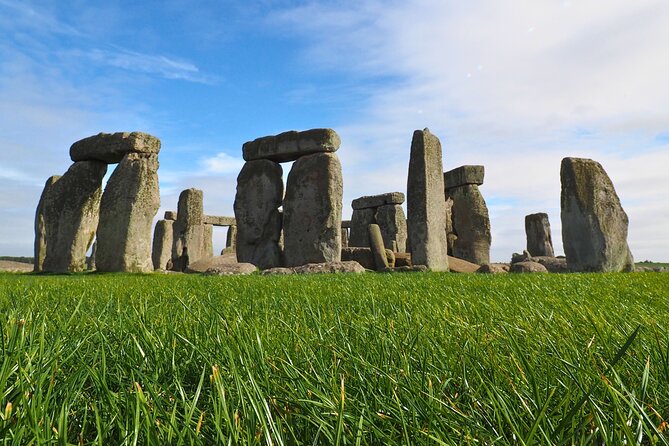
Stonehenge is the “why do people travel for this?” site. You’ll spend about 2 hours there, and the one ticket cost to plan for is Stonehenge entrance, £12.70 per person, since it’s not included in the tour price.
What your archaeologist guide should add is not just facts, but interpretation. Stonehenge has been argued over for centuries, but the more useful angle is how the monument seems to create a pull. Archaeological evidence suggests Neolithic and Bronze Age travelers traveled long distances, possibly over weeks or months, to stand in the middle of this landscape.
That’s what I’d look for during your visit: not just guessing theories, but feeling how real human movement shaped the meaning. If you’re standing there with your guide translating what’s visible and what’s inferred, it stops being an icon and becomes a place people approached with intention.
A small consideration: because you’re doing multiple major sites in one day, your time at Stonehenge is substantial but not unlimited. If you know you want maximum photo time, factor in that your guide will likely want you to see key vantage points rather than letting you wander indefinitely.
Also on in London, no fuss
- London Big Bus Hop-On Hop-Off Tour with Optional River Cruise★ 3.5 · 10,803 reviews
- London Small Group Tour of Historical Pubs★ 5.0 · 10,422 reviews
- Tower of London and Crown Jewels Exhibition Ticket★ 4.5 · 6,677 reviews
- Thorpe Park Admission Ticket★ 4.0 · 5,915 reviews
Bath time: Roman engineering meets 18th-century fashion

After Wiltshire, you’ll drive about 1 hour to Bath. Bath isn’t just a break. It’s a contrast that makes the day feel broader, not repetitive.
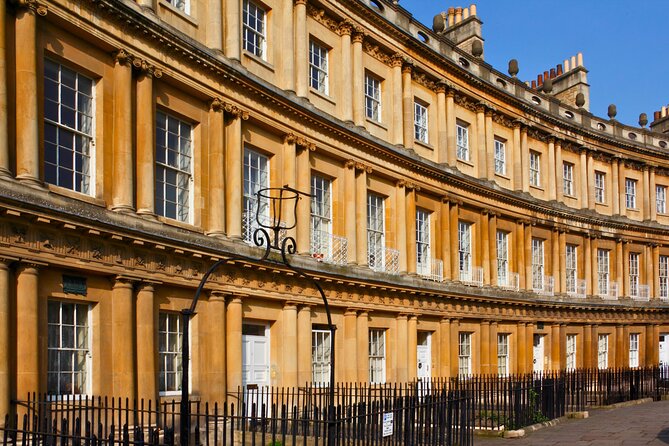
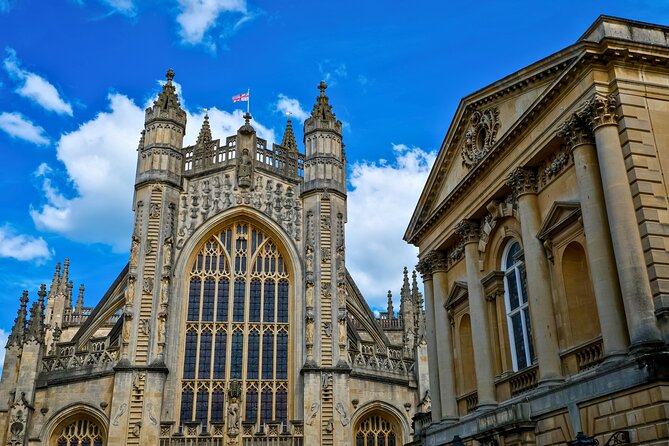
Bath connects two eras: the Romans harnessed hot springs to create a resort of impressive design, and later, the 18th century turned Bath into a fashionable destination. That’s why the city’s layout and architecture feel so deliberate, not accidental.
You’ll have about 1 hour 30 minutes at Bath, with time for independent lunch. This is a smart built-in choice, because food timing is personal. It also gives you a chance to step away from the guide’s narration and simply walk the streets at your pace.
Practical advice: treat Bath as your mental reset. Stonehenge-style sites make your brain spin. Bath lets you feel the geometry and the human scale again, especially if you take a short walk through the center and notice how the city guides your eye.
Silbury Hill: the hardest-to-believe 37 meters of man-made earth
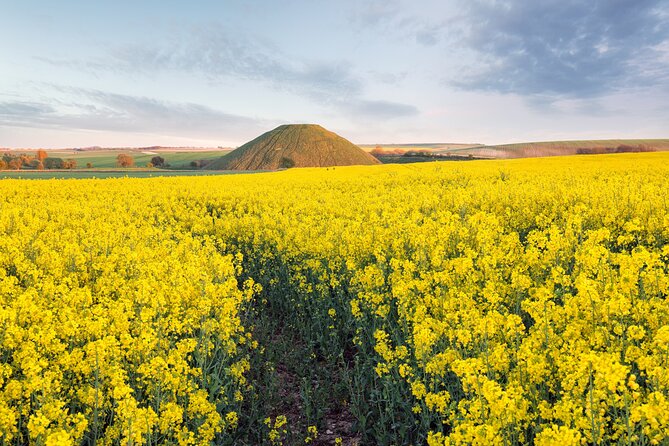
Silbury Hill is one of those places that forces your brain to do math. It’s described as the largest man-made tumulus in Prehistoric Europe, also the tallest prehistoric artificial hill in Europe, at 37 meters high with a base diameter of 160 meters.
This mound is built from chalk and clay, and the construction method is especially impressive: a terrazzo-like technique often described as pounded earth. That means mixing water with dry chalk and clay, then pounding it into place with wooden beams or stone hammers. No modern equipment. Just coordinated labor and time.
The value of visiting Silbury Hill is the sheer commitment behind it. It’s not a monument you can casually pass. It’s a major engineering effort, and standing near it helps you understand that prehistoric Britain had ambitious projects, not only stone circles.
The day flow puts Silbury Hill after the Bath segment with a drive of about 1 hour to West Kennet and Silbury Hill. That timing helps because you’ll still have enough energy to take in the scale without rushing.
West Kennet Long Barrow: a real Neolithic tomb you can enter
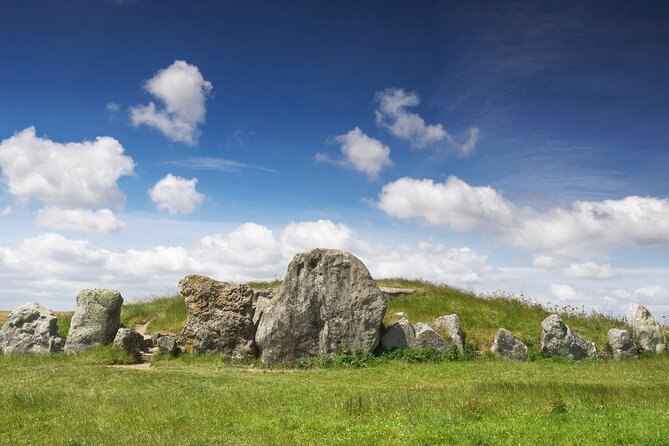
West Kennet Long Barrow is a different kind of wow. You’ll visit a 5500-year-old Neolithic tomb in the Avebury area, built around 3750 BC. The barrow includes a burial chamber with an attached passageway and side chambers, and the entrance is flanked by two massive upright stones.
What makes it more than a viewpoint is the fact it’s open to the public and you can enter. That turns “a monument” into an experience that hits your senses, with the stone roofing and the passage space shaping how you feel standing inside.
There’s one seasonal consideration: visits to the West Kennet long barrow occur between March 1 and October 31. If your trip falls outside those dates, you’ll want to confirm what the tour will do instead, because this stop is explicitly seasonal.
Also, expect it to be an archaeological stop with practical movement. The day notes mention uneven surfaces and moderate walking overall, so go slowly and wear shoes you trust.
Avebury’s stone circles and the village inside the ring
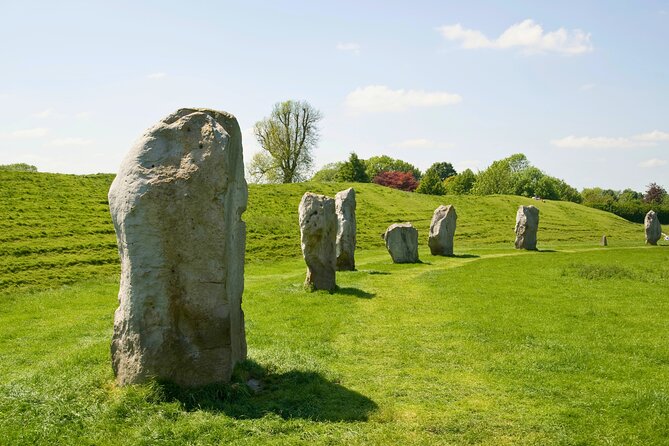
You’ll finish at Avebury, and it’s hard not to love the contrast with Stonehenge. Avebury is a small village with the world’s largest stone circle, and the stones are right in the middle of everyday life.
Avebury’s arrangement includes three stone circles: the outer circle (the largest), plus two smaller circles, northern and southern, and then an avenue. The stones are thought to have been erected between 2600 and 2400 BC. Theories include astronomical use or ritual ceremonies.
A key detail: this stop includes time to explore the stone circles, walk along the avenue, and then finish with a drink at the Red Lion pub. That pub finish is more than a cute ending. It gives you time to decompress and talk through what you learned, before heading back.
The drive back to London is listed as about 1 hour 45 minutes, so you’ll likely appreciate the relaxed wrap-up.
Who this private tour fits best
This is a strong choice if you like history that has structure, not just trivia. The day is built around relationships between sites, and that’s exactly what an archaeologist guide is good at explaining.
It also suits small groups who want to move faster than group tours and stop when something catches your eye. Because it’s private and designed around your pace, you can ask follow-up questions without watching the clock.
If you’re traveling with older teens or adults who enjoy museums plus outdoors, this works. If you’re traveling with very young kids, the tour notes say children must be accompanied by an adult, and you should think about the day’s moderate walking and long drives.
The fine print that matters for your comfort
Keep these practical points in mind so the day feels smooth:
- Walking and surfaces: moderate walking, including uneven areas, so wear solid shoes.
- Weather: it runs in all weather conditions, so dress for rain and wind if needed.
- Luggage: no large items of luggage, and the vehicle compartment is limited.
- Group setup: private means only your group is on the schedule, which helps if you want fewer interruptions.
- One paid entry: Stonehenge entrance is not included, everything else listed is free.
Should you book this Stonehenge, Bath and Avebury private day?
If your top priority is expert-led context and you want a day that connects Stonehenge to the wider prehistoric world, I think this is worth strong consideration. The biggest reason is the ordering of stops, where Woodhenge and Durrington Walls build the background so Stonehenge lands with real meaning.
I’d book it if you’re a small group and you value door-to-door pickup plus an archaeologist guide who can explain what you’re seeing without the pressure of sharing a microphone with strangers. It’s also a great fit if you want Bath added in without doing it as a separate planning headache.
I might hesitate only if you’re very sensitive to long drives or you prefer minimal walking. The sites are historic, but they still require being on your feet and moving around uneven ground.
FAQ
What is the group size for this private tour?
The tour is private for up to 6 people per group.
Where does pickup happen, and what time does the tour start?
Pickup is offered from your hotel lobby. The tour start time is 7:30 am, and you should be ready about 10 minutes before pickup time.
Is Stonehenge admission included in the price?
No. Stonehenge entrance is not included, and the listed cost is £12.70 per person.
Are the other sites included, or do I pay extra entrance fees?
The tour info lists admission tickets as free for the other stops on the day.
Will we be able to enter West Kennet Long Barrow?
West Kennet Long Barrow visits occur between March 1 and October 31.
Is the tour mostly walking or mostly sitting in a vehicle?
There is a moderate amount of walking overall and some uneven surfaces, but you also spend time traveling between sites.
What is the cancellation policy?
You can cancel up to 24 hours in advance for a full refund. If you cancel less than 24 hours before the start time, the amount paid is not refunded.
Latest to join the queue for London



Stonehenge Trips, compared.
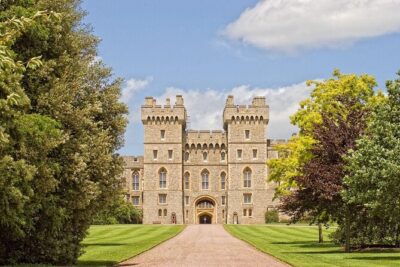
Stonehenge, Windsor Castle, and Bath from London
Read our review →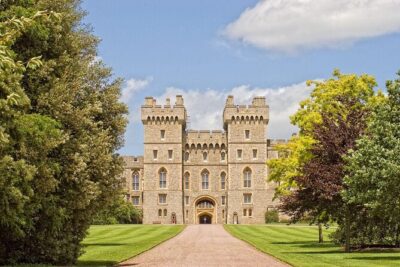
Stonehenge, Windsor Castle and Bath with Pub Lunch in Lacock
Read our review →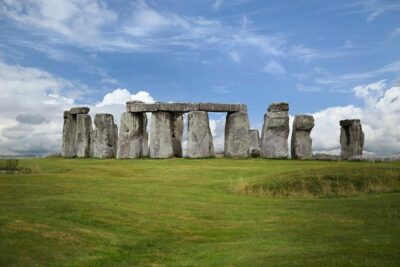
Stonehenge, Windsor Castle and Bath Full Day Guided Tour
Read our review →
Windsor Castle, Stonehenge, and Oxford Day Trip from London
Read our review →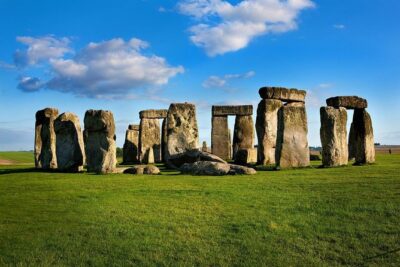
Windsor, Stonehenge and Bath Day Trip from London Spanish
Read our review →Windsor Castle, Stonehenge, and Oxford Day Trip from London
Read our review →
Stonehenge and Bath Day Trip from London with Optional Roman Baths Visit
Read our review →Browse the lists this tour appears in