
Reviewed · MUSEUMS
Crash course in archaeology at the British Museum
London has a thousand years of history, and this tour teaches you how to read it. You’ll get a guided whirlwind across major British Museum “greatest hits,” but with the missing part most visits lack: the archaeology story behind each object and the people who found it. Expect Egyptian hieroglyphs, cuneiform, and bigger human questions, from early hominids to later empires.
I especially love how the tour is built like a chronological timeline, so exhibits stop feeling random and start feeling connected. I also like the way Rossa’s background shows up in the storytelling, where you learn not just what you’re seeing, but how scholars worked it out. One possible drawback is simple: you’ll spend a lot of time on your feet, and it is not trying to help you see everything in the museum.
In This Review
- Key highlights and what makes this tour special
- Crash-course archaeology at the British Museum: what you get in 5.5 hours
- Russell Square start at 9:45, and how to set yourself up for success
- How the route turns famous objects into a real story
- Scripts and decipherment: learning how we actually read the past
- The pace: standing time, smart breaks, and what to bring
- What makes Rossa’s guided style work
- Price and value: is $83.34 worth it?
- Who should book, and who should skip it
- Should you book this British Museum archaeology crash course?
- FAQ
- What is the duration of the Crash Course in Archaeology at the British Museum?
- Where does the tour start and end?
- What time does the tour begin?
- How much does the tour cost?
- What is included in the tour price?
- Is museum admission included?
- Is lunch included?
- What language is the tour offered in?
- How big is the group?
- Are service animals allowed?
- What is the cancellation policy?
Key highlights and what makes this tour special
- A qualified archaeologist guide (Rossa leads), turning objects into real stories
- A chronological walkthrough that connects Egypt, Assyria, Greece, Rome, and more to one big narrative
- Deciphering ancient scripts, including how hieroglyphs and cuneiform were unraveled
- Relic-hunters and explorers in the spotlight, so you understand how collections formed
- Small group size up to 25, which helps you actually hear explanations and ask questions
Crash-course archaeology at the British Museum: what you get in 5.5 hours
This is a guided tour designed to make the British Museum feel readable. The museum is enormous, and walking in without a plan often turns into a long game of “find the most famous things.” This tour changes that by giving you a single storyline to carry through the galleries.
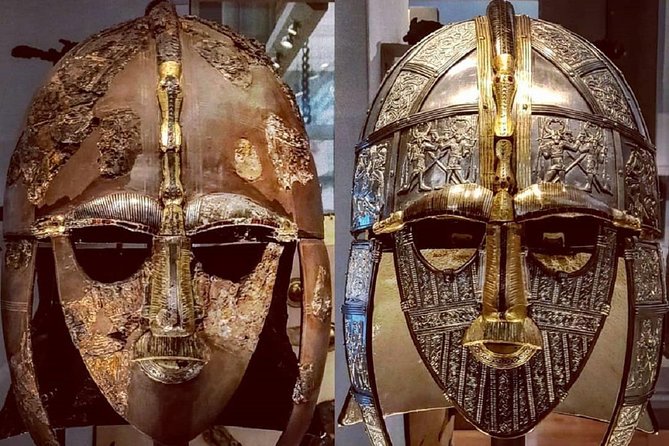
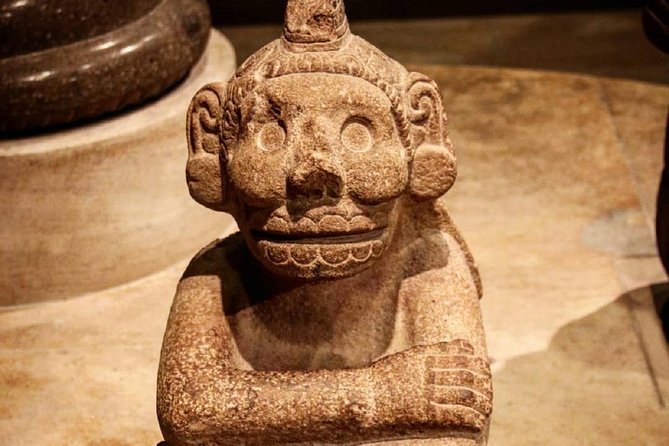
You start with the idea that archaeology is not just about the past. It is about evidence, interpretation, and detective work. From there, you hop across ancient civilizations, including Egypt, Assyria, Greece, and Rome, plus the wider world shown in the collection, such as Vikings and Aztecs.
It also helps that the tour format is practical: morning timing, a set route, and focused stops. That means you can still keep your afternoon for other London plans, instead of burning the whole day just trying to decide what to see.
More free halls and paid exhibitions:
Russell Square start at 9:45, and how to set yourself up for success
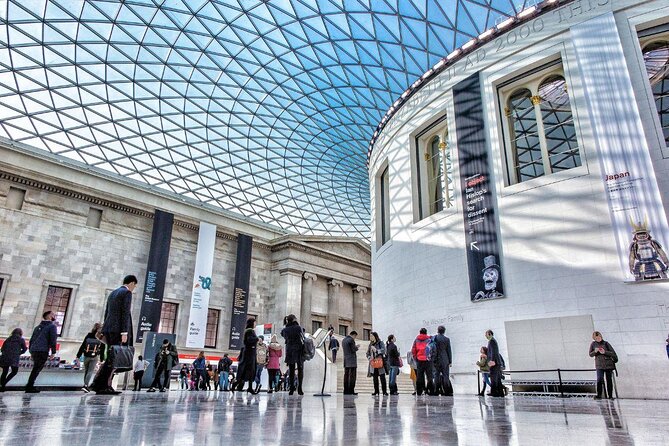
The tour meets at Russell Square, on Bernard St (London WC1N 1LJ), with a 9:45 am start. The end point is the British Museum at Great Russell St (London WC1B 3DG). It is near public transportation, which matters in London, because your feet and your schedule will be doing enough work already.
The group is capped at 25 travelers, so it feels more like an organized lecture walk than a big bus-style shuffle. That also means your guide can pace the group around the museum’s traffic flow, which is a big deal when lines form at entrances and busy galleries.
One small thing that becomes huge on a tour like this: plan for comfort early. In the museum, there are small folding chairs/stools you can grab. If you get one at the start, you’ll feel way less stressed later when the tour includes multiple standing points.
How the route turns famous objects into a real story
The British Museum can feel like a set of perfect photographs, but you learn faster when someone gives you the missing context. This tour does that by picking key artifacts and using them as anchors for a timeline that stretches across human history.
You can expect stops that connect major periods and themes, not just single-country sightseeing. In the British Museum, that often means you’re moving from ancient storytelling to ancient technology, and then to what the objects reveal about daily life, power, and belief.
A few of the kinds of things the tour includes show the breadth of what you’ll see:
- The Jericho digs angle, which brings archaeology as method to the front of the conversation
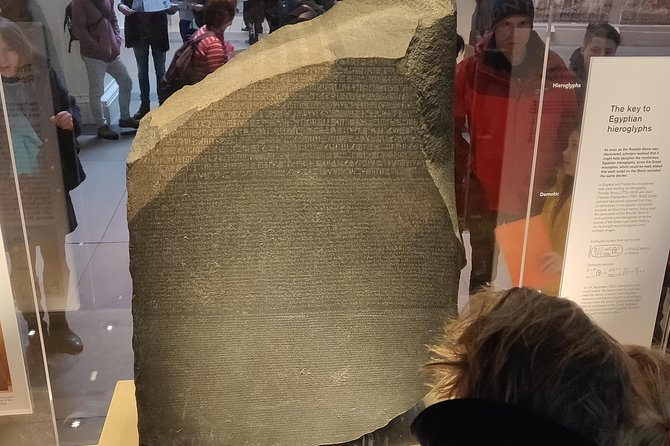
- The Rosetta Stone and the idea of decipherment, not just a famous stone photo
- The Lewis Chessmen, framed as artifacts with a story of use and meaning
- The Assyrian section, where you can connect power imagery to how empires ruled and displayed strength
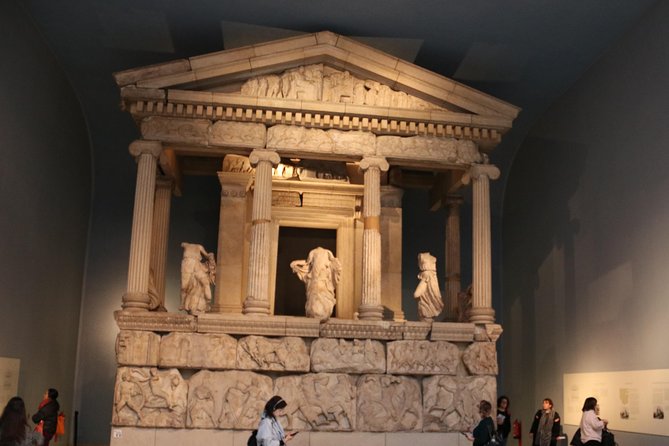
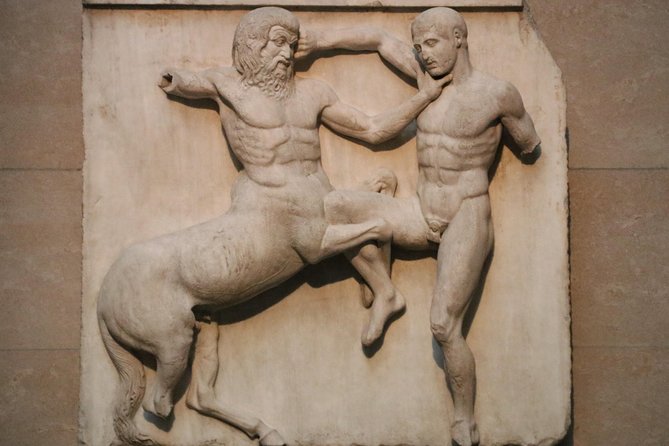
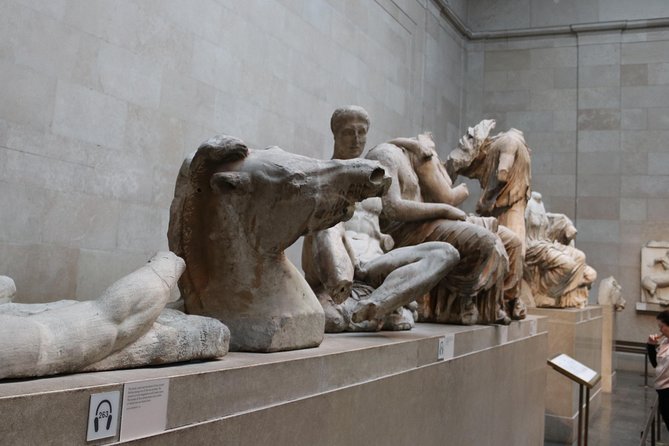
- Major sculpture highlights, including the Elgin Marbles
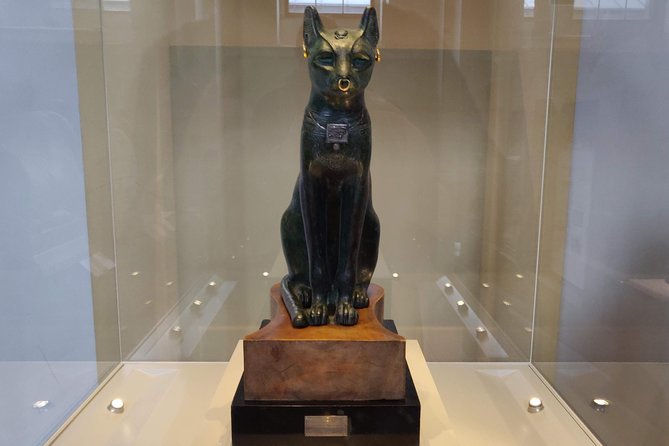
- Egyptian material culture details, like the Ur Egyptian dice game
- A look at hominid origins and early human development, using objects and evidence you can actually see
Even when you’re looking at something that would otherwise feel like a museum label, the guide’s job is to connect it to a bigger arc. That is why people leave saying it beats standard history lessons. It is not memorizing dates. It is understanding how archaeologists and historians build a story from fragments.
Scripts and decipherment: learning how we actually read the past
A big reason this tour works is that it shows how knowledge happens. Two of the most impressive parts of the British Museum are the ancient writing systems, and this tour focuses on what it took to figure them out.
You get help understanding Egyptian hieroglyphs and cuneiform in a way that feels practical, not like a classroom exam. You’ll hear how scholars turned unknown marks into readable language, which is one of those topics that sounds intimidating until someone makes it click.
This matters because the scripts are not just “symbols.” They represent administration, law, religion, and daily records. When you understand the breakthrough that made reading possible, the exhibits stop being decorative. They become documents from real societies.
In other words, the tour teaches you how to look at writing like evidence, which is the same mindset that makes archaeology compelling.
The pace: standing time, smart breaks, and what to bring
Let’s talk about your legs. This experience is built as a focused walk through many areas of the museum, so expect a lot of standing. It is not the kind of tour where you sit for long lectures and glide through halls.
The tradeoff is worth it for many people, because the guide keeps the momentum. But if you know standing is hard for you, your best move is logistical:
- Grab a folding stool early after you enter
- Plan to snack lightly between stops
- Consider taking your own food, since lunch is not included and museum food can be limited and pricey
Lunch timing can vary based on the day and the group flow, but you should treat lunch as “time to eat on the go,” not “a full sit-down break.” One useful idea from past participants: build your energy before you need it. A small bag lunch helps you stay engaged without turning the day into a hunt for a decent meal.
Also, the guide typically builds in breaks so you can reset. The museum can get crowded, and the route needs flexibility, especially around queues and high-demand rooms.
Also on in London, no fuss
- Stonehenge, Windsor Castle, and Bath from London★ 4.5 · 18,662 reviews
- London Big Bus Hop-On Hop-Off Tour with Optional River Cruise★ 3.5 · 10,803 reviews
- London Small Group Tour of Historical Pubs★ 5.0 · 10,422 reviews
- Stonehenge, Windsor Castle and Bath with Pub Lunch in Lacock★ 4.5 · 7,402 reviews
What makes Rossa’s guided style work
A lot of museum guides explain what an object is and call it a day. This tour does something different, and that difference is tied to the way Rossa tells the story.
The standout pattern is how he links three things at every stop:
1) what you’re looking at
2) how it was found or studied
3) why it matters for understanding people, not just civilizations
That approach is why participants often mention feeling like they learned more than from a stack of traditional history classes. It is also why people say the time goes fast. The explanations are not random facts. They are designed to keep the timeline coherent.
It also helps that he includes a bit of humor and pacing signals. People want to know when to get coffee or take a breather. On a tour this long, those small cues reduce fatigue and keep the group from losing the thread.
Price and value: is $83.34 worth it?
At $83.34 per person, the ticket price is not “cheap,” but it also is not trying to replace a month-long museum binge. The value comes from three clear factors.
First, you are paying for a qualified archaeologist guide for about 5 hours 30 minutes. That is more than a standard audio guide and more than a general museum walkthrough.
Second, the museum admission is listed as free, so your money is mostly going toward expert interpretation rather than entrance fees. That makes the math easier: you are not paying a premium just to get into a building you could enter on your own.
Third, it is a small group (max 25). In a place like the British Museum, your money buys access to the guide’s attention, not just a stamp on your phone.
Finally, it is popular enough that booking tends to happen ahead of time, with an average booking window of about 31 days. If you’re traveling in peak season or want a specific date, booking early is simply smart planning.
If you love history but hate aimless museum wandering, this tour can be a high-effort, high-return way to spend half a day.
Who should book, and who should skip it
This is a great match if you want structure. You’ll enjoy it most if you like:
- archaeology and how evidence gets interpreted
- big-picture timelines that connect cultures
- learning why a discovery mattered, not only what it looks like
- seeing famous highlights with explanations that put them into context
It also works well for people who have been to the British Museum before. If you already know your way around, you can focus on deeper meaning rather than trying to cover everything.
That said, it is not built for the first-time “I want every highlight” mission. If your goal is to see as much of the museum as possible on your own, this tour will feel selective, because the point is learning from chosen objects, not checking every gallery box.
Also, because it is a standing-heavy route, it may be tough if you need frequent seating. The museum’s folding stools help, but your comfort needs should still come first.
Should you book this British Museum archaeology crash course?
If you want a guided path through some of the most famous British Museum artifacts, plus explanations that focus on how we know what we know, this is an easy yes. You’ll get a clear timeline, script decipherment context, and archaeology as real detective work, all in a manageable half-day window.
Book it if you can handle standing and you like your history told through artifacts, not through generic lectures. Skip it if your priority is trying to see everything in one trip, or if long standing will ruin the experience for you.
One practical final tip: on arrival, aim to get comfortable right away by grabbing a folding stool early. Then you can spend the rest of the tour doing the fun part, paying attention to the story instead of counting minutes until you can sit.
FAQ
What is the duration of the Crash Course in Archaeology at the British Museum?
The tour lasts about 5 hours 30 minutes.
Where does the tour start and end?
It starts at Russell Square, Bernard St, London WC1N 1LJ, UK and ends at the British Museum, Great Russell St, London WC1B 3DG, UK.
What time does the tour begin?
The start time is 9:45 am.
How much does the tour cost?
The price is $83.34 per person.
What is included in the tour price?
It includes a qualified archaeologist guide.
Is museum admission included?
Yes, the admission ticket is listed as free.
Is lunch included?
No, lunch is not included.
What language is the tour offered in?
The tour is offered in English.
How big is the group?
The tour has a maximum of 25 travelers.
Are service animals allowed?
Yes, service animals are allowed.
What is the cancellation policy?
You can cancel for a full refund up to 24 hours in advance of the experience start time, with free cancellation available up to that cutoff.
Latest to join the queue for London






Museums, compared.

Tower of London and Crown Jewels Exhibition Ticket
Read our review →

Official tickets: Moco Modern & Contemporary Art Museum
Read our review →
British Museum London Guided Tour Semi-Private 8ppl Max
Read our review →
The British Museum London – Exclusive Guided Museum Tour
Read our review →

Skip the Line: Liverpool Beatles Museum – The perfect tribute to the Beatles
Read our review →Browse the lists this tour appears in