
Reviewed · GUIDED WALKS IN LONDON
Burnings, Butchery & Black Death: A Walking Tour of London’s Bloody Past
London gets dark fast. In just about two hours, this walking tour strings together more than a thousand years of London’s hard-edged story, from medieval disease to Victorian grim reality. You start where people once feared the plague, then keep walking through the market streets, churchyards, and old hospital walls that shaped how this city survived.
I really like the pacing, and the fact the group stays small, max 15 people, so your guide can actually answer questions without shouting. The tour is also led with wit and sharp local detail, which makes the darker moments easier to follow and not feel like a scary lecture. One drawback: the themes are deliberately grim, and it is weather dependent, so if you want light sightseeing, this is probably not your fit.
In This Review
- Key Stops You Will Remember
- Why This 2-Hour “Bloody Past” Walk Feels Like Value
- Charterhouse: Starting at a Plague Pit in Plain Sight
- Smithfield Market: When Food Supply Built the City
- St John’s Gate and Cloth Fair: Medieval Power in Quiet Streets
- William Wallace Memorial: A Braveheart Detour That Still Fits
- St Bartholomew the Great and Pye Corner: Old Churches, Fire, and Ghost Stories
- Holborn Viaduct: The River Fleet Sewer, Victorian London’s Hidden Reality
- Ye Olde Mitre: The Alley Pub Stop That Feels Like a Local Shortcut
- St Bartholomew’s Hospital Museum: Why Ending With Medicine Makes Sense
- Price and Logistics: Getting Your Money’s Worth
- Who Should Book This Walk, and Who Might Prefer Something Else
- Should You Book This Bloody London Walk?
- FAQ
- How long is the tour?
- What does it cost?
- What is included in the price?
- Are admissions required for the stops?
- Where do I meet, and where does it end?
- Is the tour in English?
- How large is the group?
- What if the weather is bad, or I need to cancel?
- Are service animals allowed?
Key Stops You Will Remember
- Charterhouse starts the walk at a former monastery and plague pit site
- Smithfield Market connects you to a meat trade that shaped daily life for centuries
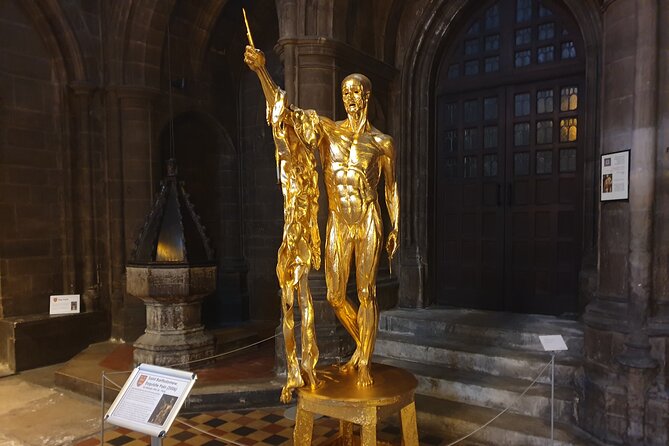
- St Bartholomew the Great gives you a rare look at an older parish church in the City of London
- Golden Boy of Pye Corner blends the Great Fire fallout with later ghost stories
- St Bartholomew’s Hospital Museum ends with the country’s oldest surviving hospital
Why This 2-Hour “Bloody Past” Walk Feels Like Value
London is big, and history can sprawl. What I like here is that this walk compresses a huge timeline into a manageable stroll. You are not trying to read every plaque or figure out connections alone. Instead, you are shown how the city’s fear, food supply, religion, and even sanitation all link together from one street to the next.
The price is around $27.73 per person, which is easier to swallow when most of the stops run on free admission tickets, and one major church stop has admission included. You are also not paying for a long bus ride. This is straight walking, with short on-site moments that still give you enough time to orient yourself and understand what you are seeing.
One practical bonus is the size. With up to 15 people, you tend to get a real conversation, not a one-way talk. It also helps you keep up with the guide’s transitions, especially when the story jumps from the Middle Ages to Victorian London in the span of a few blocks.
More Guided Walks in London
Charterhouse: Starting at a Plague Pit in Plain Sight
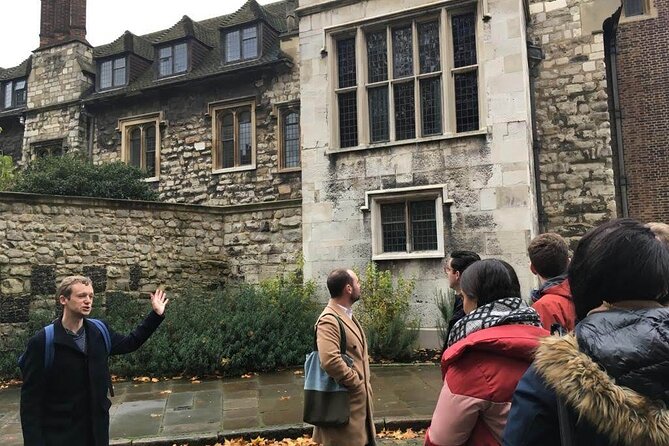
The tour begins at The Charterhouse, a site tied to a fourteenth-century monastery and a plague pit. This is the kind of start that sets expectations right away. You are not easing in with pleasant landmarks. You are getting the emotional and historical tone immediately.
What makes this stop work for you as a visitor is the way it reframes what you think you are seeing. Charterhouse is not just an old building. It is part of the city’s system for handling mass illness, and that changes how you think about everything that comes after. Even if you only know the broad outline of the Black Death era, the guide’s framing helps you connect it to how communities lived, worked, and rebuilt.
Since admission here is listed as free, you do not need to worry about extra costs before you even get started. It is also only a short window, so keep your eyes open for what looks ordinary from the sidewalk. Old sites often feel less dramatic in person than in a book, and that is exactly why a guided walk helps.
Smithfield Market: When Food Supply Built the City
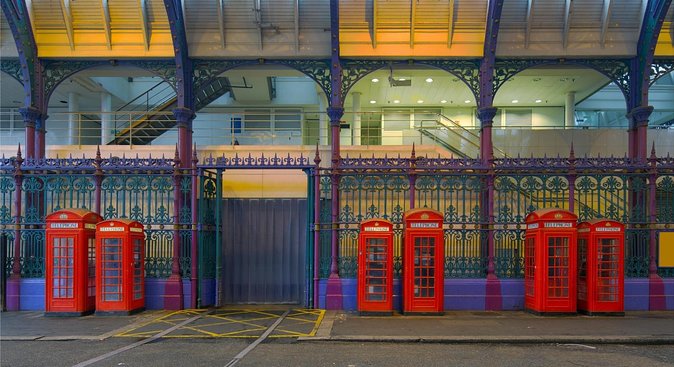
From Charterhouse, the walk moves to Smithfield Market, described as about a thousand years old. If you only think of London as monuments and museums, this stop shifts your lens. Markets are where daily life gets intense. They affect how neighborhoods grow, how people gather, and how the city deals with waste and disease.
You also get a strong sense of why London’s “bloody past” is not only about battles. It is about survival logistics. Meat markets, crowding, and sanitation concerns sit close to each other in historical cities. Standing where the trade happened helps make those connections feel real, instead of abstract.
This stop is time-limited, so you will want to use those minutes actively. Look for the street layout and imagine the flow of people. Think about where food came from, where it went next, and how the market would have looked before modern redevelopment. With a small group, it is easier to ask quick questions about how these places functioned.
St John’s Gate and Cloth Fair: Medieval Power in Quiet Streets
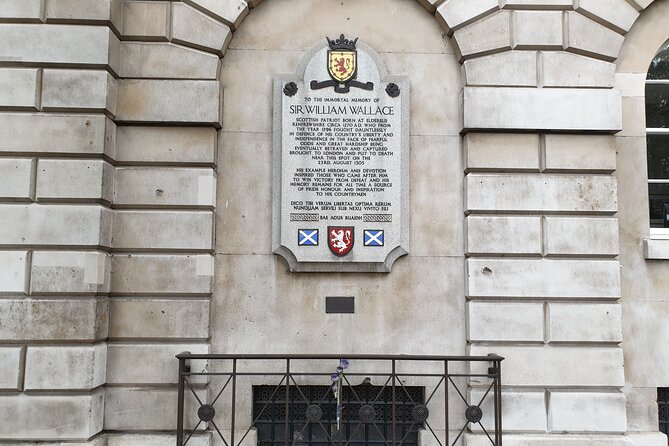
Next you visit St John’s Gate, tied to the medieval Knights Hospitallers. This is a good contrast stop. The Knights Hospitallers were part of the practical religious world, the kind that organized care, security, and resources in an era when those things were scarce.
Then you move to Cloth Fair, a quiet alley with a noisy past. That phrase matters. London’s biggest stories often survive in small spaces. An alley can sound forgettable until you understand the role it played in trade, crowds, and commerce. Cloth Fair is a reminder that London’s history is not always on wide streets with tourist signs. Sometimes it is in the narrow corners you might walk right past.
This section is also where the guide’s style really pays off. In the feedback I saw echoed again and again, the guide is clear, humorous, and good at making the in-between details click. That matters because medieval and early modern stories can feel disconnected unless someone links them in a human way.
William Wallace Memorial: A Braveheart Detour That Still Fits
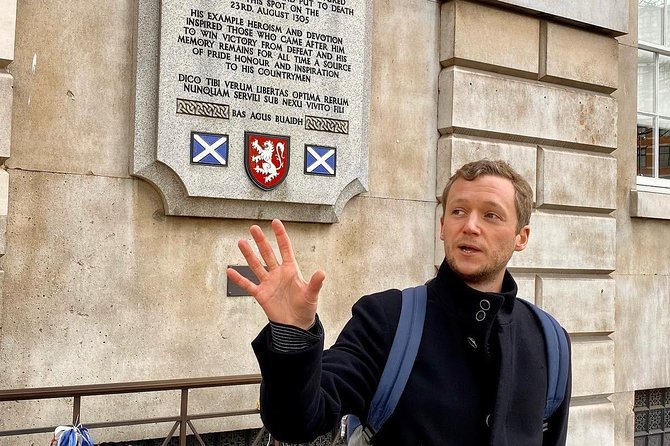
The tour includes the William Wallace Memorial, also known as the Braveheart connection. This stop can work two ways for you.
First, it gives you a quick cultural anchor, which helps the rest of the tour stay understandable. Second, it brings in the idea that London’s story is not purely local. Scotland’s history, legend, and political symbolism echo through London in memorial form, and the guide uses that to keep the tour from becoming a list of grim sites.
Because the stop is short, treat it as a moment to recalibrate. You are not stuck here. You are learning how a single monument can lead to a broader discussion of identity and conflict in the wider British Isles.
More England on foot, brolly optional:
- Westminster Guided Walking Tour with Abbey Entry★ 5.0 · 1,282 reviews
- Walking Tour of London Westminster Abbey, Big Ben, Buckingham★ 4.5 · 1,213 reviews
- London West End Musical Silent Disco Walking Tour Top 1% Rated★ 5.0 · 1,057 reviews
- Westminster 3 Hour Walking Tour and Visit of Churchill War Rooms★ 5.0 · 967 reviews
St Bartholomew the Great and Pye Corner: Old Churches, Fire, and Ghost Stories
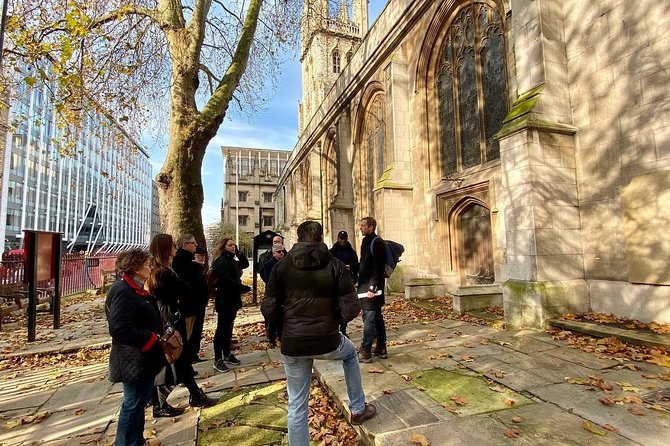
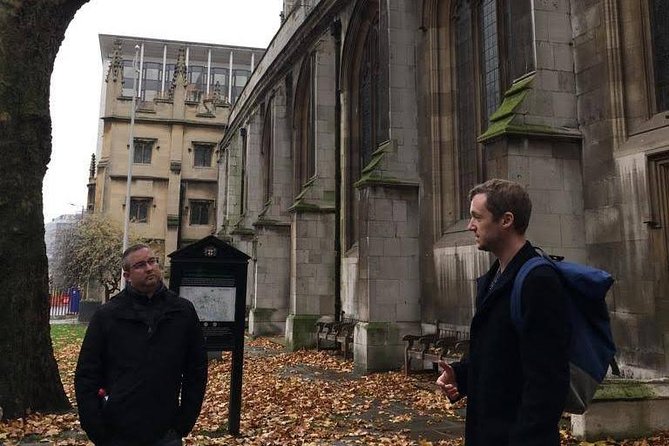
One of the best stops for atmosphere is Church of St. Bartholomew the Great, noted as London’s oldest surviving parish church. Admission here is listed as included, so this is one place where you get extra value in the form of a meaningful landmark without added ticket hassle.
This church stop is not just a photo opportunity. It helps you see continuity. It is one thing to hear about medieval London. It is another to stand somewhere still anchored in religious community life across centuries. The surrounding area also helps you imagine how people moved from sacred space to market streets and back again.
Then you reach Golden Boy of Pye Corner, tied to the spot where the Great Fire of 1666 died out, plus later eighteenth-century ghost hysteria. This pairing is clever. It takes an event that is historically huge and shows how later generations reshaped it into fear and folklore.
If you like history with a human edge, this is the stop where the city feels most like a living legend. You get the factual anchor, then the cultural spin.
Holborn Viaduct: The River Fleet Sewer, Victorian London’s Hidden Reality
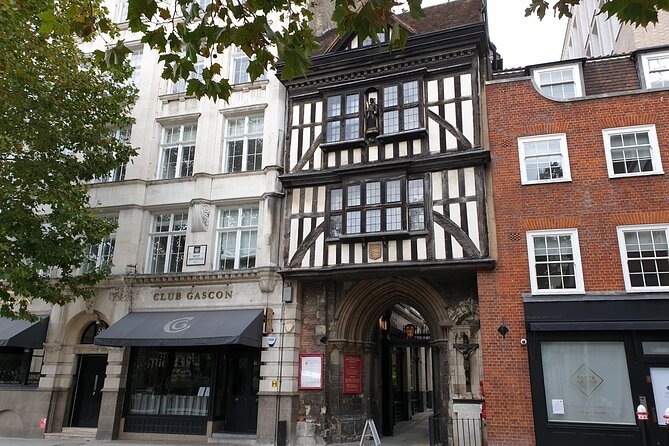
At Holborn Viaduct, the tour points to the former River Fleet, described as Victorian London’s largest open-air sewer. This is a strong turn in tone, because it brings you from medieval dread to industrial-era discomfort.
What makes this stop valuable is that it teaches you how cities handle problems when people have no modern systems. An open sewer is not only a smell problem. It shapes disease patterns, quality of life, and where people dare to walk or build.
This is also a great place to pay attention to how infrastructure can be invisible once it is covered up. A viaduct can look like scenery from a distance, but the guide’s explanation gives you the missing layer. It also helps you connect today’s tidy city map to what used to run beneath it.
Ye Olde Mitre: The Alley Pub Stop That Feels Like a Local Shortcut
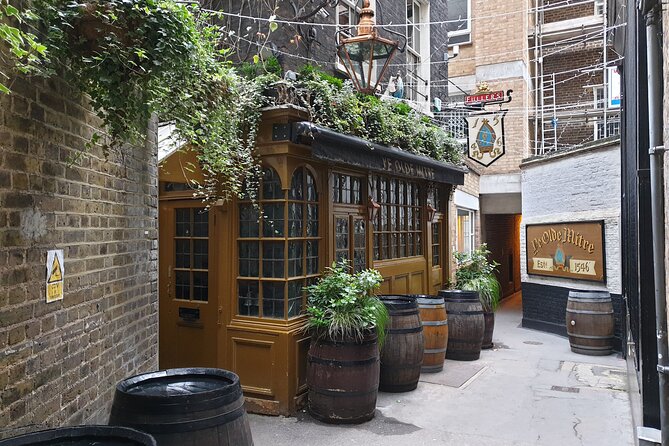
The tour ends near Ye Olde Mitre, a pub hidden down an alleyway. This is the part of the walk where you can exhale a bit.
One highlight from the experiences shared by other guests is how the pub stop naturally turns into a meal moment. People specifically praised items like cheese toasties and pork pies. Even if you keep it simple, this is a practical place to grab something warm or filling after a focused history walk.
It also works as a social reset. After plague, fire, and sanitation stories, it is nice to have a real-world break that does not feel like a tourist trap. If you are the kind of traveler who likes one good local meal during a walking day, this stop will click.
St Bartholomew’s Hospital Museum: Why Ending With Medicine Makes Sense
You finish at St Bartholomew’s Hospital Museum, described as the oldest surviving hospital in the country. Ending here gives the tour a logical closing theme. The story started with illness fear. It moves through city systems that influence health, then lands on an institution built around caring for people.
This stop is also useful because it keeps the walk from feeling like pure shock value. The point is not just to say London was brutal. The point is to show how people built institutions, practices, and spaces in response.
If you are curious, you might want to spend a bit more time absorbing how the museum frames the hospital story compared with the darker street-level sites you saw earlier. Since your time is still limited, your guide helps you choose what is most important to notice first.
Price and Logistics: Getting Your Money’s Worth
At about $27.73 per person for roughly 2 hours, this walk is priced for people who want a guided hit of history without committing a whole day. You also get a mobile ticket, which reduces fuss the morning you go.
The meeting point is near Barbican, at Underground Ltd, Aldersgate St, London EC1A 4JA. The walk finishes at Ely Place, around the corner from Farringdon Station. That end location is convenient because it lets you connect to transit quickly or keep exploring the surrounding City area.
Most stops list admission tickets as free, and the major church stop includes admission. So from a value perspective, you are not paying extra on the spot for every location. That keeps the whole experience easier to plan.
Weather matters here. The tour calls for good weather, and if it has to be canceled due to poor conditions, you should be offered a different date or a full refund.
Who Should Book This Walk, and Who Might Prefer Something Else
This is a great fit if you:
- like London history that connects street life to big events
- enjoy small-group walking tours where you can ask questions
- want a different angle than the usual top-ten attractions
- are okay with topics like plague, fire, and sanitation
I would think twice if you want a light, feel-good history tour. This one is designed to confront London’s grim eras. It is not all misery, though. The guiding approach aims to make the story understandable, often with humor and clear explanations that keep it from becoming heavy and confusing.
For a first-time London visitor, it can also be a strong choice because it helps you “read” the city. Once you have learned how hidden corners connect to major events, you start noticing those layers everywhere.
Should You Book This Bloody London Walk?
I think you should book it if you want small-group history with real street locations, not a checklist tour. The combination of Charterhouse, Smithfield Market, St John’s Gate, and the hospital museum gives you a tight loop through fear, commerce, belief, and survival. The walk is short enough to fit into a busy itinerary, yet it still covers a surprising span of time.
If your trip is short and you want one guided experience that changes how you see London, this is an easy yes. Just plan for walking, check the weather, and come ready for stories that are intentionally dark, but told with skill.
FAQ
How long is the tour?
The tour lasts about 2 hours.
What does it cost?
The price is $27.73 per person.
What is included in the price?
What is included is the tour.
Are admissions required for the stops?
Most stops list admission tickets as free, and St. Bartholomew the Great lists admission ticket as included.
Where do I meet, and where does it end?
You start at Underground Ltd, Aldersgate St, Barbican, London EC1A 4JA. You end at Ely Place, Ely Pl, London EC1N, around the corner from Farringdon Station.
Is the tour in English?
Yes, the tour is offered in English.
How large is the group?
The tour has a maximum group size of 15 travelers.
What if the weather is bad, or I need to cancel?
The experience requires good weather. If it is canceled due to poor weather, you should be offered a different date or a full refund. You can cancel for a full refund up to 24 hours before the experience’s start time.
Are service animals allowed?
Yes, service animals are allowed.
Latest to join the queue for London





Guided Walks in London, compared.

Tour for Muggles The Ultimate Harry Potter Walking Tour in London
Read our review →
Changing of the Guard Guided Walking Tour in London
Read our review →
The Great British Rock and Roll Walking Tour
Read our review →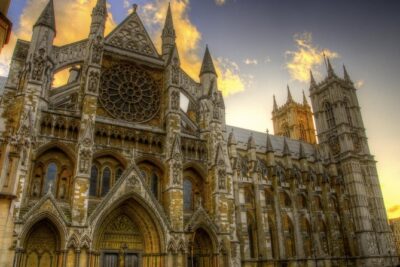
Westminster Guided Walking Tour with Abbey Entry
Read our review →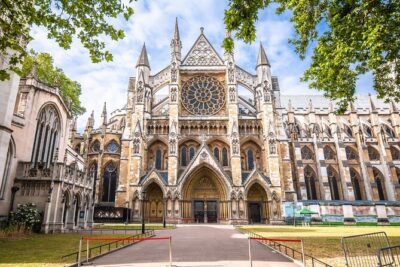
Walking Tour of London Westminster Abbey, Big Ben, Buckingham
Read our review →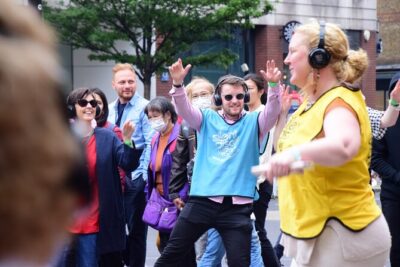
London West End Musical Silent Disco Walking Tour Top 1% Rated
Read our review →
Westminster 3 Hour Walking Tour and Visit of Churchill War Rooms
Read our review →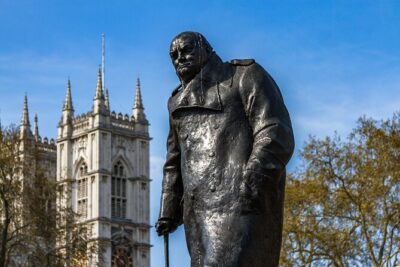
WW2 London Walking Tour & Churchill War Rooms Entrance Ticket
Read our review →Browse the lists this tour appears in