
Reviewed · BUCKINGHAM PALACE & ROYAL LONDON TOURS
Buckingham Palace, St James Palace & Tea at Kensington Palace
Royal palaces, then high tea. That is the whole trick, and it works. You get a guided walk through the palace neighborhood with story-rich stops, then a proper afternoon tea at Kensington Palace’s Orangery.
What I love most is the tight group size, typically 4 to 6 people (max 10), so you are not stuck in a giant herd. I also love how the tea is built in, with sweet treats like Welsh scones plus sandwiches and cakes, and it is served at a private table. One watch-out, you should be ready for a lot of walking in central London, even if the pace is not punishing.
In This Review
- Key Royal-Walk Takeaways
- Royal Palace Area, Without the Tourist Fatigue
- Starting at Green Park, Then Cutting Toward St James’s Back Streets
- Spencer House and Clarence House: Big Names, Smaller Footprints
- St James Palace and The Mall: When You Mostly See the Outside
- The Buckingham Palace Area: A Site With Layers Under It
- Wellington Arch, Bomber Command Memorial, and Apsley House: More Than Royal Glam
- Royal Albert Hall and Albert Memorial: Culture and Mourning in the Same Breath
- Kensington Palace Orangery High Tea: Where the Experience Hits Its Sweet Spot
- What you eat, and how to plan for diets
- How Much You Pay, and What You Get for It
- Logistics You Should Know Before You Start Walking
- Who This Tour Fits Best
- Should You Book Buckingham Palace, St James Palace, and Kensington High Tea?
- FAQ
- What is the duration of the tour?
- How much does the experience cost?
- Is there a mobile ticket?
- What meals are included?
- Are dietary restrictions handled?
- Is the group small?
- Where does the tour start and end?
- Is entrance to palace rooms included?
- Can I cancel for a full refund?
- Booking tip
Key Royal-Walk Takeaways
- Small groups (max 10, usually 4 to 6) mean more questions and less waiting around.
- High tea at Kensington Palace includes sandwiches, scones, and cakes, plus options like gluten free and halal on request.
- You see more than just the famous facades, with side streets and lesser-walked viewpoints around St James’s.
- A guide who connects details to what you are actually looking at, from palaces to memorials.
- Public access limits are real, so expect exterior views for some royal places unless you opt for state room entry.
Royal Palace Area, Without the Tourist Fatigue
This is a great way to “get your bearings” in London’s royal core fast. You start in Green Park, then spend your time in and around St James’s and the Mall, moving toward Buckingham Palace and beyond. The route is designed to keep you away from the loudest crowds when possible, so you can actually hear the guide.
The biggest value is the combo of two different kinds of London fun. Half the day is a smart history walk. The other half is a sit-down reset with classic British tea, in a setting tied to the palace world.
More guard changes done by the clock:
Starting at Green Park, Then Cutting Toward St James’s Back Streets
You meet at Green Park (near Piccadilly Underground) and begin with a quick shift away from the busiest routes. That matters more than it sounds. Green Park is the kind of place where a few blocks can feel totally different, and the tour uses that to move you into calmer streets and discreet passageways.
From there, St James’s is the next focus. This is the main aristocratic quarter, where politics and power life used to mix with taverns and chocolate houses that later became prestigious clubs. Even if you know almost nothing going in, the guide helps you connect the dots between what you see today and what those buildings meant in earlier centuries.
You will also notice that time is tight. Each stop is brief, so the story has to be clear and pointed. That is one reason the guide quality shows up so strongly in the reviews.
Spencer House and Clarence House: Big Names, Smaller Footprints
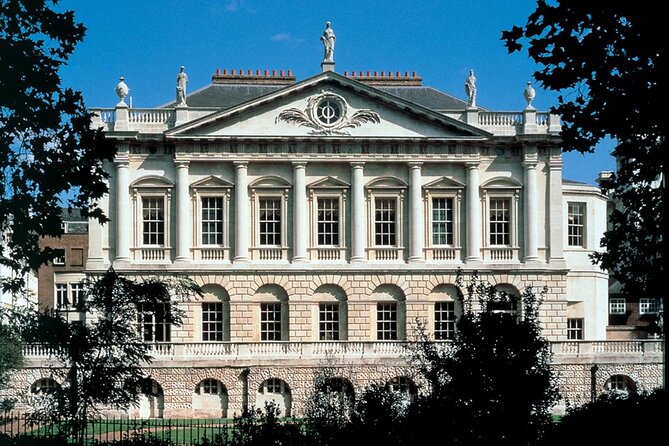
One standout on the walk is Spencer House, a superb surviving 18th-century town house built in the 1756 to 1766 window. This is not one of the usual “everybody takes the photo” spots, which is why it feels like a real find on foot. The connection to Diana’s family adds extra spark, even if you only know the modern royal headlines.
Then you shift to Clarence House. This one is also a royal-adjacent landmark without the same visitor bustle as Buckingham. It was commissioned in the 1825 to 1827 period by the Duke of Clarence, who later became King William IV. The detail I found useful is why he chose to live there instead of the nearby St James’s Palace, which he found too cramped.
These stops work well because they are not just monuments. They are examples of how power moved around the neighborhood, and how residents made choices based on comfort, space, and status.
St James Palace and The Mall: When You Mostly See the Outside
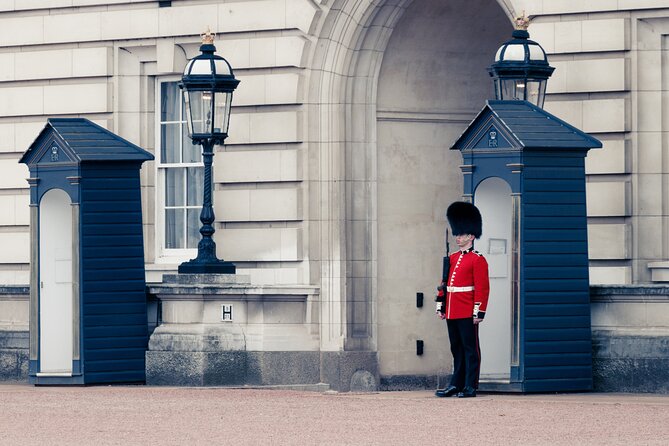
The Mall stretch is iconic, and you do get the big sense of place, even when access is limited. St James Palace stays the official London royal palace, and it is not regularly open to general visitors.
What you can do, according to the tour framing, is attend Sunday services at the Chapel Royal and the Queen’s Chapel. During a walking tour like this, that mostly means you experience the setting from outside and learn what the public can access, versus what is closed.
This is where the guide storytelling really matters. When a palace is not open, you need someone to help you “read” what you are looking at. That is also why reviews repeatedly praise guides for making the tour feel personal and fun, not like a lecture while you stare at stone.
The Buckingham Palace Area: A Site With Layers Under It
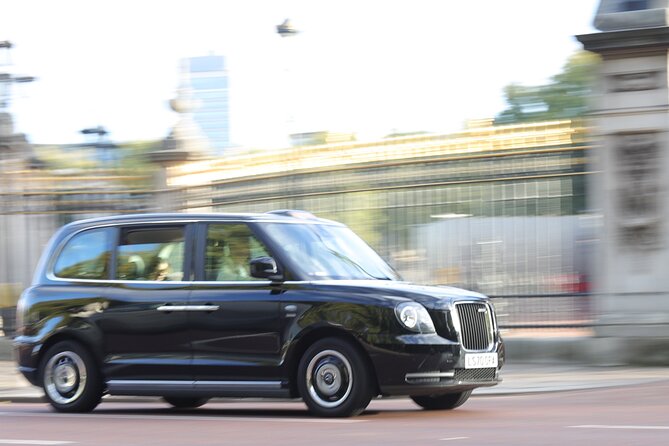
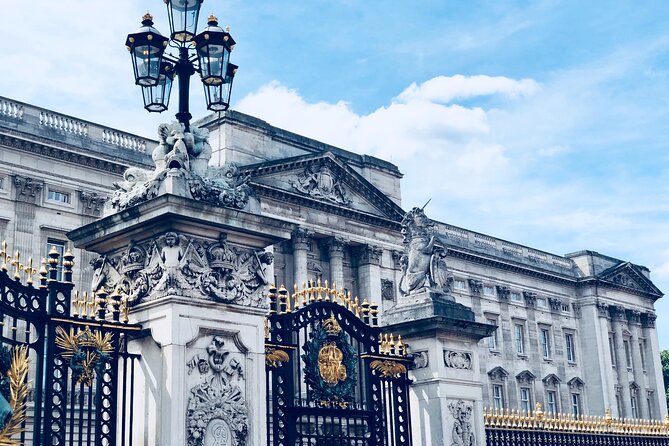
You come to Buckingham Palace later in the route, after you have already built context around St James’s. That timing helps. When you finally see Buckingham, it is not just a famous wall. It becomes a living timeline.
The tour explanation gives you the kind of foundation that makes London feel less random: the future palace site was part of the Manor of Ebury, watered by the river Tyburn, which still runs below parts of the courtyard and the south wing. Ownership shifted for centuries, with names like Edward the Confessor and Edith of Wessex showing up in the early story, followed by William the Conqueror, and then a handover linked to Westminster Abbey’s monks.
You do not need a degree to enjoy this. You just need a guide who keeps it clear. The reviews you can rely on here stress that guides like Simon Taylor are able to connect the dots for different ages, so everyone in the group stays with it.
Also on in London, no fuss
- Stonehenge, Windsor Castle, and Bath from London★ 4.5 · 18,662 reviews
- London Big Bus Hop-On Hop-Off Tour with Optional River Cruise★ 3.5 · 10,803 reviews
- London Small Group Tour of Historical Pubs★ 5.0 · 10,422 reviews
- Stonehenge, Windsor Castle and Bath with Pub Lunch in Lacock★ 4.5 · 7,402 reviews
Wellington Arch, Bomber Command Memorial, and Apsley House: More Than Royal Glam
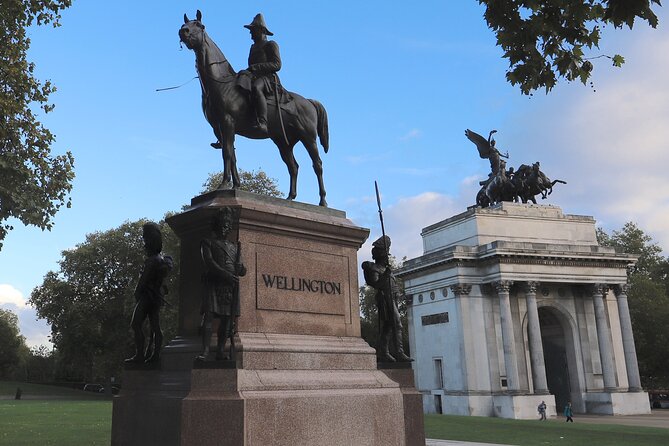
This route does something smart. It does not stop at crowns and uniforms. You also pass key landmarks that anchor London’s modern identity.
Wellington Arch is one of the stops, linked to architect Decimus Burton and built in 1828. There is also a visual detail about a 4-horse chariot and a figure of peace added later, along with the note that the central passage was reserved for royalty. Even if you do not go inside, these design facts help you understand the monument’s purpose.
Then comes Bomber Command Memorial. This is a solemn stop, placed facing Hyde Park Corner. The memorial marks the sacrifice of 55,573 RAF Bomber Command aircrew, plus civilians from multiple allied countries killed during raids. If you come in expecting only pageantry, this section gives you a necessary reality check.
Apsley House rounds out this stretch. It was built for Lord Apsley between 1771 and 1778 in red brick, with some interiors by Robert Adam surviving, including the Piccadilly Drawing Room and the Adam fireplace. The Portico Room behind the large Corinthian portico added later by Wellington is also mentioned, which is helpful because you can then spot the architecture choices rather than just walk past.
Royal Albert Hall and Albert Memorial: Culture and Mourning in the Same Breath
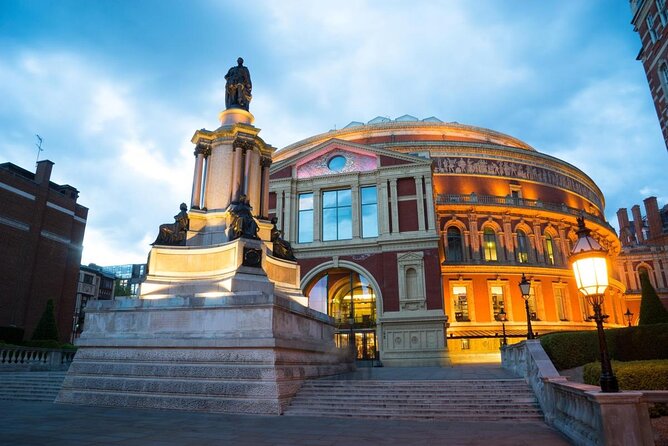
From the royal-center streets, the tour moves toward South Kensington’s grand public spaces. Royal Albert Hall is included as a quick stop, with a seating capacity of 5,272. The tour also frames it as a major cultural stage since its opening by Queen Victoria in 1871, with leading artists from many performance genres appearing there.
Next is the Albert Memorial in Kensington Gardens. It commemorates Prince Albert’s death, who died of typhoid in 1861. It is one of those monuments that feels decorative from a distance, but once you get the reason behind it, it lands differently.
These two stops are brief, yet they add balance. The walk becomes less one-note, and your afternoon tea moment feels like a reward rather than a rushed finish.
Kensington Palace Orangery High Tea: Where the Experience Hits Its Sweet Spot
The final act is at Kensington Palace, ending at the Orangery for your high tea. This is where you stop moving and actually enjoy the day.
George II’s story is part of the palace approach. The tour includes the strange, specific detail of his last morning: blind in one eye and hard of hearing, up at 6:00 am, hot chocolate, then a crash and death soon after. The account even mentions the post-mortem and the cause described as a thoracic aortic dissection, followed by burial instructions that allowed remains to mingle with his wife.
That is the kind of detail that keeps a short stop from feeling like fluff. It also sets the tone for tea, because Kensington Palace is not just a backdrop. It is the context for the tea service you are about to have.
What you eat, and how to plan for diets
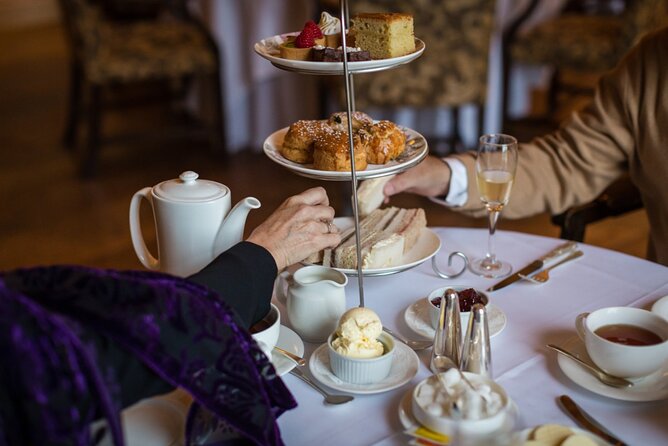
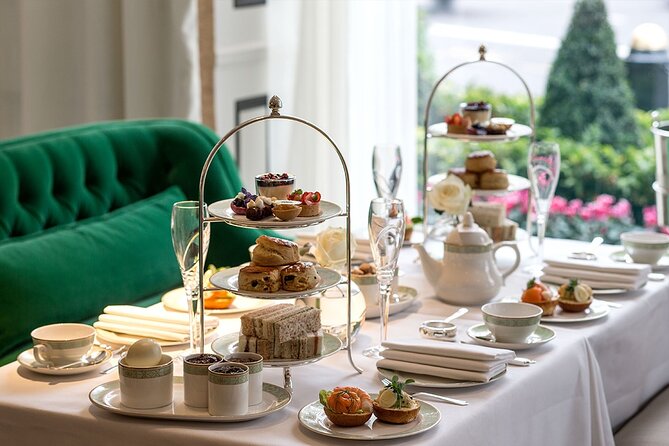
Your tea menu includes:
- Delicate finger sandwiches (with seasonal variety, and gluten free, vegan, and halal options catered for)
- Welsh scones, with and without raisins, plus clotted cream and strawberry jam
- A royal cake selection for dessert
You also get a private table at the tea venue. That is a small detail that matters. You get a calm moment without hunting for seating.
If you are traveling with kids, child tea is typically for 11 and younger. You can also request gluten free, vegetarian, vegan, and halal options ahead of time.
One fun detail from the reviews: the high tea experience is served on Princess Diana’s royal china. That is the kind of visual touch that turns tea into an actual memory, not just a meal between walking legs.
How Much You Pay, and What You Get for It
At $173.45 per person for about 2 hours, this is not a budget lunch-and-walk. But it can be good value because you are paying for three things at once:
1) a small guided walk in a tough-to-navigate area
2) a structured route with multiple landmark explanations, including quieter back streets
3) a full afternoon tea with sandwiches, scones, and cakes, plus dietary accommodation on request
If you were doing this yourself, you would likely spend time figuring out where to go and what each stop means. With a guide, you cut that mental load and get stories you would probably skip on your own.
Also, because the group is small, you tend to get more interaction. In London, that is a quality-of-life factor, not a luxury.
Logistics You Should Know Before You Start Walking
You will use public transit, and the tour starts in Green Park and ends at Kensington Palace’s Orangery. Bus fare is not included, and the info is clear that you should bring a Contactless Card or Oyster Card and budget around £1.75 per person for transit needs.
The tour is in English and uses a mobile ticket. Service animals are allowed, and most travelers can participate.
The one practical consideration that shows up in feedback is that you should expect a fair amount of walking. Even when the pace is friendly, central London adds up fast. Wear shoes you can comfortably break in, not brand-new fashion sneakers.
Who This Tour Fits Best
This is ideal for you if:
- you want a concentrated royal-area overview without getting stuck in massive crowds
- you care about story details, not just taking photos
- you like classic food experiences, and you want tea included instead of added later
- you are traveling with family or mixed ages, because guide styles described in reviews are able to connect with different levels of attention
It may not be perfect if you want long palace interior time across multiple buildings. The route includes short stops and exterior viewpoints for many places. There is mention of entrance to the State Rooms if selected at check out, but that is not automatic for every version of the experience.
Should You Book Buckingham Palace, St James Palace, and Kensington High Tea?
I think you should book if you want a “London day that actually feels planned.” The walk gives you context for the palaces, and the high tea gives you a satisfying finish in a palace setting.
Skip it, or at least set your expectations low, if your top priority is entering multiple palaces. This experience is built for walking, learning, and eating well. The value comes from the guide and the included tea, not from a schedule packed with lots of indoor entry.
If you can, book with enough lead time. The average booking window is about 81 days in advance, which usually means popular dates can go quickly.
FAQ
What is the duration of the tour?
It runs for about 2 hours.
How much does the experience cost?
The price is $173.45 per person.
Is there a mobile ticket?
Yes, the tour uses a mobile ticket.
What meals are included?
You get afternoon tea, including sandwiches, scones, and cakes.
Are dietary restrictions handled?
Yes. Gluten free, vegetarian, vegan, and halal options are available if requested in advance.
Is the group small?
Yes. Maximum size is 10 people, typically around 4 to 6.
Where does the tour start and end?
It starts at Green Park (Piccadilly area) and ends at Kensington Palace at the Orangery where high tea is hosted.
Is entrance to palace rooms included?
Entrance to the State Rooms is included only if you select it at check out. The tour otherwise does not include palace entrance.
Can I cancel for a full refund?
Yes. You can cancel up to 24 hours in advance for a full refund.
Booking tip
If you want the most relaxed tea moment, plan to start the walk day rested and with comfortable shoes. This one is fun, but the payoff at Kensington Palace is best when your feet are happy.
Latest to join the queue for London


Buckingham Palace & Royal London Tours, compared.
Changing of the Guard Guided Walking Tour in London
Read our review →
Buckingham Palace Entrance Ticket & Changing of the Guard Tour
Read our review →
Walking Tour of London Westminster Abbey, Big Ben, Buckingham
Read our review →
Changing of the Guard Guided Tour at Buckingham Palace
Read our review →
The Kensington Palace Gardens Royal High Tea
Read our review →
Changing of the Guard Walking Tour in London at Buckingham Palace
Read our review →
Royal Historic Pubs Walking Guided Tour in London
Read our review →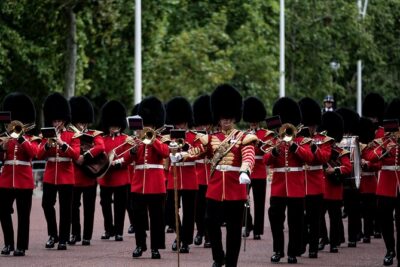
Browse the lists this tour appears in