
Reviewed · MUSEUMS
British Museum Private Tour: Ancient Daemons and Timeless Beauty
London can swallow you whole, and the British Museum is one of those places. This private tour turns the scale down to size, with a guided path through major “must-sees” and the myths that connect them. I love having a storytelling art specialist help me piece together what I’m looking at, and I also like the fast-track entry so you spend more time in galleries and less time waiting. One thing to consider: with a 2 to 3 hour visit, you will cover key highlights, not every room, so it helps to share what you want to prioritize.
You meet at Montague Place, then your guide shapes the pace for your group size and interests. In past groups, guides including Richard and Yulia were praised for tailoring the tour on the fly and for pointing out the key objects that make the museum feel coherent instead of random. The main drawback is the usual one with big museums, this tour still moves, so plan to keep your attention switched on rather than settling in for long, slow reading.
In This Review
- Key Things To Know Before You Go
- A Private Way To Tame the British Museum Maze
- Montague Place Meet-Up, Fast Track, and a 2 to 3 Hour Pace
- Entering The British Museum’s Glass-and-Light World
- Rosetta Stone: The Moment Ancient Language Becomes Readable
- Parthenon Marbles: Greece, Power, and What Art Can Signal
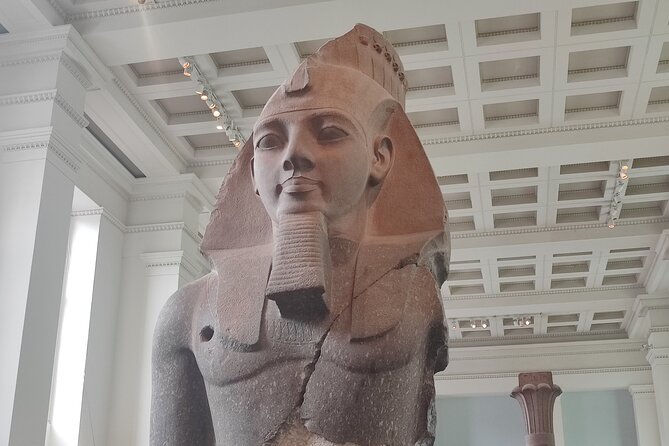
- Egyptian Mummies: Death Rituals, Belief, and Stillness
- Sutton Hoo: A Final Voyage That Still Teaches Strategy
- Lewis Chessmen: Strategy in Ivory, with a Side of Myth
- Shiva Nataraja: Creation, Destruction, and the Human Need for Meaning
- Beauty Standards Across Time: Ancient Sculpture as a Translator
- Why the Art Specialist Storytelling Changes Everything
- Price and Value: What $203.65 Buys You
- Who This Tour Fits Best, and Who Should Choose Another Plan
- Should You Book This British Museum Private Tour?
- FAQ
- How long is the British Museum private tour?
- Is the tour private?
- How many people are in a group?
- What language is the tour offered in?
- Do I need to bring an admission ticket?
- Are snacks included?
- Where do we meet?
- What is the cancellation policy?
- Is the tour near public transportation?
Key Things To Know Before You Go
- Small-group feel with a private tour, so your questions do not get lost
- Fast-track entry helps you get past the first bottleneck quickly
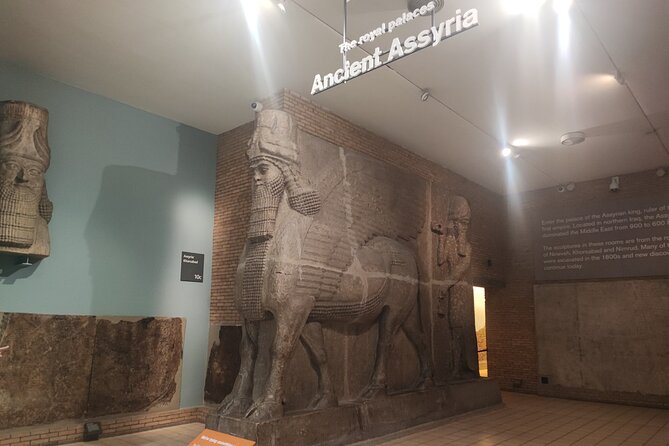
- A theme-driven route that links gods, empires, and the idea of beauty across civilizations
- Expert storytelling from an art specialist who explains context in plain language
- Multiple “anchor artifacts” like the Rosetta Stone, Parthenon Marbles, and Sutton Hoo
- Made flexible based on your group’s interests, with at least one reported extra half hour added
A Private Way To Tame the British Museum Maze
The British Museum is grand, but it is also huge. If you walk in without a plan, you can end up sprinting from one famous thing to another and missing the “why” behind what you see. This private format is built to solve that problem: you get a guided route and a narrative thread that makes the museum feel like a single story rather than a warehouse of masterpieces.
I especially like the way a themed guide changes how you look. Instead of just reading placards, you get the object’s role in its culture, what people believed, and what it meant to the people who made it. That matters in a museum where the walls are packed and your brain is doing constant sorting.
The tour also works because you are not sharing the experience with strangers. With a small group, your guide can slow down for questions, backtrack when someone wants to see one artifact again, and adjust the route if your group cares more about Egypt than Greece, or vice versa.
More free halls and paid exhibitions:
Montague Place Meet-Up, Fast Track, and a 2 to 3 Hour Pace
Your tour starts at Montague Place, Montague Pl, London and returns you back near the meeting point. You get a mobile ticket, and the experience includes fast track entry to the British Museum, which is a real quality-of-life upgrade in a major London attraction.
Timing is set for a focused visit, around 2 hours of guided touring with the full experience running about 2 to 3 hours. That is long enough to hit major highlights and get real context, but not long enough to do full-room wandering. If you like to linger, consider arriving with priorities in mind, then let the guide’s plan give you depth where it counts.
Also, snacks and drinks are not included. The British Museum is indoors, so it is easy to forget food until you feel it. If your group tends to get hungry mid-museum, bring a simple snack before you start, or plan a short break after.
Entering The British Museum’s Glass-and-Light World
The tour’s first stop is the British Museum itself, set in the museum’s most recognizable arrival feeling: a light-filled canopy designed by Norman Foster. It is not just pretty, it is a useful cue that tells you, you are about to transition from outside time to “museum time.”
From there, your guide sets expectations for the route so you do not waste your brain power figuring out where to go next. That matters because the museum’s scale can make even confident visitors second-guess themselves. A guided path helps you keep momentum without feeling rushed.
You can also expect the tour to build a kind of mini timeline. You start with standout objects that connect language, empire, and belief systems, then you keep moving through the big ideas those objects represent.
Rosetta Stone: The Moment Ancient Language Becomes Readable
One stop is the Rosetta Stone, and this is the kind of exhibit that deserves more than a quick glance. The real value is not only seeing the stone, it is understanding what made it a key. The Rosetta Stone is famous because it provided the same text in different scripts, which helped scholars unlock how to read Egyptian writing.
On a guided tour, you are not just staring at symbols. You get the bigger point: how one object can change knowledge for centuries. That is a powerful way to start because it frames the museum as a place where discoveries can rewrite history.
A practical tip for this kind of exhibit: spend one minute reading the layout your guide points out, then shift to looking at craftsmanship, placement, and how the stone is interpreted. When your guide explains the connection between scripts, it clicks fast.
Parthenon Marbles: Greece, Power, and What Art Can Signal
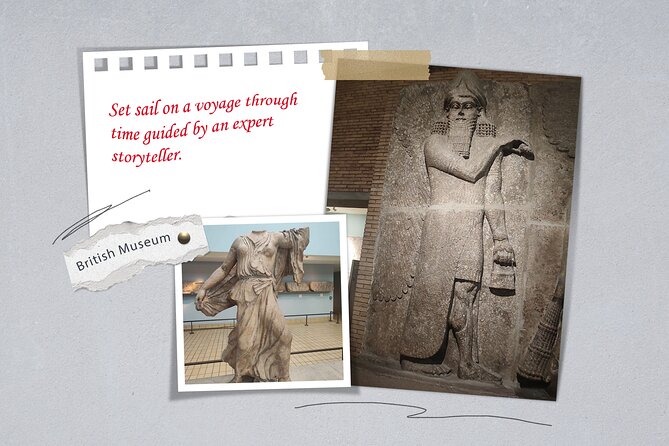
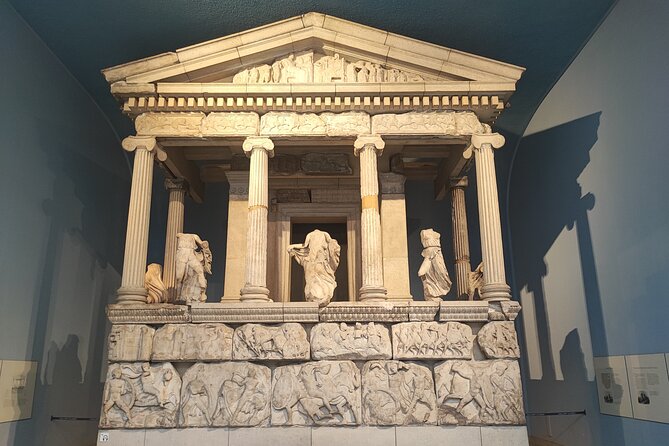
Another anchor stop is the Parthenon Marbles. You might already know they are tied to ancient Greece, but the guided angle is what turns them from famous statues into meaningful evidence.
These sculptures are connected to the Parthenon, the temple associated with Athens, and they reflect political and cultural ambition. Your guide’s job here is to connect the stone and marble to the human story: how cities wanted to be remembered, how art was used to project authority, and why these pieces are still discussed today.
The drawback of “must-see” art is that it can feel distant if you only learn the headline. With this tour, you get the why behind the fame, so you can look at posture, style, and narrative with more confidence rather than just saying, This is important.
Also on in London, no fuss
- Stonehenge, Windsor Castle, and Bath from London★ 4.5 · 18,662 reviews
- London Big Bus Hop-On Hop-Off Tour with Optional River Cruise★ 3.5 · 10,803 reviews
- London Small Group Tour of Historical Pubs★ 5.0 · 10,422 reviews
- Stonehenge, Windsor Castle and Bath with Pub Lunch in Lacock★ 4.5 · 7,402 reviews
Egyptian Mummies: Death Rituals, Belief, and Stillness
The tour also includes a stop centered on Egyptian mummies. This can feel eerie in a good way. It is not scary theater, it is the quiet tension of a preserved body and what that preservation says about belief in the afterlife.
This is one of the moments where a storyteller guide really matters. Egypt is often reduced to a quick tour of artifacts, but the best museum experiences connect objects to religion, social status, and the idea of what comes next. Your guide should help you see the mummy not just as an object behind glass, but as part of a belief system built around continuity.
Practical note: if you are sensitive to somber themes, give yourself a minute to adjust your mindset. The setting and the way objects are displayed make this a reflective stop, not a casual photo stop.
Sutton Hoo: A Final Voyage That Still Teaches Strategy
Next up is the Sutton Hoo display, focused on the story of the last voyage of an Anglo-Saxon warrior. This is where the museum stops being only about art and becomes about lived power.
Sutton Hoo is famous because it gives a snapshot of elite life in early England, including the kinds of wealth, status signals, and international connections that were possible. A private guide helps you see these items as a coordinated set, not as random finds from one burial site.
If your group likes history that feels cinematic, this is the stop that often clicks. You start hearing the “why” behind the objects, like how burial goods functioned as messages to the living. It also makes the museum’s timeline feel less like chapters and more like cause and effect.
Lewis Chessmen: Strategy in Ivory, with a Side of Myth
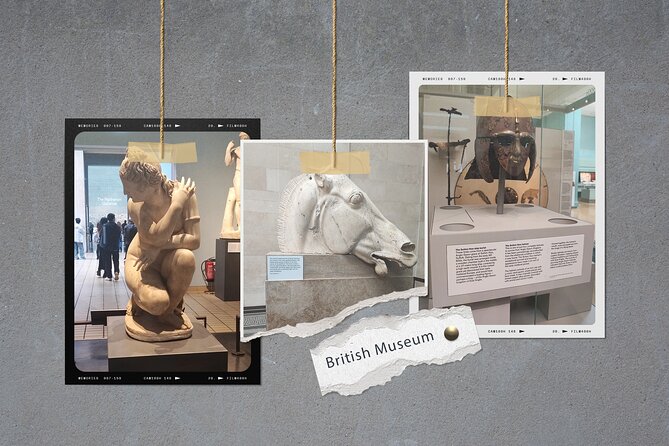
Your route includes the Lewis chessmen, and this exhibit is a perfect example of why themes work. Chess itself is already a strategy game, but the Lewis chessmen bring in the craft and symbolism of the figures used to represent pieces.
The guided experience can connect three things at once: the game concept, the artistry in the carved pieces, and the era and culture that produced them. When a guide explains what to look for, you stop treating the chessmen like a novelty and start seeing them as objects that carry meaning beyond play.
This is also a great stop for families or anyone who wants something mentally active. Strategy makes your brain pay attention, and the art keeps it from becoming purely technical.
Shiva Nataraja: Creation, Destruction, and the Human Need for Meaning
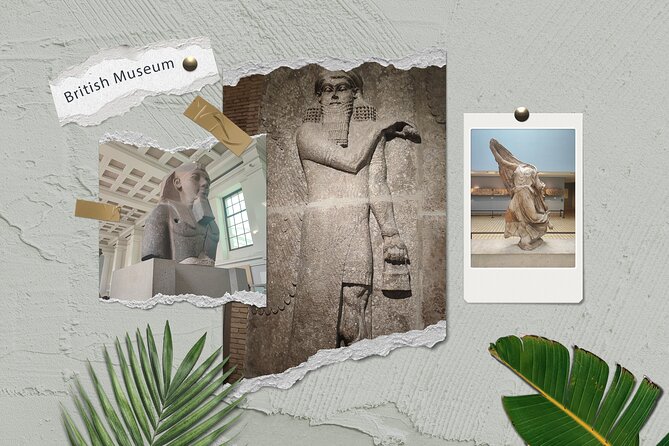
One of the most striking named stops is Shiva Nataraja, described as the cosmic dance of creation and destruction. This is where you will likely feel the theme of the tour most clearly.
If you only look at the figure, you get a powerful sculpture. With a guide, you also get the ideas behind the pose and iconography: balance, cycles, and the idea that the universe is always in motion. That is the kind of context that makes an ancient artwork feel like it is communicating, not just sitting still.
This stop can be intense, but it tends to be memorable. It is also one reason this themed approach works so well, it gives your visit a sense of meaning rather than just a list of famous objects.
Beauty Standards Across Time: Ancient Sculpture as a Translator
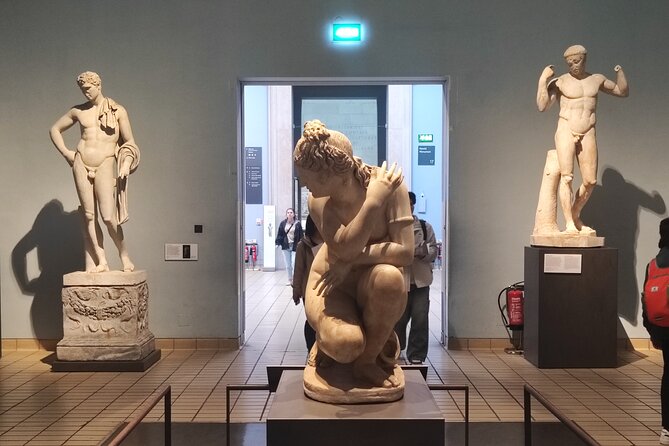
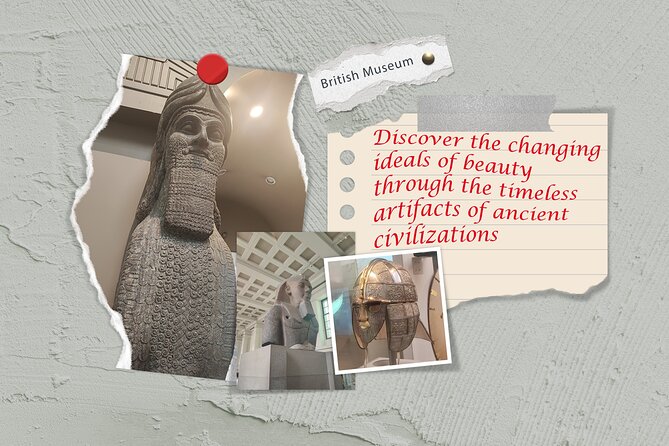
The itinerary also points to exploring the evolution of beauty standards through ancient sculptures. That is a clever angle because it is easy to think beauty is timeless, when it is actually culturally shaped.
A good guide helps you look beyond surface features. You start comparing proportions, expression, and idealized forms, and you notice how art reflects what a society valued. It can also help you connect different civilizations in one mental framework: each culture has its own idea of what “perfect” should look like.
Keep an eye on your guide’s framing here. If they are doing this well, the sculptures become a conversation about human ideals, not just a display of artistic skill.
Why the Art Specialist Storytelling Changes Everything
Several guides have been praised for doing one thing exceptionally well: making the museum feel clear. That shows up in how they answer questions and how they choose what to emphasize in the crowd.
Guides including Richard and Yulia were singled out for being flexible, and for letting the group tailor the experience toward their biggest interests. That flexibility is not a small perk in a museum like this. It is the difference between getting through a rigid checklist and actually leaving with the parts that mattered to your group.
Also, the best part is the “gliding” effect people describe when they feel the tour flows from one major exhibit to the next. When you do it right, you stop fighting the museum and start learning inside it.
One more practical advantage: your guide can help you decide what is worth photographing and what is better experienced by looking slowly first. That saves you time and memory space, and it makes your visit feel more intentional.
Price and Value: What $203.65 Buys You
The price is listed as $203.65 per group, up to 8 people, with the tour framed as a private experience for small groups (often up to 6 guests). That pricing is important because it shifts the math away from per-person tickets and toward shared value.
Here is how I think about it: you are paying for (1) a private guide, (2) fast-track entry, and (3) a theme-driven route that reduces wasted time. Admission is noted as free, and the real cost is the expertise and the time saved by not guessing your way around.
If you are traveling solo, you likely get less value because you could still buy tickets and walk independently. But if you have a family, a friend group, or anyone who wants context instead of scrolling captions, this kind of guide is often worth it. Especially at the British Museum, where the problem is not ticket cost, it is overwhelm.
If your group loves asking questions, the value goes up. You are not stuck with a loud group tour where your questions get squeezed.
Who This Tour Fits Best, and Who Should Choose Another Plan
This is a strong pick if:
- You want major artifacts explained in a clear, story-first way
- Your group includes kids or time-crunched adults who need a plan
- You dislike wandering aimlessly in huge museums
- You want a flexible route guided by your interests
It might be less ideal if:
- You want hours and hours in one gallery, reading every sign
- Your group prefers total independence with no structured route
- You are extremely sensitive to historical displays that deal with death and burial themes
The good news is that a private format gives you more control than a standard group visit. Even when the route is fixed in broad strokes, your guide can often adjust what you spend time on.
Should You Book This British Museum Private Tour?
Yes, I think it is worth booking if your main goal is to leave with understanding, not just photos. The tour’s strongest advantage is the way it links famous objects into a coherent theme, from language breakthroughs like the Rosetta Stone to empire art like the Parthenon Marbles, to belief and power through mummies, Sutton Hoo, and Shiva Nataraja.
Book it if you want to get oriented fast and have an art specialist help you see what matters. If you are on the fence, tell the guide what your group cares about before you arrive in the galleries, because the experience is built around tailoring within that 2 to 3 hour window.
FAQ
How long is the British Museum private tour?
The tour lasts about 2 to 3 hours overall, with guided touring lasting around 2 hours.
Is the tour private?
Yes. It is a private tour/activity, and only your group participates.
How many people are in a group?
The tour price is listed per group up to 8. The experience details also indicate private tours for groups up to 6 guests.
What language is the tour offered in?
The tour is offered in English.
Do I need to bring an admission ticket?
An admission ticket is noted as free, and fast track entry is included. You should still have the mobile ticket provided with the booking.
Are snacks included?
No. Snacks, food, and drinks are not included.
Where do we meet?
The meeting point is Montague Place, Montague Pl, London, UK. The activity ends back at the meeting point.
What is the cancellation policy?
You can cancel for free up to 24 hours in advance of the experience’s start time for a full refund.
Is the tour near public transportation?
Yes. The meeting point is listed as near public transportation.
Latest to join the queue for London





Museums, compared.

Tower of London and Crown Jewels Exhibition Ticket
Read our review →

Official tickets: Moco Modern & Contemporary Art Museum
Read our review →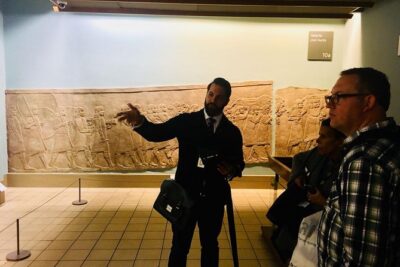
British Museum London Guided Tour Semi-Private 8ppl Max
Read our review →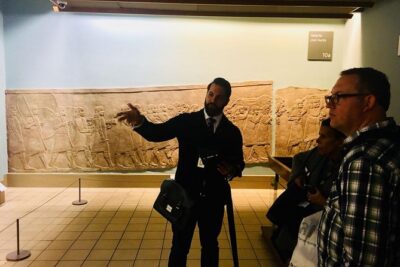
The British Museum London – Exclusive Guided Museum Tour
Read our review →


Skip the Line: Liverpool Beatles Museum – The perfect tribute to the Beatles
Read our review →Browse the lists this tour appears in