
Reviewed · MUSEUMS
British Museum Highlights Private Tour in London including the Rosetta Stone
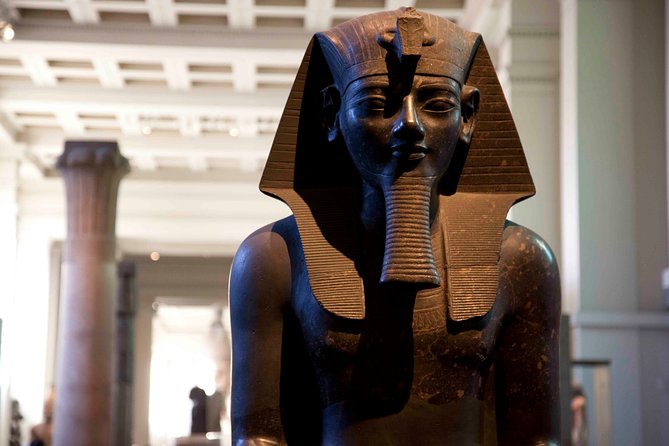
The British Museum is huge, so plan your sprint. This private tour is built for time-pressed London days, with a guide who gets you to the top sights fast and gives you the context that turns a quick look into real understanding, including the Rosetta Stone.
I especially like that it feels interactive: you can ask questions as you go, and the guide can steer the route toward what you care about most. One possible drawback, though, is that it is a highlights tour, so you will not see everything the museum has to offer.
In This Review
- Key things to know before you go
- Meeting at Montague Place, and How You Avoid the Stress
- Why the British Museum Feels Intimidating Without a Route
- Getting the Rosetta Stone Moment Right
- Egyptian Rooms and Mummies, What to Watch For
- The Parthenon Frieze, More Than a Famous Artifact
- Athenian Marbles and How the Guide Connects Civilizations
- Anglo Saxon Treasures and Sutton Hoo’s Survival Story
- Walking Pace, Stairs, and What the 2.5 Hours Really Mean
- Choosing This Tour for Your Style of Travel
- Price and Value, Is It Worth $141.56?
- Should You Book This Private Highlights Tour?
- FAQ
- How long is the British Museum Highlights Private Tour?
- Does the tour include the Rosetta Stone?
- What is included in the price?
- Is food or drinks included?
- Where do we meet the guide?
- Are baby strollers allowed?
- Can I cancel for a full refund?
Key things to know before you go
- Private guide, real Q and A so you can ask about what you are seeing, not just hear facts.
- Fast route through a maze designed for people who do not want to get lost in 70 galleries.
- Rosetta Stone spotlight with the practical story of why this stone matters for deciphering Egyptian writing.
- Egyptian Rooms focus including afterlife beliefs and the significance of the mummies.
- Parthenon Frieze context plus why a Greek masterpiece matters to how we understand ancient art.
- Anglo Saxon artifacts like Sutton Hoo with the survival story of how these finds made it through centuries.
Meeting at Montague Place, and How You Avoid the Stress
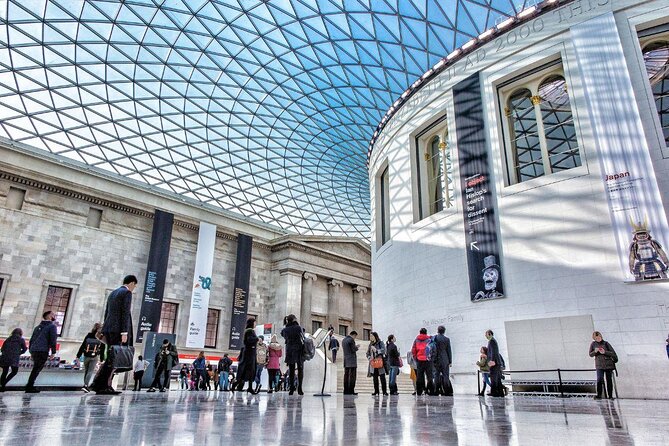
This tour starts at Montague Place, by the north entrance of the British Museum, near the stone lions. Your guide is supposed to be holding a sign, so you can find them without a scavenger hunt across the plaza.
The practical win here is simple. The British Museum is free, popular, and often crowded, so having a human with a plan means you spend less time standing around and more time looking at the objects that actually match your interests.
More free halls and paid exhibitions:
Why the British Museum Feels Intimidating Without a Route
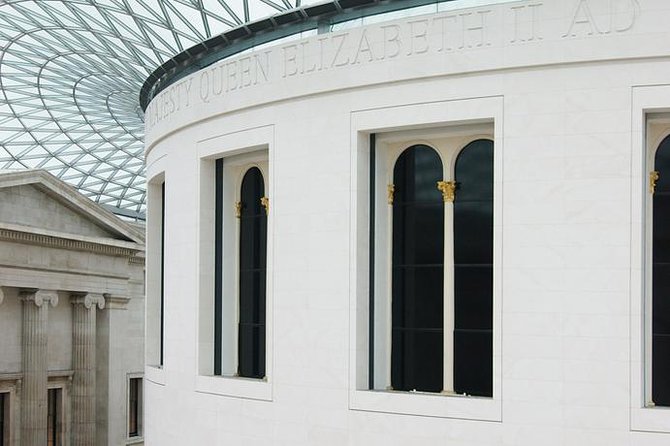
The museum is home to over eight million pieces of history spread across a massive space, with around 70 galleries you could get lost in. Even if you love museums, walking in cold can feel like drinking from a firehose.
A private highlights approach solves that problem. Instead of treating the visit like an endless stroll, you get a guided route that connects themes, like how ancient civilizations explained power, death, and identity. Then, once the tour ends, you can go back on your own with a better sense of where you are and what matters most.
Getting the Rosetta Stone Moment Right
The Rosetta Stone is one of those objects you hear about for school reasons, but it hits differently when you see it in person. Here, it is more than a famous artifact on a label. The guide ties it to the practical reason it changed everything: it helped crack the code of Egyptian hieroglyphs.
When you stand in front of it, a guide’s job is to give you an anchor. You want to understand what the stone is, why it is linked to language, and why scholars could move from guesses to real reading. That is the kind of context that makes you look longer, not just take a quick photo.
If your brain likes cause and effect, this stop will feel like a payoff. You are basically seeing a turning point in how humans learned to read another culture’s written world.
Egyptian Rooms and Mummies, What to Watch For
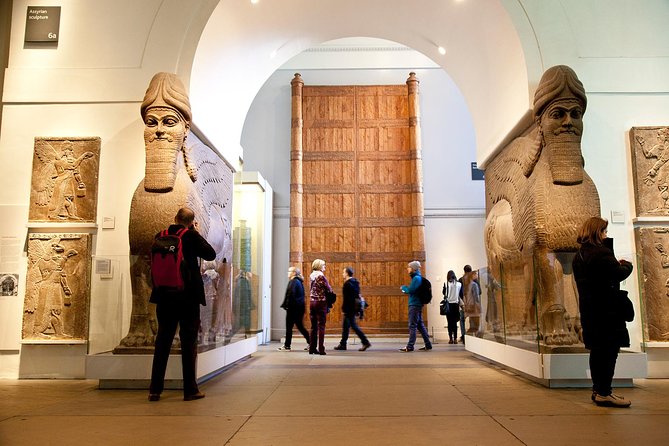
The Egyptian Rooms are often the emotional center of a highlights tour, and this one builds toward them. You will spend time with the ideas behind the display, especially how ancient Egyptians viewed death and the afterlife.
That matters because mummies can look like straightforward archaeology from a distance, but the story is about belief systems. A good guide helps you notice the cultural logic in how Egyptians prepared bodies, staged funerary practices, and built a life-after-life worldview.
Also, this is where it helps to ask questions. If you are curious about what you are seeing, you can put your questions right to the guide while the theme is fresh in your mind.
The Parthenon Frieze, More Than a Famous Artifact
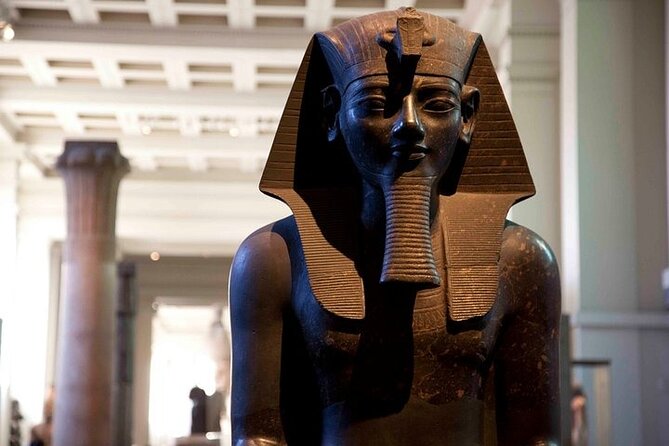
The Parthenon Frieze is enormous and visually powerful. This tour includes it as a must-see highlight, including the key detail that it once stood in the Acropolis in Athens.
A caption can tell you what something is. A good guide helps you understand why it is important. In this case, you are looking at one of the major surviving relics of classical Greece, and the context gives you a sense of how the artwork worked as part of a broader sacred and civic space.
If you care about how art carries meaning, this stop is your chance to slow down. Even in a compact tour, you can learn what to notice, like the style of sculpture, the mythic and civic themes, and why a fragment far from Athens still holds deep cultural weight.
Also on in London, no fuss
- Stonehenge, Windsor Castle, and Bath from London★ 4.5 · 18,662 reviews
- London Big Bus Hop-On Hop-Off Tour with Optional River Cruise★ 3.5 · 10,803 reviews
- London Small Group Tour of Historical Pubs★ 5.0 · 10,422 reviews
- Stonehenge, Windsor Castle and Bath with Pub Lunch in Lacock★ 4.5 · 7,402 reviews
Athenian Marbles and How the Guide Connects Civilizations
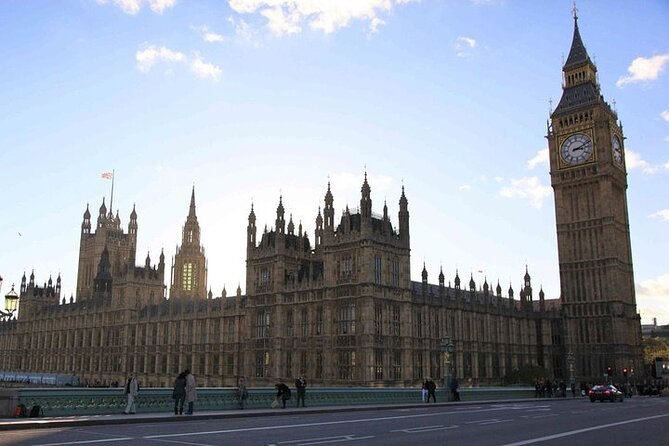
The route also includes time with Athenian marbles, which helps connect the Greek section to the larger museum story. The museum is not organized around one civilization for long. The beauty and the challenge is that you jump across cultures and centuries.
A private guide turns those jumps into understanding. You start to see patterns, like how different societies expressed authority and identity through monuments, storytelling, and ritual objects.
This is also where the tour is at its best if you have mixed interests. Maybe you want classical Greece today and ancient Egypt tomorrow. You will get both without having to plan your own zigzag through the galleries.
Anglo Saxon Treasures and Sutton Hoo’s Survival Story
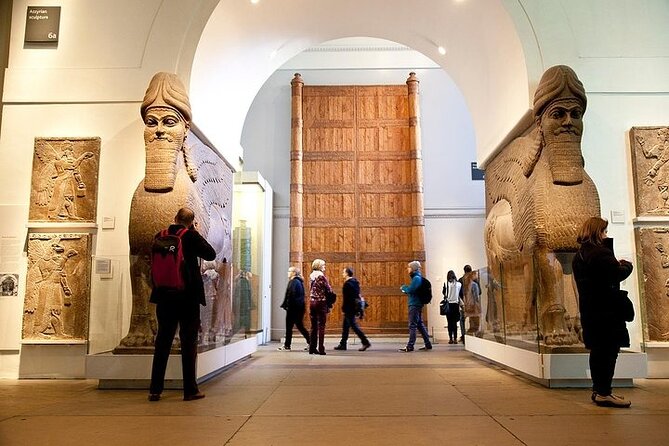
One of the coolest parts of this style of tour is that it does not only chase the headline names. You also get British finds, including Anglo Saxon culture through artifacts such as those tied to Sutton Hoo.
The big value of this stop is the survival narrative. These objects are not just impressive because of age. They are impressive because they survived, even with all the real-world chaos that history brings, including the risk of being lost to time.
For me, this is the moment when the British Museum stops feeling like a place for other people’s history and starts feeling more personal for a London trip. You still get world civilizations, but you also get a meaningful slice of Britain’s own deep past.
Walking Pace, Stairs, and What the 2.5 Hours Really Mean
This is a compact tour, designed to hit the highlights without eating your whole afternoon. The duration is listed at about 2 hours 30 minutes, though you may also see descriptions that mention 1 hour 30 minutes. Either way, the experience is short enough that you will not have time for a full museum wander.
So set expectations. If you want to read every label, study every object, and sit down for long breaks, this will feel like a fast intro. If you want a guided shortlist plus a direction for the rest of the day, it is a smart use of time.
The upside is energy management. The museum can be exhausting, and a guided route helps you keep momentum instead of stopping every few minutes because you are unsure where to go next.
Choosing This Tour for Your Style of Travel
This private British Museum highlights tour fits best if you are one of these types:
- You have limited time in London and want the top sights without research homework.
- You love asking questions and getting explanations that change how you look at objects.
- You want a guided foundation, then plan to explore further on your own afterward.
It is also a strong choice for families, as long as the group can keep up with the walking. One clear rule to note: baby strollers are not permitted on the tour, so plan accordingly if you are traveling with very young kids.
Price and Value, Is It Worth $141.56?
At $141.56 per person, this is not a budget add-on. But it is not only paying for entry either. The value is the guide and the time saved.
Two key things make the math work, at least for many visitors:
First, the museum’s scale is the problem. With a self-guided visit, it is easy to spend your limited time in the wrong rooms. Here, you get a route aimed at major highlights like Rosetta Stone, Egyptian Rooms, Parthenon Frieze, and Sutton Hoo related artifacts.
Second, you get a human explanation, not just signage. The guide adds context about afterlife beliefs, classical art significance, and how and why certain discoveries matter. That turns a collection of objects into a storyline, which is hard to replicate with a phone alone.
One more detail that can tilt value in your favor is entry efficiency. Some groups report skipping the line or getting in more smoothly than they expected, which helps when you are balancing sightseeing with travel fatigue.
Should You Book This Private Highlights Tour?
If your London schedule is tight and you want the British Museum’s biggest hits with the kind of context that makes those hits stick in your memory, then this tour is a practical choice. It is built for focus, not wandering, and the private guide format makes it easier to ask the questions you actually have while you are standing in front of the objects.
If you have several hours or a full day and you enjoy slow museum browsing, you might prefer a self-guided plan plus an audio guide. But if you want a strong orientation and a guided checklist, this is one of the smartest ways to spend a half day at the British Museum.
FAQ
How long is the British Museum Highlights Private Tour?
The tour runs about 2 hours 30 minutes.
Does the tour include the Rosetta Stone?
Yes, the Rosetta Stone is one of the highlighted stops.
What is included in the price?
You get a professional English guide, and admission ticket access is included, along with all fees and taxes.
Is food or drinks included?
No, food and drinks are not included.
Where do we meet the guide?
Meet at Montague Place at the north entrance of the museum, near the stone lions by the doorway.
Are baby strollers allowed?
No, baby strollers are not permitted on the tour.
Can I cancel for a full refund?
Yes. You can cancel up to 24 hours in advance for a full refund. If you cancel less than 24 hours before the start time, you do not get a refund.
Latest to join the queue for London







Museums, compared.
Tower of London and Crown Jewels Exhibition Ticket
Read our review →

Official tickets: Moco Modern & Contemporary Art Museum
Read our review →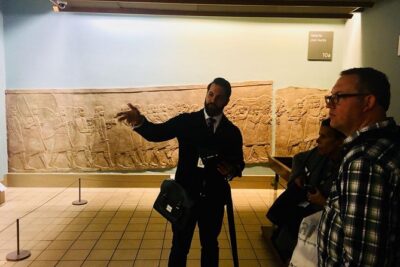
British Museum London Guided Tour Semi-Private 8ppl Max
Read our review →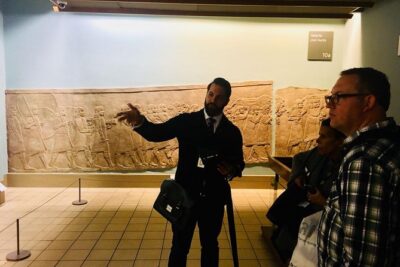
The British Museum London – Exclusive Guided Museum Tour
Read our review →


Skip the Line: Liverpool Beatles Museum – The perfect tribute to the Beatles
Read our review →Browse the lists this tour appears in