
Reviewed · GUIDED WALKS IN LONDON
Booze, Brothels & The Bard: A Walking Tour of London’s Bawdy Borough
Southwark turns the literature page. This walking tour blends Shakespeare-era drama with the rougher side of life, using places tied to prisons, outcasts, and London’s beer trade. I especially like the small-group size for real conversation, and I also like how the guide brings writers like Shakespeare and Dickens into the streets. One possible drawback is that the stops are brief, so it is more of a walk-by, not a slow sit-and-stare kind of tour.
You start at Borough High St and finish at Shakespeare’s Globe, so it feels like a guided path from grit to theater. It runs in English, uses a mobile ticket, and it is near public transportation, which makes it easy to plug into a day of sightseeing.
In This Review
- Key things that make this tour worth your time
- Why Southwark fits Booze, Brothels and The Bard
- The simple logistics: start point, end point, and pacing
- Price and what $27.78 really buys you
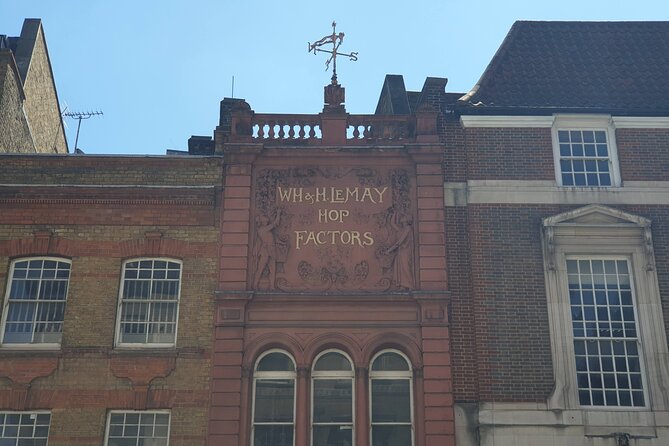
- Stop 1: St George the Martyr and the Marshalsea Prison remnant
- Stop 2: Crossbones Graveyard and the Garden of Remembrance
- Stop 3: The Hop Exchange and Southwark’s beer trade
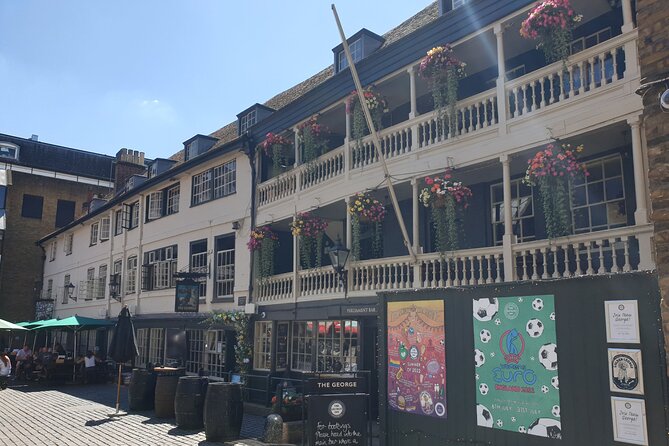
- Stop 4: George Inn, a last surviving galleried coaching inn
- Stop 5: Old Operating Theatre Museum and Herb Garret
- Stop 6 and 7: London Bridge and Southwark Cathedral
- Stop 8: Borough Market, a thousand years of food culture
- Stop 9: Winchester Palace remains from medieval prestige
- Stop 10: The Clink Prison Museum and the notoriety of confinement
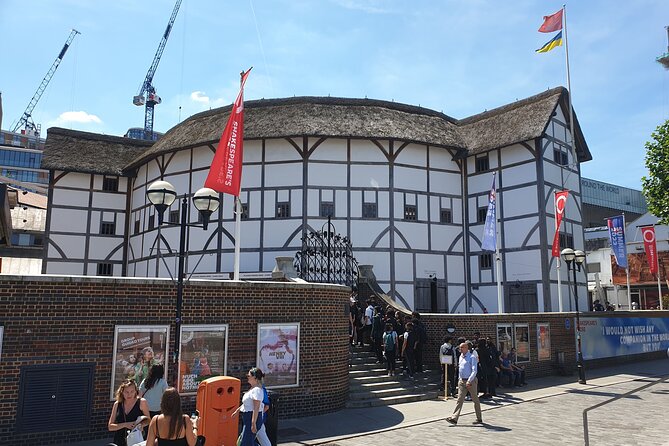
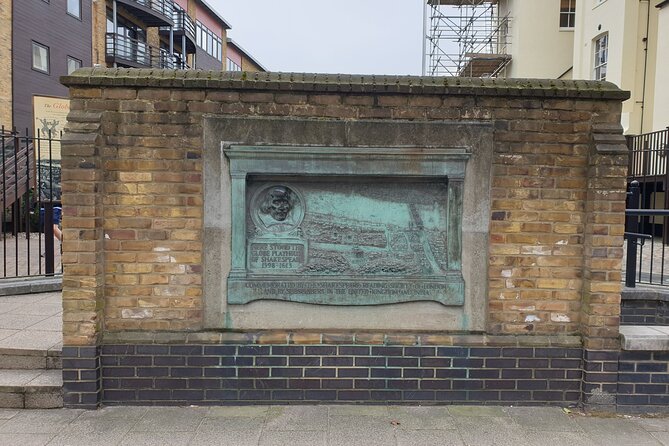
- Stop 11: Shakespeare’s Globe Theatre as your finale
- The guide factor: why this works better in small groups
- Who should book this tour, and who might want a different option
- Should you book Booze, Brothels and The Bard?
- FAQ
- What is the price per person?
- How long is the walking tour?
- What language is the tour offered in?
- What group size should I expect?
- Where does the tour start and where does it end?
- Is it near public transportation?
- How far in advance do people usually book?
- Can I cancel for a full refund?
Key things that make this tour worth your time
- A Southwark route built around prisons, outcasts, beer, and books
- Small group size (up to 15) so you get personal attention
- Shakespeare’s Globe as the finale, after earlier darker stops
- Real-world landmarks you can still stand next to, not just photos
- Stories that connect writers like Shakespeare and Dickens to everyday places
- Several stops are shown as admission ticket free, so the cost stays focused
Why Southwark fits Booze, Brothels and The Bard
Southwark is where London’s showy postcard side meets its older, messier edge. This tour leans into that contrast, using the neighborhood’s well-known landmarks along with less-famous-but-huge history: prisons, burial grounds for society’s unwanted, and the machinery of the beer economy.
The title is a promise about tone. You will not get a polite, purely academic lecture. Instead, you get a story-led walk that connects the adult themes of the borough with the writers who made sense of that world on the page. And yes, the Shakespeare element lands hard, because you end at the Globe.
More Guided Walks in London
The simple logistics: start point, end point, and pacing
This is a straight walking tour with a clear line from Borough High St (SE1 1JX) to Shakespeare’s Globe on New Globe Walk (SE1 9DT). The format is roughly two hours, and the tour keeps a brisk rhythm with short stays at each site, around five minutes per stop.
That pacing matters. If you like your history with quick context and move-on momentum, this works well. If you want long museum time at every location, plan to do your own extra wandering after the tour, especially around Borough Market and the Globe area.
Group size is capped at a maximum of 15 travelers, which is a big deal for a theme like this. Smaller groups help the guide handle questions and adjust the storytelling to the people on the walk. It is also one reason you will get more from the walk than a faster, larger-group “see it, done” approach.
Price and what $27.78 really buys you
At $27.78 per person for about two hours with a walking guide, the best thing here is how tightly the value is focused. You are paying for a guided narrative, not for a pile of paid entry tickets and optional add-ons.
Just as important, many of the sites on the route are listed as admission ticket free. That means you are not hit with surprise costs as you go from one landmark to the next. You still get a guided experience that turns famous names and grim locations into a coherent story about Southwark.
For me, the value equation looks like this: small group, a strong guide-led narrative, and a route that strings together big landmarks without forcing you into expensive entrances. If you want a literature-flavored overview of Southwark’s darker corners, this is a price that feels fair.
Stop 1: St George the Martyr and the Marshalsea Prison remnant
Your first stop is St George the Martyr. The key draw is that it includes the only remaining part of the Marshalsea Prison, one of the places that shaped Southwark’s reputation for punishment and confinement.
This is a good opener because it sets the rules of the story right away. The guide can frame the neighborhood not as a generic historical district, but as a lived place where institutions affected real lives. Even with only a short stop, this location gives you a strong anchor for everything that follows.
One practical note: since it is a quick stop, go in ready to look and listen at the same time. The value here is in the guide’s connections, not in lingering time.
Stop 2: Crossbones Graveyard and the Garden of Remembrance
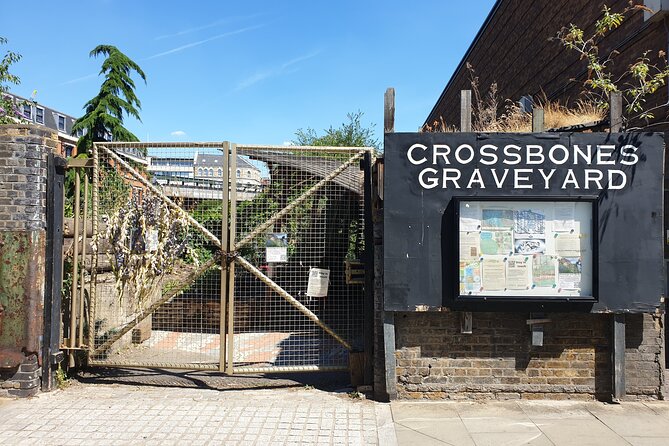
Next you come to Crossbones Graveyard and the Garden of Remembrance. This is the final resting place for thousands of Southwark’s outcast dead, so the mood shifts quickly from old institutional walls to the reality of what happened outside respectability.
This stop is important because it widens the story beyond famous structures. It is easy to treat “history” as buildings and dates. This location pushes the tour toward how society handled people who were cast aside.
Because it is short, it can land more as an emotional waypoint than a long lesson. If you appreciate history that makes you think about the human cost, you will feel the weight here.
More England on foot, brolly optional:
- Westminster Guided Walking Tour with Abbey Entry★ 5.0 · 1,282 reviews
- Walking Tour of London Westminster Abbey, Big Ben, Buckingham★ 4.5 · 1,213 reviews
- London West End Musical Silent Disco Walking Tour Top 1% Rated★ 5.0 · 1,057 reviews
- Westminster 3 Hour Walking Tour and Visit of Churchill War Rooms★ 5.0 · 967 reviews
Stop 3: The Hop Exchange and Southwark’s beer trade
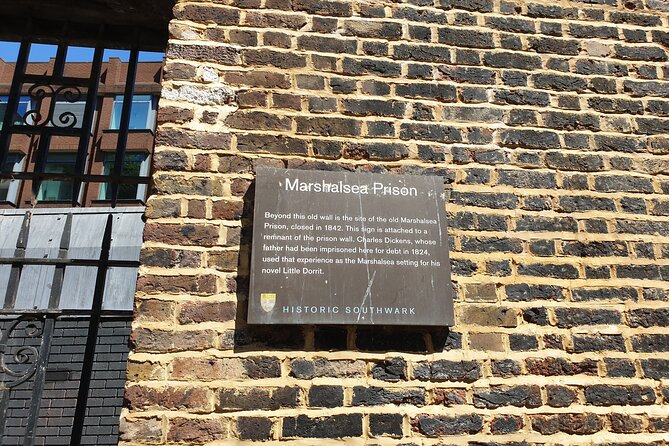
Then you move from suffering to supply chains, at least on the surface. The Hop Exchange is described as the largest extant reminder of Southwark’s beer trade, which makes it a perfect stop for the Booze half of the theme.
This is where the walk becomes more than grim tourism. You get a sense of how Southwark fed London’s appetite for beer, and how the neighborhood’s economy supported a constant flow of customers, workers, and stories.
It is also a nice contrast with the prison stops. You do not have to force yourself to enjoy this part. The building and the trade connection do the work, and the guide should help connect it back to the broader borough vibe.
Stop 4: George Inn, a last surviving galleried coaching inn
At George, you visit London’s last surviving galleried coaching inn. This matters because it ties together travel, lodging, and everyday gathering in a single surviving structure.
Galleried coaching inns were more than places to sleep. They were meeting points for news, business, and the movement of people through the city. For this tour, it helps you understand why Southwark produced so many colorful stories. People passed through, and with them came conflict, trade, and entertainment.
Again, the stop is brief, so focus on the big picture the guide is building. Think of it as a bridge between the borough’s economic engine and the cultural output that shows up in literature.
Stop 5: Old Operating Theatre Museum and Herb Garret
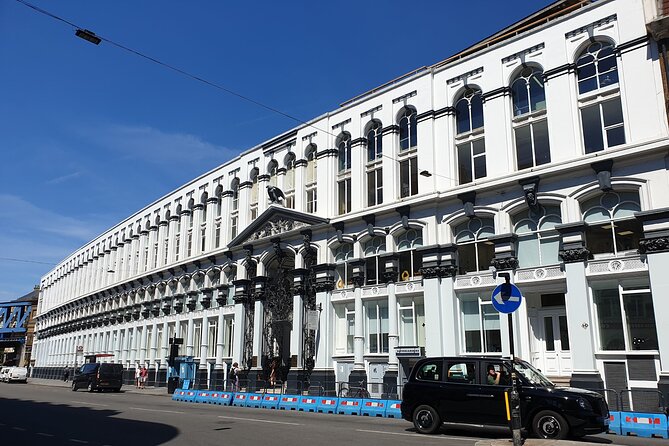
This is one of the most striking stops on the route. The Old Operating Theatre Museum and Herb Garret is described as Europe’s oldest surviving operating theatre.
Even if you are not a medical-history person, this stop can grab your attention because it turns a modern idea of surgery into something painfully specific and historical. It also fits the tour’s theme of the adult side of London life, where institutions handled sickness, suffering, and fear in ways that were part of everyday reality.
Because your time here is short, I recommend taking a mental note about what you want to look up after. If this stop sparks curiosity, it is one of the best areas to return to independently.
Stop 6 and 7: London Bridge and Southwark Cathedral
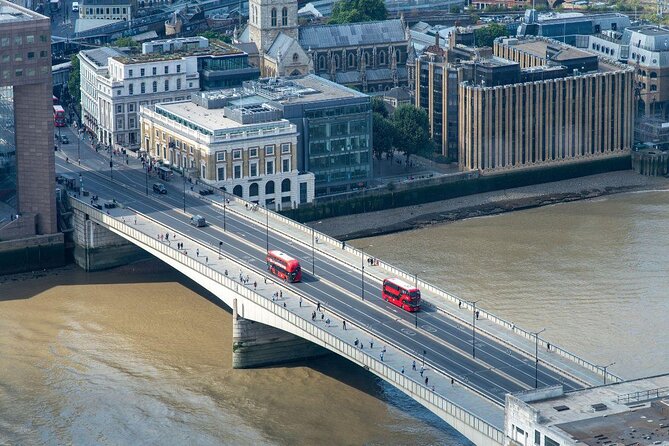
From there, you hit London Bridge, described as the world-famous and iconic London Bridge. Even with a short stop, you can feel why this location would matter to writers and traders: it is a major crossing, and crossings generate constant stories.
After the bridge comes Southwark Cathedral, described as London’s oldest surviving gothic church. This is one of those places that adds scale and tone. If earlier stops made you think about the borough’s harsh edges, the cathedral brings in the long arc of religious and civic presence.
This pairing works because it shows two different kinds of power in one flow. One is logistical and commercial, the other is spiritual and architectural.
Stop 8: Borough Market, a thousand years of food culture
Next up is Borough Market, described as a one thousand year old food market. This stop is a big reason the tour feels livable, not just grim.
Food markets are social engines. They pull in locals and visitors, create regular rhythms, and turn the neighborhood into a place where stories happen naturally. On a tour with prisons and outcasts earlier in the morning, Borough Market gives you a place to reset your brain.
I also like this stop because it is easy to extend. If you finish the tour and want to keep going, this area is a straightforward place to wander for food, drink, or simply watching how the market works today.
Stop 9: Winchester Palace remains from medieval prestige
Winchester Palace is next, with the remains of one of the most prestigious homes in medieval England. This is another contrast stop that broadens your view beyond the borough’s rough reputation.
It helps you see that Southwark was not only a place for society’s bottom layer. It was also home to status and important households. That kind of contrast is what makes the literature connections feel believable. Writers did not invent their settings from thin air. They drew from places where different levels of society existed side by side.
Because it is a short stop, the guide’s framing is crucial. You want them to connect it back to the broader story, not treat it like a random landmark.
Stop 10: The Clink Prison Museum and the notoriety of confinement
Then you come to the Clink Prison Museum, tied to the site of the notorious Clink Prison. If Marshalsea gave you the opening prison thread, Clink gives you the second act, and the change in the specific prison story helps keep the tour from feeling repetitive.
The word notorious is doing real work here. This is where the tour’s tone can get more adult and more direct, because prisons were tied to how society controlled behavior. The guide should connect this kind of confinement to the way Southwark became a literary setting.
Even in a short window, this stop can feel intense. If you do not like heavy topics, it is the part where you should mentally prepare.
Stop 11: Shakespeare’s Globe Theatre as your finale
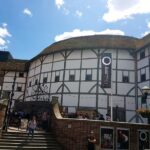
The last stop is Shakespeare’s Globe Theatre, described as the reconstruction of Shakespeare’s Globe Theatre. This is the payoff, the moment when the borough’s rough reality turns into stagecraft.
Ending here changes how you experience the earlier stops. Prisons, outcasts, beer trade, and coaching inns are not random detours. They become the living background for the kind of characters that show up in drama and literature.
If you take one extra step after the tour, do it around the Globe area. The reconstruction setting makes it easier to imagine the neighborhood’s energy as something that could be performed, not just endured.
The guide factor: why this works better in small groups
The guide quality is a standout reason people give this tour a perfect score. The name Tom comes up in the feedback, and the common thread is passion and sharp storytelling. When a guide cares, you feel it in how smoothly the tour flows from one landmark to the next.
For you, that means you are not just reading facts. You get the “why” behind the places. You also get a chance to ask questions in the moment, which is harder on larger tours.
If your idea of a great tour is a guide who actually talks like a person, this is the right style.
Who should book this tour, and who might want a different option
I would book this if you want a London walk that mixes literature with real places tied to commerce and control. It is especially good for first-time visitors who want to see a different side of London than the usual central highlights.
You should also consider it if you like theme-based tours that connect the dots. The route is designed to move you through Southwark in a way that makes Shakespeare and Dickens feel tied to the neighborhood, not separate from it.
You might skip it if you need lots of time at each stop. Because the stays are short, it is not ideal for people who want to linger in museums or read every plaque. You can still get value, but you will want to plan extra time afterward.
Should you book Booze, Brothels and The Bard?
Yes, if your goal is a fast, story-led introduction to Southwark that connects the neighborhood’s adult themes to major literary names. The small-group size, the guide-led flow, and the way the route ends at Shakespeare’s Globe make it a satisfying morning or afternoon plan.
If you want a slow, museum-heavy day, this may feel like a tasting menu instead of a full meal. But for $27.78, with many stops listed as admission ticket free, it is a strong value way to get oriented and leave with real places in your head.
FAQ
What is the price per person?
The price is $27.78 per person.
How long is the walking tour?
It runs for about 2 hours.
What language is the tour offered in?
The tour is offered in English.
What group size should I expect?
There is a maximum of 15 travelers.
Where does the tour start and where does it end?
It starts at Borough High St, London SE1 1JX, UK and ends at Shakespeare’s Globe, 21 New Globe Walk, London SE1 9DT, UK.
Is it near public transportation?
Yes, it is near public transportation.
How far in advance do people usually book?
On average, it is booked about 35 days in advance.
Can I cancel for a full refund?
Yes. You can cancel up to 24 hours in advance for a full refund.
Latest to join the queue for London



Guided Walks in London, compared.
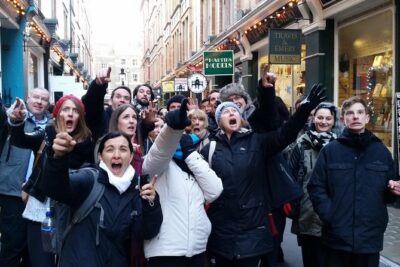
Tour for Muggles The Ultimate Harry Potter Walking Tour in London
Read our review →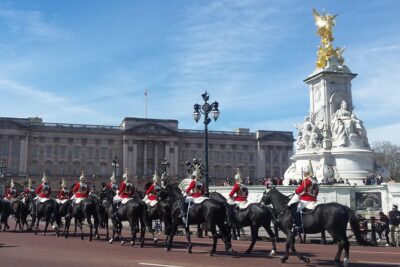
Changing of the Guard Guided Walking Tour in London
Read our review →
The Great British Rock and Roll Walking Tour
Read our review →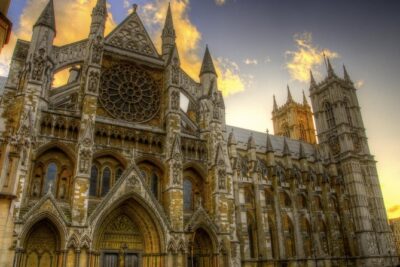
Westminster Guided Walking Tour with Abbey Entry
Read our review →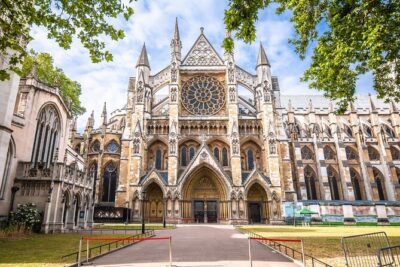
Walking Tour of London Westminster Abbey, Big Ben, Buckingham
Read our review →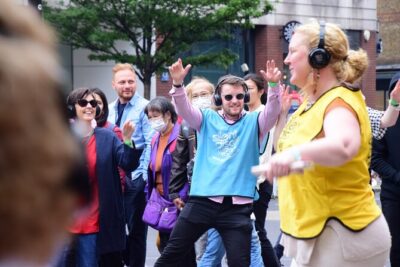
London West End Musical Silent Disco Walking Tour Top 1% Rated
Read our review →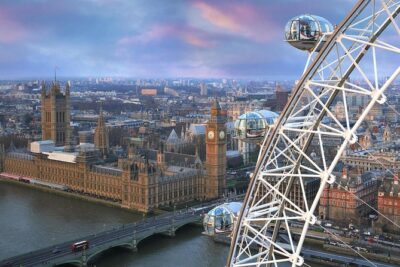
Westminster 3 Hour Walking Tour and Visit of Churchill War Rooms
Read our review →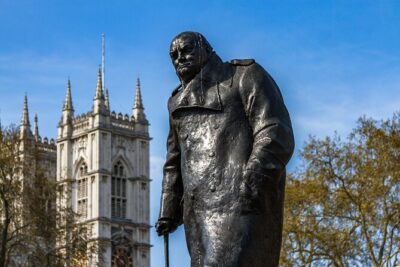
WW2 London Walking Tour & Churchill War Rooms Entrance Ticket
Read our review →Browse the lists this tour appears in