
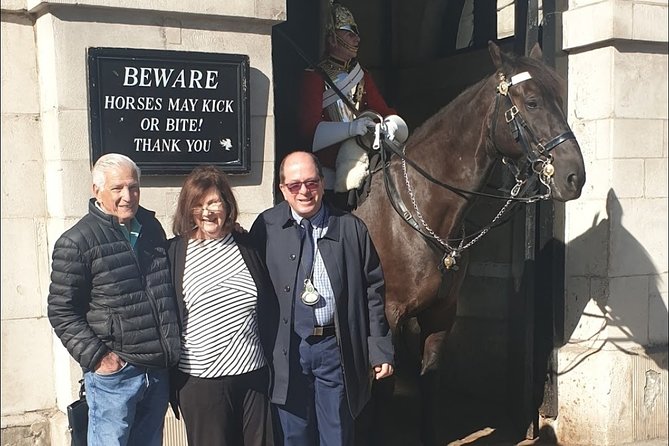
Reviewed · BLACK CAB SIGHTSEEING TOURS
Black Taxi Tour Of London
London in a black cab beats the bus.
This private custom taxi tour lets you request stops and steer the day, so you spend 4 hours seeing London your way, not a fixed script. I love the big-window, glazed-roof cab setup for clear views, and I love the flexible guiding, with names like Morris, Bryan, Dave, and Tony popping up again and again in the guide lineup. One possible drawback: with only about 4 hours, you’ll mostly do sighting and narration from the cab and street, so if you want lots of inside time, you may need a separate plan.
Expect a smooth, group-friendly way to hit the big hitters plus the lesser seen angles you would not find as easily on your own. The route is built around Westminster, the river, and the City, with the guide able to slow down for photos, wheelchairs, kids, or a very specific interest (Beatles, Dickens, you name it).
In This Review
- Key highlights worth planning around
- A private black cab, built for seeing London fast
- Price and what your 4 hours actually buys
- Pickup near Trafalgar Square and the Embankment Place start
- Westminster to the Elizabeth Tower: Wellington, Parliament, Downing Street
- Apsley House and Wellington Arch area
- Westminster and the Houses of Parliament area
- Big Ben and the Elizabeth Tower
- Downing Street
- Westminster Abbey
- Bridges, the Thames, Victoria Embankment, and St Paul’s Cathedral
- London Bridge, Tower Bridge, and the Albert Bridge stories
- Victoria Embankment: memorials plus engineering
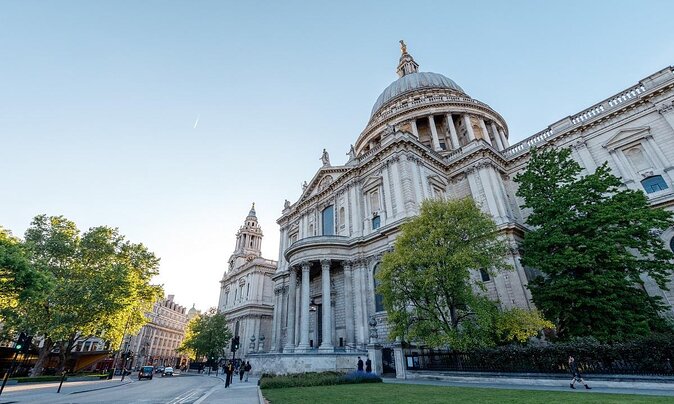
- St Paul’s Cathedral and the dome that dominates the skyline
- How to make the route truly yours in the taxi
- Should you book this black taxi tour of London?
- FAQ
- Is this tour private?
- How many people is the tour for?
- How long is the tour?
- Do you offer pickup?
- Where does the tour start and end?
- Can I cancel and get a full refund?
Key highlights worth planning around
- Private black cab comfort, big windows and a glazed roof for better sightlines
- Customizable stops, you can request, swap, or let the guide choose
- One flat fare per group (up to six), great for families and friend groups
- Westminster-first routing, from Apsley House to the Elizabeth Tower
- River focus with multiple bridges, including Tower Bridge and Albert Bridge
- Accessible for mobility needs, with experience handling ramps and scooter-style movement
A private black cab, built for seeing London fast
If you want London to make sense quickly, this style of tour helps. A black cab sits you above the street traffic, with plenty of glass for looking out. That matters because London landmarks read differently when you’re seeing them from street level and angles that buses often miss.
I like that the cab is designed for visibility: large windows and a glazed roof give you options for photos that feel less like you’re photographing through foggy glass. It also makes the guide’s storytelling easier, because you can actually point and look at what they’re describing.
The other big benefit is how real the customization feels. This isn’t just a “choice of themes” brochure. The guide can slow down for details, take you to requested spots, and skip duplication. In real life, that saves time and frustration. One common theme from guides in this lineup is taking time to ask what you care about, then turning the route into something that fits your group pace, like keeping stops tighter for kids or handling mobility needs with extra attention.
Small practical note: a cab tour still has a time cap. You’ll see plenty, but you’ll have less lingering time than if you planned this as a full walking day with entry tickets for every stop. Think of it as a high-impact orientation plus highlights, then choose what to revisit later.
More of the Knowledge from the front seat:
Price and what your 4 hours actually buys
The listed cost is $603.08 per group, up to six people, for about 4 hours. At first glance, it sounds pricey until you do the simple math: you are paying for one vehicle and one guide for the group, not paying per person like many “top sights” tours.
This pricing fits especially well for:
- Families with kids who want a calmer experience than big buses
- Small groups of friends where the cab can replace multiple separate rides
- Anyone who wants a history-and-photo combo without crowds
You’re also buying convenience. Pickup is included within a defined radius and you can get hotel or Airbnb pickup too, which reduces “how do we even get there” stress. For short visits, that is often the difference between a great afternoon and a day lost to transit logistics.
One more value point: the guide can tailor the route around your priorities. If your group is history-heavy, you’ll get the timeline story. If you care about specific themes, the guide can incorporate those interests and still cover the core landmarks. That kind of flexibility is hard to replicate if you’re just using public transport on your own.
Pickup near Trafalgar Square and the Embankment Place start
The tour meets at Embankment Place, London WC2N and ends back at the same meeting spot. If you want pickup, you can get pickup and drop-off within 5 miles of Trafalgar Square for free, plus pickup and drop-off from your hotel or Airbnb.
A practical tip: if you’re staying slightly outside that zone, confirm pickup coverage during booking so you’re not surprised on the day. Also, the general starting time is around 10:00 AM, and your confirmation should clarify the exact departure time. The provider notes opening hours that run within a morning window, so expect a morning start rather than an all-day schedule.
If you’re arriving by airport or port, collections are not included, but they can be arranged at extra charge depending on availability. That can be a real win for someone who lands and wants to skip the transit puzzle, but you’ll want to get the quote early.
Westminster to the Elizabeth Tower: Wellington, Parliament, Downing Street
Your route centers on London’s power and pageantry. You start by easing into the Westminster area, where buildings seem to carry their own captions.
Apsley House and Wellington Arch area
You begin near Apsley House, built as the home of the Duke of Wellington and dating to 1825. This stop is useful because it explains London’s habit of reusing and repositioning symbols. Opposite is the Wellington Arch, moved to support the look of Buckingham Palace at one point, and now facing Constitution Hill.
You also get the story behind the statues changing over time: after Wellington died, a huge statue was taken down and moved to Aldershot Barracks, and a smaller statue sits where the arch originally faced Apsley House. Above the arch now is the large quadriga with Nike, the Goddess of Victory, riding the chariot. It’s the kind of detail that you would miss if you simply walked by without context.
Why it’s worth seeing from the cab: the guide can connect the street-level view to the bigger royal and military history, and you can get photos from safe positions rather than squeezing around pedestrians.
Also on in London, no fuss
- Stonehenge, Windsor Castle, and Bath from London★ 4.5 · 18,662 reviews
- London Big Bus Hop-On Hop-Off Tour with Optional River Cruise★ 3.5 · 10,803 reviews
- London Small Group Tour of Historical Pubs★ 5.0 · 10,422 reviews
- Stonehenge, Windsor Castle and Bath with Pub Lunch in Lacock★ 4.5 · 7,402 reviews
Westminster and the Houses of Parliament area
Next you shift to the area around the original palace site. Here, the guide’s narration really earns its keep. You hear how the first record of a building at this location goes back to the 11th century, with a palace linked to William the Conqueror. The building burned in 1512, then the site was destroyed again in 1834, leaving key pieces like the crypt, the Jewel Tower, and Westminster Hall (dating to 1097 under King William Rufus).
Then you get the modern parliamentary layout: the Houses of Parliament were rebuilt from 1834 to 1870 by architects Augustus Pugin and Charles Barry. The point of covering this at the start of your day is that it helps you understand why Westminster looks the way it does now, instead of just memorizing names.
Big Ben and the Elizabeth Tower
From there, you move toward the clock everyone calls Big Ben. The tour keeps it accurate: Big Ben is the nickname for the Great Bell, and people often use it to refer to the bell, the clock, and the tower together.
What you learn is the tower’s official naming and design evolution. The tower opened in 1859 and was renamed The Elizabeth Tower in 2012 for Queen Elizabeth II’s Diamond Jubilee. The style is Gothic Revival, and the design is tied to Augustus Pugin. From the cab, you can frame the tower and clock face in a way that feels much more natural than a single distant postcard angle.
Downing Street
Then comes Downing Street, built in 1680 by Sir George Downing. You get the basics fast: Number 10 is home to the Prime Minister, and Number 11 is for the Chancellor of the Exchequer. You mostly see the street view and entrances, so don’t expect a tour inside. But it’s still a powerful London moment because it’s so specific and so tightly connected to modern UK governance.
Westminster Abbey
Finally in this Westminster cluster, you reach Westminster Abbey. It’s mainly Gothic in design and is central to major British ceremonies. You learn it’s a place of coronations since William the Conqueror, hosted sixteen royal weddings, and serves as a burial site for many monarchs.
If you’re the type who likes understanding what a building means, this is a good place to have a guide. The Abbey is a World Heritage Site and a Grade One listed building, founded in 960 AD. Add in the fact that towers were added in the 18th century by Nicholas Hawksmoor, and you’ll see how the architecture evolved long after the original founding.
One practical drawback to keep in mind: this is a short tour. Even if you stop close, you may not have long on-the-ground time at each landmark. If you want interior viewing, build that into a separate day.
Bridges, the Thames, Victoria Embankment, and St Paul’s Cathedral
After Westminster, the day turns scenic and architectural. This is where cab viewing feels especially smart, because you can look across the river, catch bridge silhouettes, and get a coherent picture of how London spreads.
London Bridge, Tower Bridge, and the Albert Bridge stories
You hear how London’s bridge history stretches back to Roman wooden bridges, then moves into major stone eras. The original London Bridge was built between 1176 and 1209 and is credited as the first stone bridge across the Thames. It was the longest inhabited bridge in Europe, with shops, houses, restaurants, and even a chapel.
The modern London Bridge is the third stone bridge. That kind of timeline helps you notice that the city keeps building on top of old foundations, both literally and culturally.
Then you hit Tower Bridge, built between 1886 and 1894, a combined bascule and suspension bridge. You also get the nickname sense: people call it the Wonder Bridge, and bascule relates to a see-saw style motion.
And then comes Albert Bridge between Chelsea and Battersea. This is where the guide’s storytelling often makes the stop memorable. You learn it has spectacular lighting and has appeared in films. You also hear why there’s a sign about troops needing to break step, tied to past instability. It’s still nicknamed the Trembling Lady.
From a planning standpoint, these bridge stops give you variety. Even if you care mostly about big monuments, bridges add the “London map” feeling, so your photos look less like a pile of standalone landmarks.
Victoria Embankment: memorials plus engineering
Next is Victoria Embankment along the north bank from the Palace of Westminster to Blackfriars Bridge. It’s known for memorials including the Battle of Britain and for permanently retired vessels like H.M.S. President, plus gardens.
Construction ran from 1865 to 1870, under Joseph Bazalgette. You also learn how his work affected the Thames by narrowing the river. That’s one of those details that makes London’s “pretty waterfront” feel engineered and intentional.
St Paul’s Cathedral and the dome that dominates the skyline
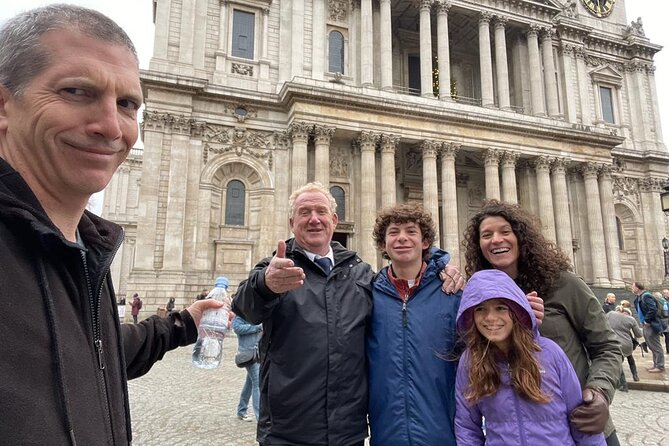
The tour finishes strong with St Paul’s Cathedral. The site’s story goes back to 604 AD, and there have been four cathedrals on the location. The one you see was built between 1675 and 1710, with Christopher Wren as the architect. Wren is buried under the Dome.
The guide also gives you the older St Paul’s context: it was built between 1087 and 1314, was the largest building in the UK until the Great Fire of London in 1666, when it was lost. The current St Paul’s is Anglican, and it became the seat of the Bishop of London.
You’ll hear a few dome stats that stick, because they’re big: the dome is 365 feet high and weighs about 65,000 tons. Standing in London without that scale in your head is like looking at a painting without knowing its size. With the scale, the building feels real fast.
How to make the route truly yours in the taxi

The best way to get value from a custom tour is to give the guide usable direction. In this case, you’ll do well if you share two things early: your must-see list and your comfort limits.
Here are practical prompts that work with this kind of black cab tour:
- Share the landmark level you want, for example quick exterior views or more time at a few stops
- Name your interests, like Beatles, Charles Dickens, architecture, or military history
- Tell the guide your walking limits up front
- Ask for “no repeats,” so you do not waste time covering the same area twice
From the guide approach reflected in the tour team, you can expect the route to flex. Some groups are family-first, some are photo-first, and some want a history lesson that connects dots rather than just listing facts. Guides such as Morris and Dave have shown up in the lineup with a reputation for steering tours around the exact needs of the day, including patience with kids and help for mobility constraints.
For accessibility, the provided details are reassuring: service animals are allowed, taxis are described as accessible with big viewing options, and there is specific mention of helping mobility scooter users and wheelchair access. That does not mean every street will be perfect, but it does mean the driver and guide should already know how to manage curb timing and getting in and out smoothly.
One final caution: if your day includes a lot of photo stops, you can feel the time pressure. Your guide can manage the pace, but you should still decide in advance what matters most, so the final hour stays satisfying, not rushed.
Should you book this black taxi tour of London?
Book it if you want a high-value, low-stress overview of Westminster, the Thames bridges, and St Paul’s, without the crowd crush or the confusion of hopping between transit lines.
Skip it, or pair it with another plan, if you know you want long interior visits at multiple sites. This tour is built for a short, guided circuit where cab views and storytelling do most of the work.
One more reality check: one booking reported a driver no-show and a reschedule. That’s not the norm based on the overall pattern, but it’s still smart to keep your confirmation details handy and have a backup idea if plans shift.
If you’re a small group, a family, or you want your first London day to feel like a smart orientation, this is one of the better ways to spend 4 hours. You’ll finish with a clearer mental map, better photos, and a short list of what you’ll want to return to on your own time.
FAQ
Is this tour private?
Yes. It is listed as a private tour, so only your group participates.
How many people is the tour for?
It’s priced for up to 6 people per group.
How long is the tour?
It runs about 4 hours.
Do you offer pickup?
Yes. Pickup is included for locations within 5 miles of Trafalgar Square and also pickup and drop-off from your hotel or Airbnb.
Where does the tour start and end?
The tour starts at Embankment Place (WC2N) and ends back at the same meeting point.
Can I cancel and get a full refund?
You can cancel for a full refund if you cancel at least 24 hours before the experience’s start time.
Latest to join the queue for London





Black Cab Sightseeing Tours, compared.
The Premier Classic London: Private 4-Hour Tour in a Black Cab
Read our review →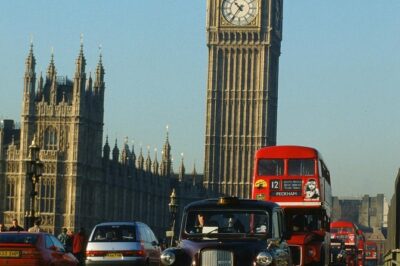
London Sightseeing Private Black Cab Tour with Hotel Pick Up
Read our review →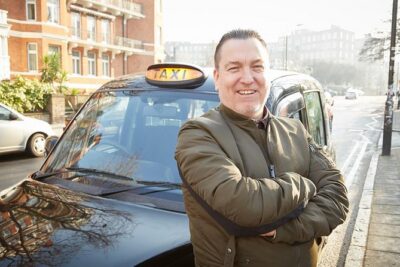
Rock Cab Tours presents Music Legends Private Taxi Tour of London
Read our review →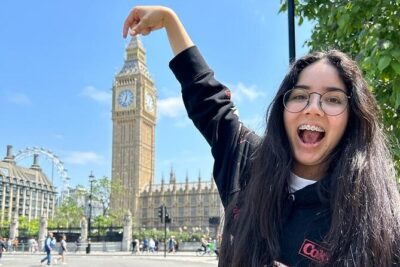
The Ultimate 6-hour Private Tour of London in an Iconic Black Cab
Read our review →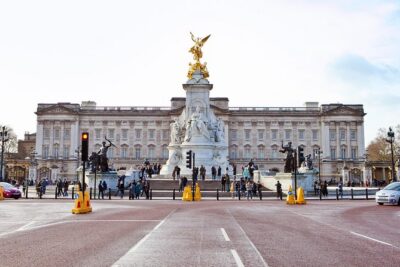
Black Taxi Tour of London: Classic Sightseeing Bespoke & Fun
Read our review →
Harry Potter Black Taxi Private Tour of London with Hotel Pickup
Read our review →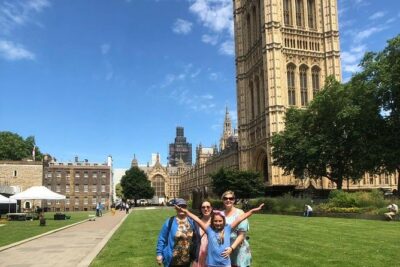
Private London Highlights Tour in a Black Cab: 2, 4, or 6 Hours
Read our review →Browse the lists this tour appears in